
Extended Producer Responsibility EPR Textiles EU Compliance Guide: How Fashion Brands Can Navigate Regulations with Managed Dual-Hub Apparel Manufacturing
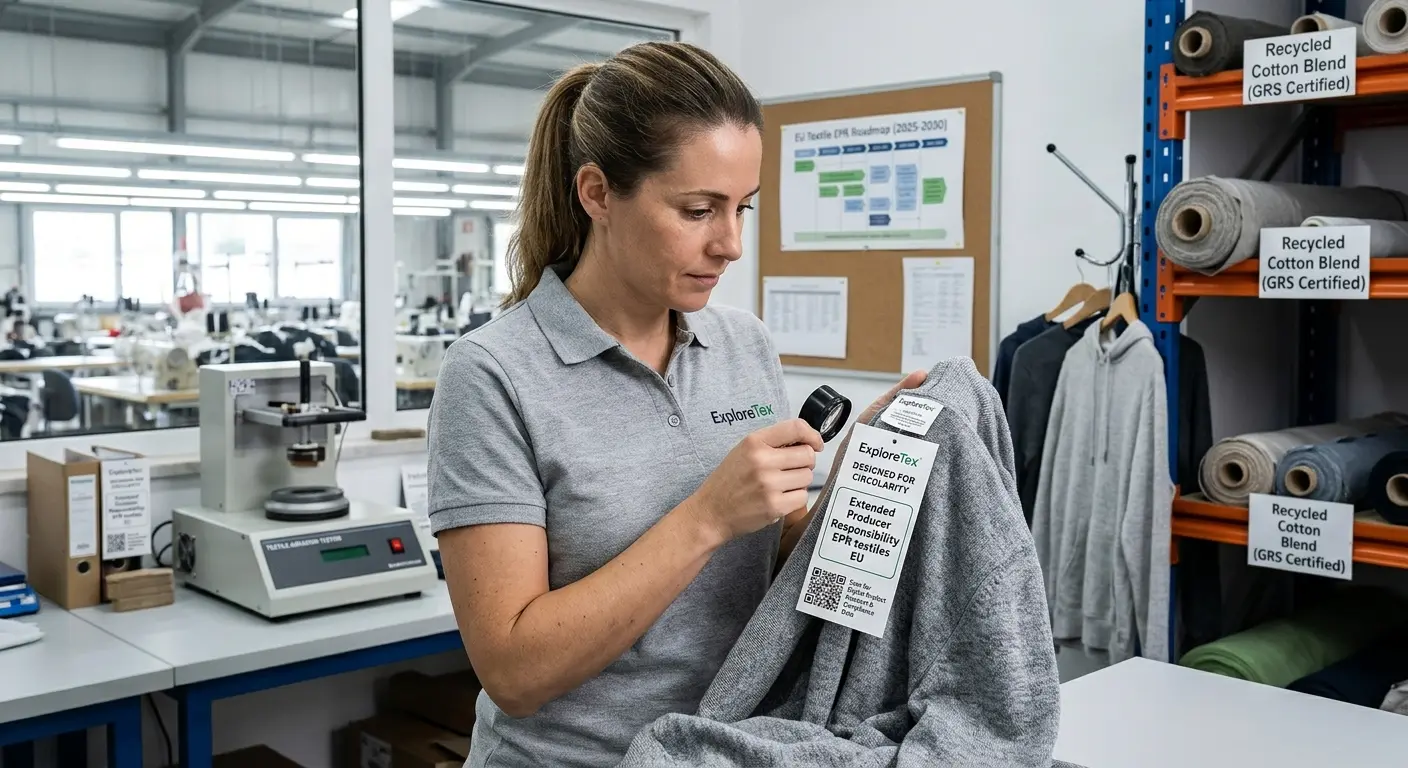
As modern European apparel brands face rigorous legislative transformations and tightening environmental standards across global markets, thoroughly understanding Extended Producer Responsibility EPR textiles EU is no longer optional for industry leaders. The swift implementation of Extended Producer Responsibility EPR textiles EU mandates completely redefines how clothing is manufactured, tracked, sorted, and recycled throughout the supply chain. At ExploreTex, our robust dual-hub production ecosystem operating across Portugal and Bangladesh actively helps fashion brands navigate Extended Producer Responsibility EPR textiles EU compliance seamlessly.
Every operational and design strategy concerning Extended Producer Responsibility EPR textiles EU directly impacts your brand’s bottom line and retail margins, making absolute Extended Producer Responsibility EPR textiles EU mastery essential for long-term sustainable fashion success.
Effectively navigating Extended Producer Responsibility EPR textiles EU legislation requires meticulous supply chain control, verified material transparency, and proactive eco-design execution. Under the newly revised European regulatory framework, official Extended Producer Responsibility EPR textiles EU policies shift the heavy financial and operational burdens of end-of-life textile waste management directly onto brand owners and importers.
When you seamlessly integrate core Extended Producer Responsibility EPR textiles EU criteria into your initial tech packs and design blueprints, your upcoming collections automatically align with critical Extended Producer Responsibility EPR textiles EU eco-modulation targets. ExploreTex specializes in meeting rigorous Extended Producer Responsibility EPR textiles EU requirements, ensuring every single garment produced under official Extended Producer Responsibility EPR textiles EU guidelines meets premium European quality standards.
Ensuring full compliance with Extended Producer Responsibility EPR textiles EU demands certified material traceability and rigorous manufacturing accountability. Through our sustainable sourcing channels and transparent mill partnerships, ExploreTex addresses strict Extended Producer Responsibility EPR textiles EU standards by incorporating GRS-certified post-consumer recycled fibers and organic cotton blends. Fashion brands addressing complex Extended Producer Responsibility EPR textiles EU mandates benefit significantly from advanced mono-material construction methodologies.
Our specialized manufacturing facilities in Portugal and Bangladesh are fully optimized for Extended Producer Responsibility EPR textiles EU regulations, successfully turning intricate Extended Producer Responsibility EPR textiles EU rules into a powerful competitive advantage for your private label apparel collection.
Preparing your fashion enterprise for upcoming Extended Producer Responsibility EPR textiles EU enforcement protects your business from costly administrative penalties and market access restrictions. Each progressive regulatory update regarding Extended Producer Responsibility EPR textiles EU strongly emphasizes product durability, repairability, and recyclability. By partnering with ExploreTex for your end-to-end apparel manufacturing, you ensure complete, verifiable adherence to Extended Producer Responsibility EPR textiles EU laws. Discover how our experienced technical team masters complex Extended Producer Responsibility EPR textiles EU frameworks, positioning your apparel brand firmly at the forefront of the circular economy under official Extended Producer Responsibility EPR textiles EU governance.
Executive Summary: The Structural Regulatory Shift Facing European Fashion Brands
The European apparel industry faces a fundamental regulatory overhaul. With the full integration of the revised EU Waste Framework Directive (WFD) alongside the rollout of the Ecosystem for Eco-design for Sustainable Products Regulation (ESPR), fashion brands, private labels, and apparel importers placing products on the European market can no longer operate under linear, take-make-waste business models.
The centerpiece of this legislative push is the mandatory implementation of Extended Producer Responsibility EPR textiles EU framework parameters across all 27 EU Member States.
For apparel brands, compliance with Extended Producer Responsibility EPR textiles EU requirements is not merely an end-of-pipe waste management fee; it is an end-to-end design, sourcing, and supply chain accountability mandate.
+---------------------------------------------------------------------------------+
|               EU Extended Producer Responsibility (EPR) Pipeline                |
+---------------------------------------------------------------------------------+
|  1. ECODESIGN           2. DUAL-HUB PRODUCTION      3. RETAIL & TRACEABILITY        |
|  - Mono-material spec   - High-grade European knit  - Digital Product Passport      |
|  - Recycled fiber %     - Vertical mass scale       - Batch-level BOM tracking      |
|  - Low eco-fee design   - Zero-defect QA (AQL 1.5)  - On-demand PRO declarations    |
+---------------------------------------------------------------------------------+
|               4. END-OF-LIFE RECOVERY & RECYCLING INFRASTRUCTURE                |
|  - Eco-modulated PRO registration & Fiber-to-Fiber recycling validation         |
+---------------------------------------------------------------------------------+
Under newly established national Producer Responsibility Organisations (PROs) and European Union directives, brands are legally responsible for the entire lifecycle of their garments—from raw fiber selection to ultimate end-of-life sorting, reuse, and fiber-to-fiber mechanical or chemical recycling.
Navigating the complex architecture of Extended Producer Responsibility EPR textiles EU mandates requires an operational manufacturing partner who understands both high-end European garment engineering and cost-effective, high-volume production scale.
This is where ExploreTex operates as your strategic manufacturing partner.
As a Portuguese-based company with a registered European brand, an established network of artisanal partner factories in Portugal, and our own vertical manufacturing facility in Bangladesh, ExploreTex bridges the gap between strict European compliance, premium craft quality, and global commercial scalability.
In this comprehensive guide, we unpack every dimension of Extended Producer Responsibility EPR textiles EU legislation, demonstrating how our dual-hub production ecosystem protects your brand from non-compliance penalties while optimizing your eco-modulated fees.
Module 1: Understanding Extended Producer Responsibility EPR Textiles EU Legislation
The Core Mandate of the EU Waste Framework Directive
The primary mechanism driving Extended Producer Responsibility EPR textiles EU policy is the amended EU Waste Framework Directive.
Historically, municipal authorities bore the technical and financial burden of collecting, sorting, and processing post-consumer textile waste.
Under the updated Extended Producer Responsibility EPR textiles EU rules, this financial and operational liability shifts entirely to the “producer”—defined as any entity that first places finished textile, apparel, or footwear products on the market within an EU Member State, including distance sellers and online retailers.
+---------------------------------------------------------------------------------+
|               Traditional Linear vs. EU EPR Circular Model                      |
+---------------------------------------------------------------------------------+
| LINEAR MODEL:                                                                   |
| Raw Materials --> Manufacturing --> Consumer Sales --> Municipal Landfill/Waste  |
+---------------------------------------------------------------------------------+
| EU EPR CIRCULAR MODEL:                                                          |
| Circular Fiber Selection --> Compliant Production --> DPP Retail Tracking       |
|       ^                                                      |                  |
|       |------------ Fiber-to-Fiber Recycling <---------------+                  |
|                      (Funded by Eco-Modulated EPR Fees)                         |
+---------------------------------------------------------------------------------+
To comply with Extended Producer Responsibility EPR textiles EU standards, brands must meet three structural requirements:
Mandatory Registration: Brands must register as textile producers with the designated national authority or recognized Producer Responsibility Organisation (PRO) in every single EU Member State where their products are commercialized.
Financial Volume Contributions: Brands must pay recurring EPR fees calculated on a per-unit or weight-based metric (metric tons of apparel placed on the market) to fund collection, sorting, repair, and circular recycling networks.
Data Reporting & Transparency: Brands must report exact volumes, material composition breakdowns, component weight distributions, and durability indexes down to the individual SKU level.
Eco-Modulation: How Design Choices Directly Control Your Margins
The most critical economic driver within the Extended Producer Responsibility EPR textiles EU policy landscape is eco-modulation.
Eco-modulation dictates that EPR fee schedules are not flat rate fees; instead, they are dynamically adjusted based on the environmental performance and circularity potential of the garment.
                ECO-MODULATION EPR FEE SCALE

  Higher Financial Penalty (High EPR Fee / Unit)
  ▲
  │  [!] Complex Multi-Fiber Blends (e.g., Poly-Cotton-Elastane)
  │  [!] Non-Recyclable Synthetic Trim & Coated Fabrics
  │  [!] High Shedding / Low Durability Materials
  │
  │  --------------------------------------------------
  │
  │  [✓] GOTS Organic Single-Fiber Constructions
  │  [✓] GRS-Certified Post-Consumer Recycled Content
  │  [✓] Monomaterial Engineering & Disassembly-Ready Specs
  │
  ▼
  Lower Financial Penalty (Discounted EPR Fee / Unit)
Garments designed using low-grade, mixed-blend fibers that cannot be mechanically or chemically recycled will attract maximum financial penalties per unit under national PRO frameworks.
Conversely, apparel manufactured using circular eco-design principles—such as mono-material fiber compositions, certified post-consumer recycled fibers, high physical tensile durability, and absence of hazardous chemicals—receives substantial financial rebates and discounted eco-modulated fee brackets.
By partnering with ExploreTex, your brand accesses sophisticated collection planning and technical material selection specifically engineered to achieve the lowest possible eco-modulated fee brackets under Extended Producer Responsibility EPR textiles EU directives.
Module 2: Key Milestones & Regulatory Timelines for EU Apparel Brands
Navigating the transition period of Extended Producer Responsibility EPR textiles EU enforcement requires clear operational visibility over key compliance cut-offs.
The European Union has established a phased implementation roadmap across all Member States:
+---------------------------------------------------------------------------------+
|          EU Textile EPR Regulatory Implementation Roadmap                      |
+---------------------------------------------------------------------------------+
|  [2025]   Mandatory separate collection of textile waste across all EU states   |
|     │                                                                           |
|  [2026]   National transposition of Waste Framework Directive guidelines       |
|     │                                                                           |
|  [2027]   Member State legislation finalized & PRO structure approvals          |
|     │                                                                           |
|  [2028]   Full operational enforcement of textile EPR fees across major markets|
|     │                                                                           |
|  [2029]   Inclusion of micro-enterprises & enforcement on distance platforms    |
+---------------------------------------------------------------------------------+
Country-Specific Framework Highlights
While the EU provides the overarching legislative directive, individual Member States are executing Extended Producer Responsibility EPR textiles EU policies through distinct national mechanisms:
France (Refashion): The benchmark pioneer for French textile EPR, enforcing strict eco-modulation tiers based on physical durability criteria, environmental label certifications, and post-consumer recycled fiber ratios.
The Netherlands (UPV Textiel): Sets aggressive circular reuse and recycling targets. By 2030, 75% of all textiles placed on the Dutch market must be prepared for reuse or recycling, with at least 33% undergoing direct fiber-to-fiber recycling.
Spain (SCRAP Implementation): Transitioning toward mandatory collective producer responsibility schemes covering all apparel categories sold domestically.
Germany & Italy: Accelerating national waste collection infrastructure while harmonizing reporting formats with upcoming European Digital Product Passport (DPP) requirements.
Failure to register with local PROs or non-compliance with national Extended Producer Responsibility EPR textiles EU reporting standards carries severe operational risks—including substantial daily administrative fines, mandatory product recalls, and outright bans from selling products across EU online marketplaces and brick-and-mortar retail distribution networks.
Module 3: Technical Eco-Design Strategies to Minimize EPR Fees
To achieve competitive commercial positioning under Extended Producer Responsibility EPR textiles EU regulations, fashion brands must move away from reactive compliance and adopt proactive eco-design methodologies during initial collection planning.
+---------------------------------------------------------------------------------+
|                 ExploreTex Eco-Design Compliance Framework                      |
+---------------------------------------------------------------------------------+
| Pillar 1: Material Purity    --> 100% Organic or Single-Fiber Knit/Woven Specs  |
| Pillar 2: Recycled Ratios    --> Minimum 30%-50% GRS Post-Consumer Content      |
| Pillar 3: Physical Longevity --> Tensile, Abrasion, & Colorfastness QA (AQL 1.5) |
| Pillar 4: Trimming Integrity --> Recyclable Zip, Button, & Thread Architectures |
+---------------------------------------------------------------------------------+
1. Mono-Material Garment Construction
Mixed-fiber textiles—such as standard 65% polyester / 35% cotton or tri-blends containing elastane—present severe technological barriers to industrial recycling facilities.
Under eco-modulated Extended Producer Responsibility EPR textiles EU structures, multi-fiber blends carry higher fee surcharges.
At ExploreTex, our pattern masters and textile engineers specialize in single-fiber construction strategies.
We assist private label partners in developing 100% organic cotton French Terry knits, 100% recycled polyester outerwear, and pure linen collections that can enter automated sorting and mechanical fiber-to-fiber recycling lines without manual separation costs.
2. Integration of Certified Post-Consumer Recycled Content
The inclusion of verified post-consumer recycled material is a primary mechanism for unlocking financial fee reductions under Extended Producer Responsibility EPR textiles EU policy.
Through our transparent supply chain network, ExploreTex sources Global Recycled Standard (GRS) certified yarns and fabrics.
By incorporating verified GRS post-consumer recycled cotton or recycled nylon into your tech packs, your brand secures favorable eco-modulation tiers while maintaining premium garment hand-feel and structural integrity.
3. Physical Durability & Extended Garment Lifespan
Extended Producer Responsibility EPR textiles EU framework criteria place high emphasis on product durability.
Garments that pill, shrink, bleed color, or lose shape after initial consumer wash cycles contribute directly to accelerated textile waste generation.
ExploreTex integrates strict physical performance standards into every step of our custom clothing design and manufacturing workflows:
+---------------------------------------------------------------------------------+
|                   ExploreTex Physical Performance Quality Scale                 |
+---------------------------------------------------------------------------------+
| QA Test Category    | Standard Industry Metric | ExploreTex Compliance Target   |
+---------------------+--------------------------+--------------------------------+
| Dimensional Stability| Max +/- 5.0% Shrinkage   | < +/- 2.5% Post-Wash Shrinkage |
| Color Fastness      | Grade 3-4 Wash Rating    | Grade 4-5 Premium Rating       |
| Martindale Abrasion | 15,000 Rub Cycles        | > 30,000 Rub Cycles            |
| Seam Tensile Strength| Basic Joining Stitch    | Reinforced Safety Overlock     |
+---------------------+--------------------------+--------------------------------+
4. Hardware and Trimming Disassembly Alignment
A major hurdle in post-consumer textile sorting is the presence of non-recyclable trims, non-removable metal zippers, polyurethane brand patches, and synthetic threads on natural fiber garments.
Our engineering team works through comprehensive tech pack development to ensure all hardware, thread specs, and interior brand labels align with circular disassembly requirements.
We offer organic cotton sewing threads, removable metal hardware systems, and heat-transfer brand tags that eliminate contamination risks during post-consumer shredding.
Module 4: Dual-Hub Sourcing Architecture: The ExploreTex Strategic Advantage
Managing compliance with Extended Producer Responsibility EPR textiles EU regulations while keeping production costs commercially viable requires a flexible, multi-tiered manufacturing strategy.
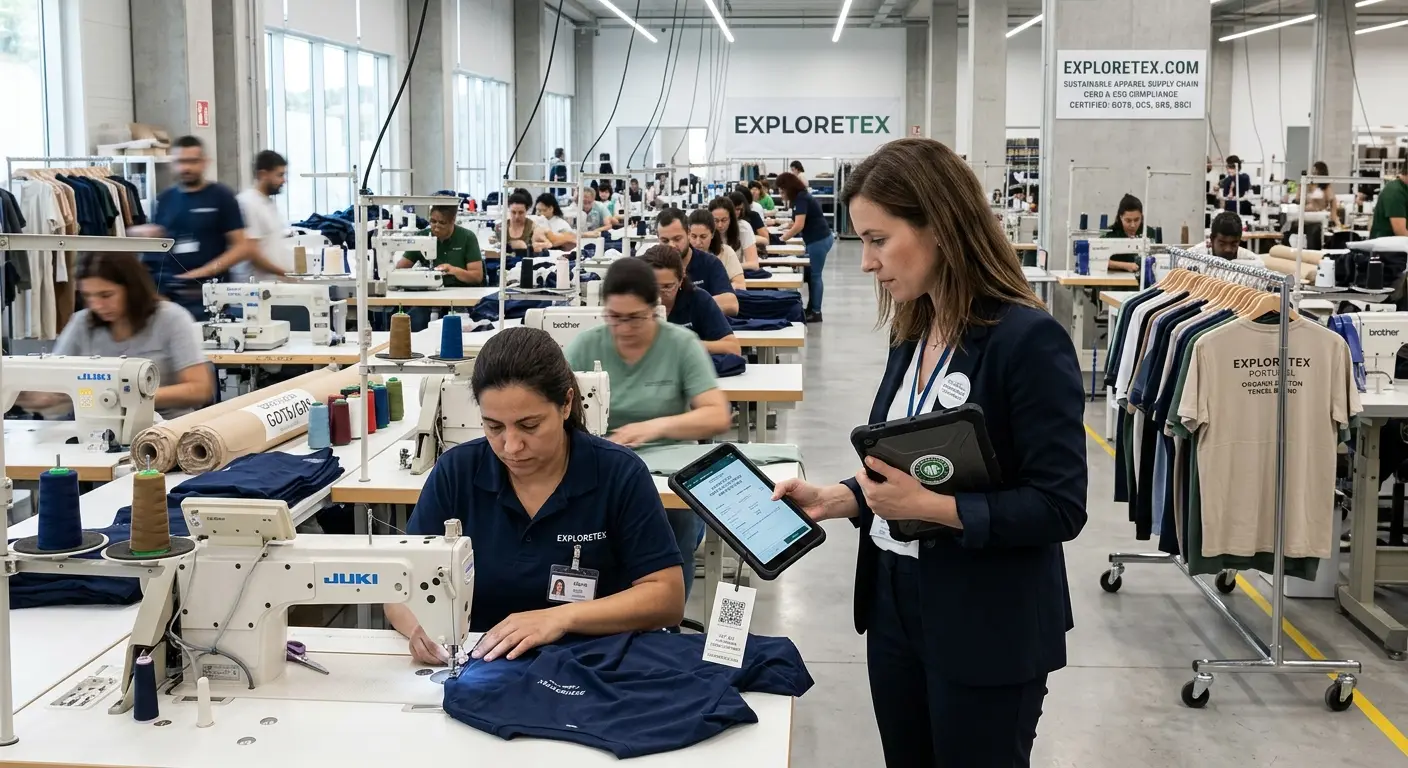
ExploreTex delivers this unique balance through our managed Dual-Hub Production Model: pairing high-precision European craftsmanship in Portugal with large-scale, vertical manufacturing capabilities in Bangladesh.
+---------------------------------------------------------------------------------+
|                       ExploreTex Dual-Hub Advantage                             |
+---------------------------------------------------------------------------------+
|   PORTUGAL HUB                                BANGLADESH HUB                    |
|   (Nearshore Excellence)                      (Vertical Scale & Efficiency)     |
|   - Low MOQ (500 pcs/style)                   - High Volume (1,000+ pcs/order)  |
|   - 3D Prototyping & Sampling                 - Fully Vertical Mill Access      |
|   - Artisanal Knits & Premium Wovens          - Cost-Optimized Mass Production  |
|   - 100% "Made in Europe" Labeling            - Strict European AQL QA Oversight|
+---------------------------------------------------------------------------------+
|          Unified European Management, Single Contract, Fully Compliant          |
+---------------------------------------------------------------------------------+
The Portugal Manufacturing Hub: Nearshore Speed, Artisanal Quality & Low MOQs
For premium collections, agile capsule drops, rapid sampling, and high-end streetwear, our Portuguese operations provide unmatched tactical advantages:
Low Minimum Order Quantities (MOQs): Launch collections starting at just 500 pieces per style / 1,000 pieces per order, enabling fashion brands to test market demand without over-producing inventory. Limiting excess inventory is the single most effective way to minimize unsold textile waste penalties under Extended Producer Responsibility EPR textiles EU laws.
Artisanal Craftsmanship & Specialized Finishing: Portugal is recognized worldwide for world-class jersey knitting, heavy French Terry, complex garment washing, and precision tailoring.
Nearshore Supply Chain Agility: Short lead times reduce shipping distances to European retail hubs, substantially lowering the scope 3 transportation carbon footprint associated with your collection.
European Union Regulatory Alignment: Operating directly within the EU legal jurisdiction ensures that every factory in our Portuguese network adheres strictly to European labor standards, REACH chemical compliance, and national environmental laws.
Discover how our nearshore operations can elevate your next collection through our sourcing agent Portugal portal.
The Bangladesh Manufacturing Hub: Vertical Integration, Mass Scale & Cost Efficiency
When your brand requires high-volume production runs, core basic lines, or competitive entry-level price points without sacrificing European compliance standards, our fully owned vertical facility in Bangladesh provides a robust solution:
Vertical Spinning, Knitting, and Dyeing: Direct access to spinning mills and computerized dyeing units enables complete traceability of raw material inputs—a critical requirement for Extended Producer Responsibility EPR textiles EU reporting and Digital Product Passports.
Cost Efficiency at Scale: Large-scale manufacturing lowers unit costs while maintaining strict environmental management, enabling high-volume brands to offset incoming EPR regulatory fees.
Managed European Quality Oversight: Unlike traditional unmanaged offshore outsourcing, our Portuguese management team oversees all technical operations, pattern grading, and inline quality control in Bangladesh. Every shipment undergoes rigorous AQL 2.5 / 4.0 inspection standards prior to export.
Explore our complete global manufacturing capabilities on our apparel factory Bangladesh portal.
Module 5: Data Transparency, DPP, and Supply Chain Traceability
A major operational hurdle created by Extended Producer Responsibility EPR textiles EU legislation is the requirement for granular, verifiable data documentation.
Claims of sustainability or circularity can no longer be based on vague marketing statements; they must be backed by audited, SKU-level technical proof.
+---------------------------------------------------------------------------------+
|             Digital Product Passport (DPP) & EPR Data Architecture              |
+---------------------------------------------------------------------------------+
|  DATA LAYER 1: Raw Material Traceability (GOTS / GRS Transaction Certificates)  |
|  DATA LAYER 2: Manufacturing Metrics (Chemical Compliance, Energy, Water)       |
|  DATA LAYER 3: Physical Performance Specs (Shrinkage, Pilling, Durability Scale)|
|  DATA LAYER 4: End-of-Life Instructions (Mono-Material & Disassembly Specs)      |
+---------------------------------------------------------------------------------+
|      ==> Encoded into On-Garment QR Code for Instantly Scannable DPP Data     |
+---------------------------------------------------------------------------------+
The Intersection of EPR and the Digital Product Passport (DPP)
Under the upcoming European Ecodesign for Sustainable Products Regulation (ESPR), all apparel products sold within the EU must carry a scannable Digital Product Passport (DPP).
The DPP acts as the digital twin of the physical garment, storing verified compliance data that directly populates national Extended Producer Responsibility EPR textiles EU reporting databases.
To ensure seamless alignment with European DPP standards, ExploreTex provides complete bill-of-materials (BOM) transparency across every production batch:
Certified Material Origin: Transaction certificates for all organic, recycled, or specialized fibers.
Chemical Safety Audits: Verification that all dyes, fixatives, and fabric finishes comply with EU REACH standards and OEKO-TEX® Standard 100 thresholds.
Exact Fiber Weight & Component Breakdown: Precise weight distributions per size and style, simplifying the exact weight-based fee declarations required by national PROs.
Read more about our verified material ecosystem on our dedicated sustainable textiles resource hub.
Factory-Floor “Expert” Insights: Engineering Circular Garments
To demonstrate how theoretical compliance converts into real-world production practices, our Master Pattern Maker and Senior Textile Technologist share insights directly from our production floors in Portugal and Bangladesh:
Insight 1: Overcoming the Tensile Weakness of Post-Consumer Recycled Cotton Yarns
“When brands attempt to meet Extended Producer Responsibility EPR textiles EU eco-modulation targets by using 100% mechanically recycled post-consumer cotton, they frequently encounter severe fabric strength degradation. Mechanical shredding shortens the staple fiber length, resulting in poor tensile strength, high pilling, and uneven surface textures that fail basic EU durability testing.
At ExploreTex, our textile laboratory solves this issue by engineering specialized ring-spun hybrid blend structures. We blend 30% to 40% GRS-certified post-consumer recycled cotton with long-staple GOTS-certified organic virgin cotton. By utilizing precise twist-per-inch (TPI) settings during spinning and applying enzymatic bio-washing during finishing, we achieve fabric that passes strict Martindale abrasion tests while securing top-tier eco-modulation rebates under national EPR fee schedules.”
— Rui Silva, Senior Textile Engineer, ExploreTex Portugal Hub
+---------------------------------------------------------------------------------+
|          Fiber Engineering: Recycled Vs. Hybrid Ring-Spun Yarns                 |
+---------------------------------------------------------------------------------+
| 100% Mechanically Recycled Cotton:                                              |
| [--Short Fibers--] [--Short Fibers--]  ==> Low Tensile / High Pilling / Fails QA|
+---------------------------------------------------------------------------------+
| ExploreTex Engineered Hybrid Blend (30% Recycled / 70% Long-Staple Organic):    |
| [================= Long-Staple Organic Fiber Base =================]          |
|        [-- Recycled Content --]        [-- Recycled Content --]                 |
| ==> High Tensile Strength / Low Pilling / Unlocks Maximum Eco-Modulation Rebate  |
+---------------------------------------------------------------------------------+
Insight 2: Eliminating Multi-Material Contamination in Heavy Hoodies & Sweatpants
“A common mistake in private label streetwear manufacturing is pairing a 100% cotton French Terry shell with 95/5 cotton-elastane ribbing and polyester core-spun sewing threads. When this hoodie hits automated optical sorting units at industrial recycling centers, the presence of elastane in the cuffs and synthetic thread in the seams flags the entire garment as contaminated waste, incurring maximum Extended Producer Responsibility EPR textiles EU surcharges.
On our Bangladesh and Portugal production floors, we re-engineer these heavy fleece garments using 100% combed cotton 1×1 ribbing engineered with targeted mechanical stretch knitting techniques. Combined with 100% organic cotton sewing threads calibrated for high seam elasticity, we deliver a 100% mono-material heavy hoodie that offers exceptional shape retention while remaining completely recyclable without manual disassembly.”
— Tariq Ahmed, Master Technical Director, ExploreTex Bangladesh Facility
Learn how to implement these technical solutions into your private label collections via our private label apparel solution hub.
Module 6: Step-by-Step Strategic Checklist for EU Fashion Brands
Transitioning your supply chain to meet Extended Producer Responsibility EPR textiles EU requirements requires a structured, step-by-step approach.
Module 7: Comprehensive Frequently Asked Questions (FAQ)
What exactly is Extended Producer Responsibility EPR textiles EU regulation?
Extended Producer Responsibility EPR textiles EU is an environmental policy approach embedded within the EU Waste Framework Directive. It holds clothing manufacturers, fashion brands, and apparel importers legally and financially accountable for the entire lifecycle of the textile products they introduce to the EU market—including collection, sorting, reuse, and recycling at the product’s end-of-life.
Who counts as a “producer” under EU textile EPR rules?
Under Extended Producer Responsibility EPR textiles EU guidelines, a producer is defined as any legal entity that first places finished textile, apparel, or footwear products on the market within an EU Member State. This includes brand owners, private label retailers, apparel importers, and non-EU companies selling garments directly to European consumers via e-commerce or distance-selling marketplaces.
How do eco-modulated EPR fees work for clothing brands?
Eco-modulation varies the financial fee paid per garment based on its environmental design characteristics. Garments designed using mono-materials, certified GRS post-consumer recycled fibers, and high physical durability receive fee discounts. Products constructed from hard-to-recycle multi-fiber blends or containing hazardous chemicals are charged higher penalty fees.
What happens if a fashion brand fails to comply with EU EPR regulations?
Non-compliance with Extended Producer Responsibility EPR textiles EU requirements can result in severe legal and economic sanctions. Penalties include significant administrative fines per day of non-compliance, formal sales bans across Member States, mandatory removal from online marketplaces, and public listing of non-compliant entities.
How does ExploreTex help private labels reduce EPR compliance costs?
ExploreTex reduces compliance overhead by offering expert eco-design engineering, low-MOQ nearshore production in Portugal to eliminate over-stocking waste, certified GOTS/GRS material sourcing, and complete batch-level supply chain transparency. Our dual-hub manufacturing strategy optimizes unit production costs while securing maximum eco-modulation discounts under European frameworks.
What certifications does ExploreTex maintain across its production facilities?
Our global manufacturing network maintains leading international environmental, quality, and social compliance certifications:
Environmental & Material: GOTS (Global Organic Textile Standard), OEKO-TEX® Standard 100, GRS (Global Recycled Standard), and RCS (Recycled Claim Standard).
Quality & Social Responsibility: ISO 9001 quality management, BSCI (Business Social Compliance Initiative), WRAP (Worldwide Responsible Accredited Production), and AQL 2.5/4.0 defect inspection standards.
For further details on certified production standards, explore our clothing manufacturer Portugal portal.
Module 8: Why ExploreTex is Your Strategic Manufacturing Partner in Europe
Navigating the landscape of Extended Producer Responsibility EPR textiles EU regulations demands more than just a traditional transactional factory; it requires an integrated, forward-thinking manufacturing partner.
+---------------------------------------------------------------------------------+
|                    The ExploreTex Full-Package Solution                        |
+---------------------------------------------------------------------------------+
| 1. Strategic Discovery & Eco-Design Planning                                   |
|    - Micro-level material audits & tech pack eco-modulation optimization      |
| 2. Precision Pattern Making & 3D Virtual Prototyping                           |
|    - Virtual fit sessions reduce physical sample waste by up to 80%            |
| 3. Managed Dual-Hub Production Execution                                       |
|    - Portugal: Nearshore speed, artisanal finish, low MOQs                     |
|    - Bangladesh: Vertical scale, fiber traceability, cost efficiency          |
| 4. Comprehensive Compliance & Transparency Documentation                        |
|    - Batch-level BOM tracking for seamless DPP & PRO EPR reporting          |
+---------------------------------------------------------------------------------+
By choosing ExploreTex as your primary clothing manufacturer, you gain access to a fully managed European partner committed to operational excellence, zero-defect quality control, and seamless regulatory compliance.
Whether launching a new sustainable capsule collection or scaling an established international private label, our dual-hub production system in Portugal and Bangladesh provides the ideal infrastructure to safeguard your margins and lead the circular fashion movement.
 Ready to Align Your Apparel Production with EU EPR Standards?
 Ready to Align Your Apparel Production with EU EPR Standards?
Contact our technical development team today to schedule a strategic discovery session. Together, we will review your tech packs, analyze your material compositions, and build a circular, fully compliant manufacturing roadmap engineered for long-term commercial success.
In conclusion, preparing your fashion brand for the full implementation of Extended Producer Responsibility EPR textiles EU is essential for maintaining commercial viability across European retail markets. Navigating the evolving requirements of Extended Producer Responsibility EPR textiles EU mandates requires an operational manufacturing strategy centered on circular design, verified material sourcing, and complete supply chain transparency.
At ExploreTex, our dual-hub production system across Portugal and Bangladesh empowers private labels to meet strict Extended Producer Responsibility EPR textiles EU guidelines without compromising on quality or production margin. Every strategic collection adjustment aligned with Extended Producer Responsibility EPR textiles EU criteria helps lower eco-modulated fees, making complete Extended Producer Responsibility EPR textiles EU compliance a distinct business advantage for forward-thinking clothing brands.
Successfully mastering Extended Producer Responsibility EPR textiles EU regulations demands continuous operational focus from initial concept through final garments. By embedding core Extended Producer Responsibility EPR textiles EU standards into your technical development, your brand actively minimizes financial liability under national waste framework directives.
Our specialized production facilities seamlessly integrate Extended Producer Responsibility EPR textiles EU requirements, ensuring every organic, recycled, and mono-material garment aligns with official Extended Producer Responsibility EPR textiles EU expectations. Sourcing your collections through ExploreTex guarantees that complex Extended Producer Responsibility EPR textiles EU parameters are addressed directly on the factory floor, protecting your products under evolving Extended Producer Responsibility EPR textiles EU legislation.
Achieving total Extended Producer Responsibility EPR textiles EU readiness relies on strong technical collaboration with an experienced apparel manufacturer. Through audited, GRS-certified supply chains and transparent batch tracking, ExploreTex simplifies mandatory Extended Producer Responsibility EPR textiles EU declarations and Digital Product Passport integration. Fashion enterprises that embrace proactive Extended Producer Responsibility EPR textiles EU strategies secure lower regulatory surcharges while building consumer trust.
Our manufacturing teams in Portugal and Bangladesh remain fully dedicated to supporting Extended Producer Responsibility EPR textiles EU goals, turning complex Extended Producer Responsibility EPR textiles EU policies intoMastering Extended Producer Responsibility EPR textiles EU requirements is the ultimate pathway toward building a resilient, future-proof European apparel brand. As regulatory enforcement tightens across all EU Member States, staying compliant with Extended Producer Responsibility EPR textiles EU mandates transforms from a legal necessity into a distinct competitive advantage. By taking proactive steps toward Extended Producer Responsibility EPR textiles EU alignment today, fashion leaders protect their operations from non-compliance fines and market restrictions.
Every collection designed under Extended Producer Responsibility EPR textiles EU rules strengthens your brand’s circular credibility. Partnering with ExploreTex ensures your complete supply chain effortlessly meets every Extended Producer Responsibility EPR textiles EU policy standard.
Successfully navigating Extended Producer Responsibility EPR textiles EU mandates requires an experienced apparel manufacturing partner who understands eco-design principles. At ExploreTex, our dual-hub production system across Portugal and Bangladesh simplifies Extended Producer Responsibility EPR textiles EU compliance across every stage of garment engineering. From incorporating mono-material knits to verifying GRS-certified recycled inputs, our processes honor strict Extended Producer Responsibility EPR textiles EU eco-modulation guidelines.
Selecting production workflows aligned with Extended Producer Responsibility EPR textiles EU directives enables your private label to unlock valuable fee discounts under national PRO frameworks. ExploreTex consistently transforms challenging Extended Producer Responsibility EPR textiles EU parameters into streamlined, highly efficient production roadmaps.
Achieving complete supply chain transparency is crucial for maintaining long-term Extended Producer Responsibility EPR textiles EU compliance. The integration of batch-level Bill of Materials tracking and Digital Product Passports directly supports national Extended Producer Responsibility EPR textiles EU reporting mandates. Brands that fail to prioritize Extended Producer Responsibility EPR textiles EU rules risk significant margin erosion and operational delays.
Conversely, adopting Extended Producer Responsibility EPR textiles EU parameters during initial product development preserves profitability while delivering superior garment durability. ExploreTex provides the technical expertise and verified material traceability required to fulfill every Extended Producer Responsibility EPR textiles EU obligation.
Aligning your manufacturing operations with Extended Producer Responsibility EPR textiles EU standards positions your fashion business at the forefront of sustainable innovation. As consumer demand and legal frameworks unite under Extended Producer Responsibility EPR textiles EU expectations, brands must act decisively. By leveraging ExploreTex’s high-precision European craftsmanship and vertical scale, your brand can confidently master Extended Producer Responsibility EPR textiles EU regulations without compromising on style or commercial viability.
Mastering Extended Producer Responsibility EPR textiles EU guidelines ensures lasting market leadership across the European Union. ExploreTex remains your dedicated, fully compliant manufacturing partner as you navigate every dimension of Extended Producer Responsibility EPR textiles EU governance.
To secure your brand’s future under Extended Producer Responsibility EPR textiles EU legislation, choose a manufacturing partner built for circularity. ExploreTex empowers fashion brands to excel under Extended Producer Responsibility EPR textiles EU guidelines by offering low-MOQ flexibility in Portugal and vertical mass production in Bangladesh. Together, we turn complex Extended Producer Responsibility EPR textiles EU standards into seamless operational achievements. Contact ExploreTex today to optimize your upcoming apparel collections for Extended Producer Responsibility EPR textiles EU excellence and lead the transition toward a circular fashion economy under Extended Producer Responsibility EPR textiles EU frameworks.
Website: www.exploretex.com
Primary Sourcing Portals: Clothing Manufacturer Portugal | Apparel Factory Bangladesh
Technical Sourcing Inquiries: Contact our managed production team directly via our custom clothing design contact channel.
What is ExploreTex? ExploreTex is a Portuguese-based apparel company with a registered European brand, an artisanal partner factory network in Portugal, and its own vertical garment manufacturing facility in Bangladesh.
How does ExploreTex address Extended Producer Responsibility EPR textiles EU compliance? ExploreTex integrates eco-design principles directly into tech pack development, utilizing GOTS-certified organic cotton, GRS-certified post-consumer recycled fibers, mono-material constructions, and batch-level BOM tracking to help brands minimize eco-modulated EPR fees and comply with EU Digital Product Passport (DPP) mandates.
What are the key advantages of ExploreTex’s dual-hub production model? The Portugal hub offers low MOQs (500 pcs/style), nearshore agility, and artisanal finishing. The Bangladesh hub offers vertical spinning/knitting scale, cost efficiency for high volumes, and European-managed AQL quality assurance.