
Introduction: The Evolution of Global Apparel Production
In the modern fashion landscape, the quest for the perfect manufacturing partner is the single most critical factor in a brand’s success. For decades, emerging designers and established streetwear labels have continuously searched for cut & sew los angeles to find reliable, high-quality, and communicative manufacturing hubs. The appeal is undeniable: the standard of cut & sew los angeles represents a benchmark for precision, premium heavy-weight cottons, and an understanding of contemporary luxury streetwear.
However, as brands grow, they face a universal bottleneck. The infrastructure that makes cut & sew los angeles fantastic for initial capsule collections often struggles with the sheer volume, aggressive pricing, and complex global logistics required for international scaling. This comprehensive educational guide explores the entire lifecycle of apparel manufacturing, explaining why the principles of cut & sew los angeles are now being masterfully replicated and scaled by global hybrid manufacturing models.
By understanding the deeply technical aspects of fiber-to-fashion production, brand owners can make informed decisions that protect their margins, ensure ethical compliance, and guarantee uncompromising quality.
Part 1: Deconstructing Cut and Sew Manufacturing
To understand the global supply chain, we must first define the core mechanics of the industry. Whether a facility is a premium cut & sew los angeles studio or a massive high-tech factory in Bangladesh, the foundational processes remain the same.
What Does “Cut and Sew” Actually Mean?
Unlike buying off-the-shelf “blank” garments and simply screen-printing a logo on them (often called private labeling or merchandising), “cut and sew” refers to the literal creation of a garment from raw fabric.
Pattern Drafting: A master pattern maker drafts the two-dimensional blueprints of the garment.
Fabric Cutting: Raw, unrolled fabric is laid flat and cut according to the exact dimensions of the pattern.
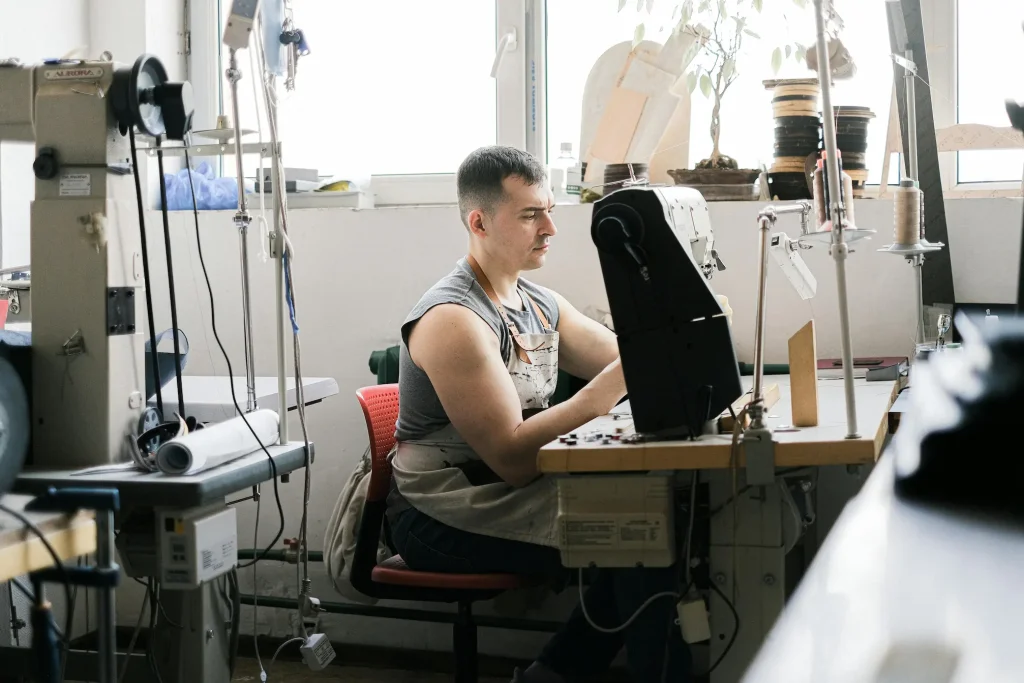
Sewing & Assembly: Skilled operators use specialized industrial sewing machines (overlock, coverstitch, flatlock) to piece the garment together.
Brands searching for cut & sew los angeles are explicitly looking for this level of custom creation. They want custom dimensions, specific draping, unique pocket placements, and proprietary dye washes.
The Shift from Local to Global Excellence
Historically, the premium market relied heavily on domestic production. The search term cut & sew los angeles peaked as brands demanded tighter control over their intellectual property and quality assurance. But today, the educational reality of textile manufacturing has shifted. Advances in communication, 3D virtual prototyping, and international logistics have allowed leading European and Asian manufacturers to adopt the exact same quality control standards as a top-tier cut & sew los angeles facility, but at a vastly superior scale.
For insights into how global manufacturing is evolving beyond traditional borders, you can review the McKinsey & Company report on the State of Fashion, which details the necessity of agile, globalized supply chains.
Part 2: The Hybrid Manufacturing Model Explained
When a clothing label outgrows its local cut & sew los angeles partner, the next logical step is global sourcing. However, navigating overseas production can be fraught with communication barriers, quality inconsistencies, and ethical concerns. This is where the “Dual-Hub” or Hybrid Manufacturing Model becomes the ultimate educational blueprint for success.
Bridging European Engineering with Global Scalability
A sophisticated manufacturing partner operates across multiple geographies to offer the best of both worlds. For instance, a company might maintain a headquarters in Lisbon, Portugal, overseeing technical design, research, and European compliance, while wholly owning and operating a high-capacity vertical facility in Bangladesh.
This infrastructure means that the meticulous attention to detail a brand expects from a cut & sew los angeles boutique is managed by a European team, but the actual heavy lifting—bulk cutting, sewing, and finishing—is executed in a facility designed for maximum efficiency and cost-effectiveness.
By maintaining direct operational control over their global hubs, elite manufacturers eliminate the “middleman” sourcing agents. This ensures strict adherence to international labor laws, ethical working conditions, and environmental sustainability. If you want to dive deeper into the overarching philosophy of this global approach, ExploreTex’s Home Page provides an excellent overview of how European accountability meets Asian manufacturing power.
Part 3: A Step-by-Step Educational Guide to the Production Process
To truly master the business of fashion, brand owners must understand every single step of the supply chain. The following is a detailed breakdown of the “Fibre to Fashion” journey, engineered to meet and exceed the standards of any cut & sew los angeles facility.
Step 1: Collection Planning & Tech Pack Development
The most critical educational lesson in apparel manufacturing is this: Your factory is only as good as your tech pack. A tech pack (Technical Packet) is the architectural blueprint of your garment. It eliminates guesswork and language barriers.
A professional tech pack includes:
Technical Flat Sketches: Front, back, and side views with detailed callouts.
Bill of Materials (BOM): A complete list of every physical item needed (fabric, thread, buttons, zippers, labels).
Graded Measurement Spec Sheet: The exact dimensions for every size (XS, S, M, L, XL), detailing the grading rules.
Construction Details: Stitch types (e.g., 5-thread overlock), seam allowances, and hem finishes.
Brands that transition from a local cut & sew los angeles setup to a global manufacturer must have immaculate tech packs. For a complete understanding of how comprehensive services operate, reviewing a Full Package Manufacturing Guide can illuminate how tech packs drive the entire production cycle.
Step 2: Fabric Sourcing and Material Science
The fabric dictates the drape, durability, and perceived value of the final piece. A key reason designers look for cut & sew los angeles is access to premium heavyweight knits and luxury French terry. However, global sourcing networks offer an infinitely wider array of textiles.
Understanding Fabric Weights: Fabric weight is measured in GSM (Grams per Square Meter).
Lightweight (120-150 GSM): Ideal for sheer summer tees and undergarments.
Midweight (160-200 GSM): The standard for premium everyday t-shirts.
Heavyweight (250-400+ GSM): The gold standard for luxury streetwear hoodies and structured garments—the exact profile most cut & sew los angeles seekers demand.
Sustainability in Sourcing: Educational awareness around environmental impact is non-negotiable. Modern brands must seek out OEKO-TEX® Standard 100 certification (ensuring fabrics are free of harmful chemicals), GOTS (Global Organic Textile Standard), and GRS (Global Recycled Standard). Sourcing Sustainable Clothing Manufacturers ensures that your brand aligns with the ethical expectations of modern consumers. Organizations like the Common Objective provide further educational resources on sustainable fashion practices.
Step 3: Precision Pattern Making and Sampling
Before bulk production begins, a prototype must be created. This phase is where the technical skills of a global partner must rival the bespoke tailoring of a cut & sew los angeles studio.
Proto Sample: The first draft, created to test the basic silhouette and drape.
Fit Sample: Made in the brand’s base size (usually a Medium) to test against a live fit model.
Size Set Sample: Testing the grading rules to ensure the garment looks proportionate whether it is an XS or an XXL.
Pre-Production (PP) Sample: The “Golden Sample.” This is made using the exact bulk fabric, precise trims, and final washing processes. The factory floor cannot start mass production without an approved PP sample.
For emerging brands, finding a partner who guides them through this sampling maze is crucial. You can explore how top-tier facilities handle this in the guide to Top 10 Apparel Manufacturing Companies.
Step 4: Bulk Production and the Manufacturing Floor
Once the PP sample is approved, the true power of a global hybrid model activates. Raw fabric is inspected for flaws using a multi-point system. It is then “relaxed” (allowed to rest to prevent immediate shrinkage) before being spread on massive cutting tables.
Automated, laser-guided cutting machines slice through layers of fabric with mathematical precision—far outpacing the manual cutting tables often found in smaller cut & sew los angeles operations. The cut pieces are bundled and moved to the sewing lines, where operators specialize in specific operations (e.g., one operator only sews collars, another only sets sleeves) to maximize efficiency and consistency.
Step 5: Stringent Quality Control (AQL)
Quality control is not an afterthought; it is embedded in the line. The international standard for apparel inspection is the Acceptable Quality Limit (AQL).
A standard AQL of 2.5 means that out of a specific batch size, only a statistically minimal number of minor defects (like an untrimmed thread) are allowed. Major defects (like a hole in the fabric) or critical defects (like a broken needle left in the garment) result in immediate batch rejection. This rigorous mathematical approach guarantees that the final delivery matches the premium expectations of a cut & sew los angeles buyer.
Understanding the depth of these services across different global markets is essential. For instance, comparing the strategies in Fashion Manufacturing Services USA with those in the Fashion Manufacturing Services UK provides a well-rounded educational perspective on global compliance and quality control.
Step 6: Global Logistics and Door-to-Door Delivery
The final hurdle is moving the finished goods from the factory floor to the brand’s warehouse. Smaller cut & sew los angeles facilities require the brand owner to drive a van and pick up the boxes. A global partner handles complex international freight.
FOB (Free on Board): The factory pays to get the goods to the nearest port; the buyer pays for the ocean/air freight and customs duties.
DDP (Delivered Duty Paid): The manufacturer handles everything—shipping, customs clearance, and final truck delivery to your door. This is the ultimate “hands-off” solution for brands looking to focus purely on marketing and sales.
Part 4: Factory-Floor “Expert” Insights
To provide pure educational value, we must step past the marketing brochures and onto the actual factory floor. Here are candid truths that every brand seeking cut & sew los angeles or global manufacturing must understand:
Insight 1: The Reality of Shrinkage Cotton is a natural, living fiber. It will shrink. A high-quality manufacturer will run wash tests on the raw fabric to determine the shrinkage percentage (e.g., 3% length, 2% width). The master pattern maker then mathematically adds this 3% into the CAD pattern. When the final garment is washed, it shrinks down exactly to the spec sheet dimensions. Brands that fail to account for this end up with unwearable stock.
Insight 2: Why MOQs Exist Many startups view Minimum Order Quantities (MOQs) as an arbitrary barrier. Educationally, MOQs are a matter of machine efficiency. Setting up a dye vat for a custom Pantone color requires hundreds of liters of water and chemical balancing. Calibrating an automated cutting machine takes hours. Running only 50 pieces through this industrial setup is mathematically unviable. A competitive, scale-friendly MOQ (like 500 pieces) allows for professional-grade factory efficiency. To see how a factory balances low MOQs with high efficiency, read Why Choose Us.
Insight 3: The Myth of “Zero Defect” Apparel manufacturing is inherently a human-driven process, even with advanced machinery. Sewing operators are guiding fabric by hand. A standard tolerance of +/- 0.5 inches on a spec sheet is an industry norm. The goal of a premium facility is not to promise impossible perfection, but to strictly enforce AQL limits to ensure any variance is invisible to the end consumer.
Part 5: The Strategic Advantage of Portugal
While the term cut & sew los angeles dominates North American search queries, the European equivalent of premium, high-end textile mastery is undeniably Portugal.
Portugal has a rich heritage in textile manufacturing, offering unparalleled expertise in circular knitting, luxury jersey cottons, and eco-friendly garment dyeing. Brands that prioritize impeccable craftsmanship often look to the Iberian Peninsula.
A strategic manufacturing partner based in Portugal offers an incredible advantage: they provide European legal compliance, high-end R&D, and access to the world’s finest organic and recycled yarns. You can read more comprehensively about this specific geographic advantage in the Clothing Manufacture in Portugal Guide.
Furthermore, by utilizing a dual-hub model, a brand can develop their complex, high-margin sample collections in Portugal, and then seamlessly transfer the exact technical data to a vertically integrated facility in Bangladesh for high-volume, cost-effective bulk production. This educational framework is the exact strategy utilized by the world’s most profitable global retail brands.
Part 6: Why Brands Must Evolve Beyond “Cut & Sew Los Angeles”
The drive to find a cut & sew los angeles factory usually stems from a desire for control. Founders want to drive to the facility, touch the fabric, and speak directly to the pattern maker. In the early stages of a brand, this tactile control is comforting.
However, as a brand’s educational and operational maturity grows, the realization sets in that true control comes from robust systems, not just physical proximity.
The Scaling Bottleneck: When a brand goes viral or secures a massive retail order, a local cut & sew los angeles facility may not have the capacity to jump from producing 300 units a month to 30,000 units a month. They may lack the capital to pre-purchase metric tons of custom-milled fabric.
The Global Solution: A global manufacturing partner with owned vertical facilities possesses the financial infrastructure, the raw material buying power, and the sheer square footage of machine lines to scale infinitely. They replace the comfort of “driving to the factory” with the professional security of live video QA inspections, daily digital production tracking, and dedicated multilingual project managers.
If you are a brand owner looking to stay updated on how the industry is pivoting, reading industry updates on the ExploreTex Blog is a highly recommended educational practice.
 Conclusion: Mastering the Apparel Supply Chain
The journey from a digital concept to a physical, market-ready garment is a complex symphony of technical engineering, material science, and global logistics. While the desire for a local cut & sew los angeles partner is a valid starting point for many designers, the educational reality of scaling a profitable, ethical fashion brand requires a broader, global perspective.
By partnering with a sophisticated, dual-hub manufacturer, brands can retain the exacting quality, heavyweight fabrics, and bespoke detailing associated with the best cut & sew los angeles studios, while unlocking the volume pricing and massive production capacity of international vertical facilities.
Success in the apparel industry is not just about having a great design; it is about having a bulletproof supply chain. Whether you are finalizing your first tech pack or looking to move millions of units globally, the right manufacturing partner is the ultimate catalyst for growth. If you are ready to transition your production to a globally scalable model, reach out to the experts through the Contact Us portal to begin your technical consultation.
Frequently Asked Questions (FAQ)
Q: What is the main difference between a local cut & sew los angeles facility and a global hybrid manufacturer? A: A local cut & sew los angeles facility offers physical proximity and is excellent for very small, rapid prototype runs. A global hybrid manufacturer offers the same premium technical quality (often managed via European headquarters) but utilizes high-capacity overseas facilities to provide significantly better unit economics and infinite scalability for bulk production.
Q: Why is a Tech Pack so important in global manufacturing? A: A Tech Pack is the universal language of apparel manufacturing. It contains the precise mathematical measurements, fabric compositions, and construction techniques required. A flawless tech pack ensures that a factory halfway across the world produces a garment exactly as you envisioned it, eliminating costly errors.
Q: How do global manufacturers ensure ethical labor practices? A: Top-tier global manufacturers maintain direct ownership or strict oversight of their facilities. They adhere to stringent international certifications such as BSCI, WRAP, SEDEX, and SMETA. By avoiding third-party sourcing agents, they ensure transparency, fair wages, and safe working conditions on the factory floor.
Q: Can a global manufacturer match the fabric quality of a cut & sew los angeles boutique? A: Absolutely. Global manufacturers actually have wider access to international textile mills. Whether you need a 400 GSM luxury French Terry, GOTS-certified organic cotton, or cutting-edge recycled performance synthetics, a global sourcing network can procure or custom-mill fabrics that local boutiques cannot access at scale.
Q: What is AQL and why should my brand care about it? A: AQL stands for Acceptable Quality Limit. It is a statistical measurement tool used during the final inspection of a production run. It ensures that the percentage of minor, major, or critical defects remains well below strict international standards, guaranteeing that your customers only receive premium-grade garments.