
The Ultimate Guide to Partnering with a Low MOQ Sustainable Clothing Manufacturer
The global fashion landscape is undergoing a monumental transformation. Today, scaling a brand requires a delicate balance between cost-efficiency, impeccable quality, and an unyielding commitment to environmental responsibility. For emerging labels, independent designers, and established fashion houses alike, the traditional barrier to entry—massive minimum order quantities (MOQs)—has long stifled innovation. The solution to this modern challenge is the strategic partnership with a low MOQ sustainable clothing manufacturer.
By choosing a reliable low MOQ sustainable clothing manufacturer, brands can dramatically reduce inventory risk, minimize textile waste, and confidently market their collections to an increasingly eco-conscious consumer base. Finding the right low MOQ sustainable clothing manufacturer is not merely a logistical decision; it is a critical brand-defining strategy. Throughout this comprehensive, purely educational guide, we will examine the intricate mechanics of global apparel production, deep-dive into advanced textile sciences, and reveal how leveraging a hybrid European-Asian production model is setting new benchmarks for the industry.
The global apparel industry is at a critical crossroads. For decades, the barrier to entry for new fashion labels was defined by massive minimum order quantities (MOQs) that forced brands into high-risk inventory cycles. Today, the rise of the low MOQ sustainable clothing manufacturer has fundamentally changed the blueprint for success. By merging artisanal quality with scalable ethical production, these manufacturers empower brands to launch collection-driven capsules without the environmental or financial burden of overproduction.
To thrive in the 2026 fashion landscape, understanding the mechanics of a low MOQ sustainable clothing manufacturer is essential. This guide explores the intricate “Fibre-to-Fashion” journey, focusing on how a Portuguese-headquartered partner like ExploreTex utilizes a unique dual-hub system—combining European R&D with high-capacity vertical facilities in Bangladesh—to offer a truly global solution for the modern designer.
Chapter 1: The Evolution of the Fashion Supply Chain
Historically, the garment industry was divided into two rigid extremes. On one end, premium European ateliers offered incredible craftsmanship but at exorbitant prices and painfully slow production timelines. On the other end, massive overseas conglomerates provided cheap, high-volume production, but demanded astronomical MOQs that locked out independent creators and often ignored environmental accountability. The market desperately needed a hybrid approach—a genuine low MOQ sustainable clothing manufacturer capable of bridging the gap between artisanal quality and industrial scalability.
The rise of the low MOQ sustainable clothing manufacturer stems from a critical shift in consumer psychology. Modern buyers demand transparency. They want to know who made their clothes, what materials were used, and the carbon footprint of the production cycle. A premier low MOQ clothing manufacturer answers this demand by offering full traceability, from fiber sourcing to final fashion execution.
Furthermore, the inventory crises of recent years have proven that overproduction is a catastrophic business model. Storing thousands of unsold units leads to deadstock, which is financially crippling and environmentally devastating. Working with a low MOQ sustainable clothing manufacturer allows brands to implement “lean inventory” strategies, testing new styles with their audience before committing to massive bulk runs. In essence, a low MOQ clothing manufacturer is the financial safeguard that modern brands need to survive and thrive.
Defining the Value of a Low MOQ Sustainable Clothing Manufacturer
What does it actually mean to be a low MOQ sustainable clothing manufacturer? In a world of “greenwashing,” the term is often misused. A genuine partner in this space must balance two distinct, often conflicting, operational goals: the flexibility of small-batch production and the rigid discipline of sustainable material science.
The Inventory Risk Mitigation
Traditional manufacturing often requires 1,000+ units per style. For a startup or a brand testing a new niche, this is a recipe for deadstock. A low MOQ sustainable clothing manufacturer typically offers entry points at 100 pieces, or even 50 pieces for specialized luxury lines. This “lean manufacturing” approach ensures that capital is not tied up in unsold boxes, but rather in the next design iteration.
The Ethical Imperative
Sustainability is not a feature; it is the foundation. A top-tier low MOQ sustainable clothing manufacturer ensures every thread is traceable. This involves sourcing from GOTS-certified mills and ensuring that factories comply with OEKO-TEX Standard 100 to guarantee the absence of harmful chemicals. By prioritizing these certifications, the manufacturer protects both the end consumer and the workers on the factory floor.
Chapter 2: Defining the Modern Low MOQ Sustainable Clothing Manufacturer
What exactly constitutes a top-tier low MOQ sustainable clothing manufacturer? The definition goes far beyond simply accepting small orders. A true low MOQ clothing manufacturer integrates complex engineering, ethical labor standards, and advanced material sciences into a seamless Full Package Production (FPP) service.
The “Low MOQ” Advantage
For a low MOQ sustainable clothing manufacturer, low minimums typically range from 50 to 500 pieces per style. This flexibility allows designers to launch comprehensive, multi-style collections without exhausting their capital. A competent low MOQ clothing manufacturer uses intelligent supply chain management—such as shared fabric utilization and digital pattern grading—to absorb the setup costs that usually make small runs unprofitable.
The “Sustainable” Imperative
When a facility claims to be a low MOQ sustainable clothing manufacturer, that claim must be backed by rigorous global certifications. A leading low MOQ sustainable clothing manufacturer operates within the frameworks set by organizations like the Global Organic Textile Standard (GOTS) and the Cascale (formerly Sustainable Apparel Coalition). These standards ensure that a low MOQ clothing manufacturer uses organic fibers, non-toxic Textilcolor AG compliant dyes, and water-recycling systems.
To understand how these concepts unify, we can examine the operations of ExploreTex Unipessoal Lda, a registered Portuguese brand that perfectly exemplifies the capabilities of a modern low MOQ sustainable clothing manufacturer. By offering flexible minimums without sacrificing ecological integrity, ExploreTex stands as a benchmark for what a low MOQ clothing manufacturer should be.
Chapter 3: The Portugal-Bangladesh Dual-Hub Production Model
One of the most profound innovations in the realm of the low MOQ sustainable clothing manufacturer is the “Dual-Hub” production model. This system harmonizes the sophisticated management and luxury heritage of European textiles with the unmatched scalability and vertical integration of Asian manufacturing.
The European Headquarters
In this model, the low MOQ sustainable clothing manufacturer maintains its operational, legal, and design headquarters in a fashion-forward European hub, such as Lisbon, Portugal. Why is this critical for a low MOQ clothing manufacturer?
Legal Security: Brands dealing with a low MOQ sustainable clothing manufacturer based in the EU benefit from EU-binding contracts, intellectual property protection, and standardized communication.
Technical Design: The R&D phase—encompassing tech pack development, 3D virtual prototyping, and luxury material sourcing—is overseen by master pattern makers in Portugal. For brands seeking clothing manufacture in Portugal, this ensures the garment’s silhouette and drape meet the highest international standards.
The Vertical Manufacturing Facility
Simultaneously, the bulk of the production is carried out in state-of-the-art facilities in South Asia. A low MOQ sustainable clothing manufacturer utilizing apparel manufacturers Bangladesh taps into a deeply established textile infrastructure. Bangladesh is the second-largest apparel exporter globally, possessing incredible resources for spinning, knitting, dyeing, and finishing.
By operating its own vertical facility, a low MOQ sustainable clothing manufacturer can directly oversee the “Wet Processing” and cutting stages, bypassing middlemen. This is how a low MOQ clothing manufacturer can offer competitive pricing on small batches. When you partner with a Bangladesh clothing supplier that operates under strict European management, you achieve an unparalleled balance of cost, quality, and ethics.
Full Package Production (FPP) vs. CMT
Navigating the production floor requires choosing between two service models. A professional low MOQ sustainable clothing manufacturer will almost always recommend FPP for modern brands.
CMT (Cut, Make, Trim): The brand provides the fabric and trims; the factory just sews. This is often difficult for small brands to manage across borders.
FPP (Full Package Production): The manufacturer handles everything—from fiber sourcing and pattern making to final logistics.
By choosing garments manufacturing services that cover the “Full Package,” brands can focus on marketing while their low MOQ sustainable clothing manufacturer manages the complex supply chain. This includes everything from custom brand assets like eco-friendly hangtags to the mathematical precision of size grading.
Chapter 4: Deep Dive into Sustainable Fabrics and Raw Material Sourcing
A low MOQ sustainable clothing manufacturer is only as good as the raw materials it procures. The transition from conventional to sustainable textiles requires a deep understanding of fiber chemistry and agricultural supply chains.
Organic and Recycled Fibers
A reputable low MOQ sustainable clothing manufacturer prioritizes fibers cultivated without synthetic pesticides or genetically modified seeds. GOTS-certified organic cotton uses up to 91% less water than conventional cotton. Additionally, a progressive low MOQ clothing manufacturer will source Global Recycled Standard (GRS) certified polyesters, transforming post-consumer plastic waste into high-performance activewear.
Access to Luxury Mills
Premium brands require premium textures. A premier low MOQ sustainable clothing manufacturer maintains direct relationships with the finest textile mills globally. For example, by connecting with top luxury textile suppliers in Portugal, a low MOQ sustainable clothing manufacturer can secure bespoke cashmere blends, heavyweight French terry, and ultra-soft linens. Because a low MOQ clothing manufacturer consolidates purchasing power across multiple clients, it can meet the high MOQs demanded by luxury mills, subsequently passing the fabric down to individual brands at low minimums.
Zero-Harm Dyeing and Wet Processing
The dyeing phase is traditionally the most toxic segment of clothing production. A responsible low MOQ sustainable clothing manufacturer completely overhauls this process. By utilizing closed-loop water systems and OEKO-TEX certified low-impact dyes, a low MOQ sustainable clothing manufacturer ensures no harmful chemicals leach into the local water supply.
Chapter 5: Full Package Production (FPP) Walkthrough
Navigating the transition from a conceptual sketch to a market-ready garment requires precision. A world-class low MOQ sustainable clothing manufacturer offers a “Fibre to Fashion” solution known as Full Package Production (FPP). Here is the meticulous step-by-step process executed by a leading low MOQ sustainable clothing manufacturer:
1. Strategic Discovery and Tech Pack Development Before a single piece of fabric is cut, a low MOQ sustainable clothing manufacturer works with the brand to develop a comprehensive Tech Pack. This blueprint details every measurement, tolerance limit, stitch type, and hardware placement. A diligent low MOQ sustainable clothing manufacturer relies on this document to eliminate assumptions and prevent costly errors.
2. 3D Virtual Prototyping To minimize physical waste, an advanced low MOQ sustainable clothing manufacturer employs digital twin engineering. High-fidelity 3D software simulates fabric drape, tension, and fit on a digital avatar. This allows the low MOQ sustainable clothing manufacturer and the client to instantly iterate on colorways and proportions without wasting a single yard of fabric.
3. Physical Sampling and Pre-Production Once the digital model is approved, the low MOQ sustainable clothing manufacturer creates a physical pre-production sample. The brand can touch and feel the garment, checking shrinkage, colorfastness, and hand-feel. A trusted low MOQ sustainable clothing manufacturer will mandate that bulk production only begins after the brand has signed off on the golden sample. You can explore this comprehensive ExploreTex production process to see how a top-tier low MOQ sustainable clothing manufacturer manages these vital steps.
4. Bulk Production and Precision Cutting During bulk production, a low MOQ sustainable clothing manufacturer must maximize fabric utilization. Through AI-driven CAD cutting, a low MOQ sustainable clothing manufacturer calculates the most efficient nesting of pattern pieces, drastically reducing textile off-cuts. These off-cuts are then donated or recycled, ensuring the low MOQ sustainable clothing manufacturer maintains a zero-waste philosophy.
5. Finishing, Labeling, and Global Logistics The final stage for a low MOQ sustainable clothing manufacturer involves intricate detailing. This includes custom embroidery, sustainable hang tags, and biodegradable polybags. Finally, the low MOQ sustainable clothing manufacturer manages complex export documentation, utilizing efficient DDP (Delivered Duty Paid) or FOB shipping routes to ensure your inventory arrives seamlessly.
Material Science: The Backbone of Sustainable Apparel
A low MOQ sustainable clothing manufacturer must be an expert in textiles. The transition toward a circular economy relies on the materials used in the initial “cut and sew” phase.
Organic Cotton and Its Superiority
Organic cotton is the gold standard for sustainable basics. Unlike conventional cotton, it is grown without synthetic pesticides. When working with private label organic cotton clothing, the focus is on GSM (Grams per Square Meter). Whether it’s a lightweight 160 GSM tee or a heavy 450 GSM brush-back fleece hoodie, a low MOQ sustainable clothing manufacturer ensures the hand-feel is premium while the impact is minimal.
Recycled Synthetics and the Circular Economy
Beyond cotton, a low MOQ sustainable clothing manufacturer explores GRS (Global Recycled Standard) certified polyesters and regenerated nylons. These materials are essential for activewear and outerwear, helping divert plastic waste from landfills and oceans. As noted by the Ellen MacArthur Foundation, moving toward circular fashion requires manufacturers to design for durability and recyclability from the start.
Chapter 6: Factory-Floor “Expert” Insights: The Anatomy of Premium Production
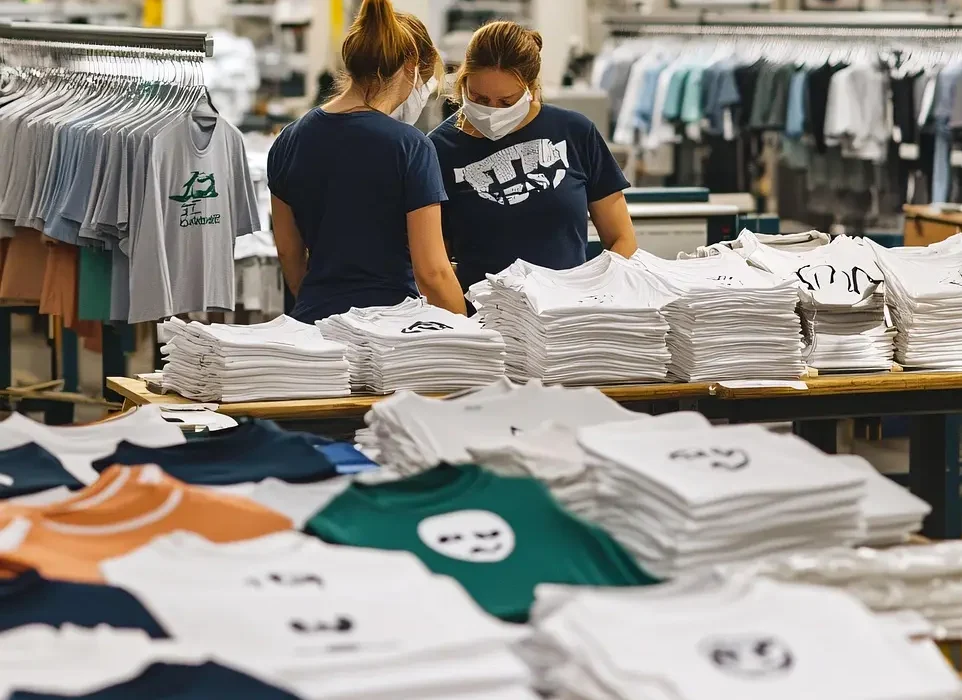
To truly understand what separates a generic supplier from a genuine low MOQ sustainable clothing manufacturer, one must look closely at the factory floor. The operational discipline of a low MOQ sustainable clothing manufacturer is governed by strict quality control metrics.
AQL 2.5 Quality Assurance: A premier low MOQ sustainable clothing manufacturer operates on the internationally recognized Acceptable Quality Limit (AQL) of 2.5. This means the low MOQ sustainable clothing manufacturer conducts rigorous pre-production, mid-line, and final inspections, checking for stitch density, seam strength, and dimensional stability.
Fabric Relaxation: High-quality garments require time. A skilled low MOQ sustainable clothing manufacturer will never cut fabric immediately upon its arrival at the facility. Instead, the low MOQ sustainable clothing manufacturer allows the fabric rolls to relax for 24 to 48 hours to release tension. This prevents the garment from warping or shrinking after the consumer washes it.
The “Human Thread” – Ethical Compliance: The backbone of any low MOQ sustainable clothing manufacturer is its workforce. A true low MOQ sustainable clothing manufacturer provides living wages, natural lighting, generous break areas, and 100% operational transparency. By maintaining a zero-debt status and owning its facilities outright, a low MOQ sustainable clothing manufacturer avoids the financial pressures that often lead to compromised worker safety in standard factories. To discover more about these ethical commitments, you can read why choose us to see how a dedicated low MOQ sustainable clothing manufacturer prioritizes human capital.
Chapter 7: How to Scale Your Fashion Brand Ethically
Selecting a low MOQ sustainable clothing manufacturer is a strategic investment in your brand’s future. By aligning with a low MOQ sustainable clothing manufacturer, you unlock the ability to scale fluidly.
For a startup, a low MOQ sustainable clothing manufacturer allows you to test the market with capsule collections. If a specific hoodie or t-shirt design gains traction, your low MOQ sustainable clothing manufacturer is already equipped with your tech packs and graded patterns. Because the low MOQ sustainable clothing manufacturer operates highly efficient vertical facilities, they can seamlessly scale your next order from 50 pieces to 5,000 pieces without sacrificing quality or extending lead times.
Communication is the linchpin of this relationship. A professional low MOQ sustainable clothing manufacturer provides a dedicated, single point of contact. This project manager guides you through costing, budgeting, and timeline tracking. If you are ready to begin this journey, reaching out to your low MOQ sustainable clothing manufacturer through their official contact us page is the vital first step.
The right low MOQ sustainable clothing manufacturer is not just a vendor; they are your operational partner. They empower your creativity by absorbing the complexities of supply chain management, allowing you to focus entirely on marketing and brand growth. By choosing a low MOQ sustainable clothing manufacturer, you ensure that your clothing line is resilient, profitable, and ethically sound.
Factory-Floor “Expert” Insights: Precision in Production
To understand why ExploreTex is a leading low MOQ sustainable clothing manufacturer, one must look at the technical protocols practiced on the factory floor. These insights separate “fast fashion” from “quality fashion.”
1. 3D Virtual Prototyping
The old way of sampling involved shipping physical prototypes back and forth, wasting time and carbon. An advanced low MOQ sustainable clothing manufacturer now uses 3D rendering to simulate drape and fit. This “Digital Twin” technology allows for instant revisions before the first piece of fabric is even cut.
2. AQL 2.5 Quality Gates
Quality control is not a final step; it’s an ongoing process. A low MOQ sustainable clothing manufacturer uses the Acceptable Quality Limit (AQL) 2.5 standard. This involves inline inspections at every station—from the cutting table to the final steam-pressing—ensuring that the stitching density and seam strength meet global retail requirements.
3. Fabric Relaxation Protocols
Most cheap factories cut fabric as soon as the rolls arrive. A premier low MOQ sustainable clothing manufacturer allows the fabric to “relax” for 24-48 hours. This prevents the finished garment from shrinking or twisting after the consumer’s first wash—a hallmark of high-end manufacturing.
Specialized FAQ Section
Q1: What exactly does a low MOQ sustainable clothing manufacturer do? A: A low MOQ sustainable clothing manufacturer specializes in producing high-quality garments in small batch sizes (often starting at 50 units per style) while adhering strictly to eco-friendly practices. This includes using organic or recycled fabrics, employing non-toxic dyeing processes, and ensuring fair-trade labor conditions. A low MOQ sustainable clothing manufacturer allows emerging brands to launch ethically without the massive financial burden of large minimum orders.
Q2: How can a low MOQ sustainable clothing manufacturer offer competitive pricing on small runs? A: A premium low MOQ sustainable clothing manufacturer utilizes vertical integration and a Dual-Hub Production Model. By bypassing middlemen and owning the production facilities directly (such as combining European management with Asian manufacturing efficiency), a low MOQ sustainable clothing manufacturer absorbs setup costs. Furthermore, a low MOQ sustainable clothing manufacturer groups material sourcing and utilizes digital pattern cutting to eliminate waste and optimize operational costs.
Q3: What certifications should I look for in a low MOQ sustainable clothing manufacturer? A: A reliable low MOQ sustainable clothing manufacturer should hold globally recognized certifications that validate their claims. Look for a low MOQ sustainable clothing manufacturer that partners with facilities holding GOTS (Global Organic Textile Standard) for organic fibers, GRS (Global Recycled Standard), OEKO-TEX for chemical-free processing, and BSCI or WRAP for social and ethical labor compliance.
Q4: Can a low MOQ sustainable clothing manufacturer handle Full Package Production (FPP)? A: Yes, an elite low MOQ sustainable clothing manufacturer provides comprehensive FPP. This means the low MOQ sustainable clothing manufacturer manages the entire lifecycle of the garment, from 3D design and tech pack creation to fabric sourcing, sample development, bulk production, and door-to-door logistics. Discovering a low MOQ sustainable clothing manufacturer that offers FPP, such as ExploreTex Home, ensures a seamless, hands-off manufacturing experience for the brand owner.
Q5: Is it possible to scale up production with a low MOQ sustainable clothing manufacturer? A: Absolutely. The greatest advantage of partnering with a sophisticated low MOQ sustainable clothing manufacturer is their scalability. While a low MOQ sustainable clothing manufacturer accommodates small startup runs of 50-100 pieces, their underlying infrastructure (often spanning large facilities in regions like Bangladesh) allows them to easily pivot and produce 10,000+ units as your brand’s demand grows, maintaining the exact same quality standards.
Navigating Global Logistics and Compliance
The journey doesn’t end when the last button is sewn. A low MOQ sustainable clothing manufacturer must also be a master of global trade.
Managing customs and compliance is where many brands fail. Whether shipping under FOB (Free on Board) or DDP (Delivered Duty Paid) terms, a Portuguese-based partner provides the legal security of the EU. For brands looking for cut and sew factories Portugal, this means their production is governed by strict REACH regulations, ensuring no toxic dyes enter the market.
How to Scale Your Brand with a Manufacturing Partner
The ultimate goal of partnering with a low MOQ sustainable clothing manufacturer is growth. The “ExploreTex Advantage” lies in the ability to scale fluidly.
Phase 1: Market Testing. Launch with 100 units of a “hero” product manufactured in Portugal.
Phase 2: Optimization. Use customer feedback to refine the fit and fabric through your custom apparel project manager.
Phase 3: Scaling. Once the product is a bestseller, shift production to the vertical facility in Bangladesh to lower the unit cost while maintaining the same GOTS-certified quality.
By utilizing this roadmap, brands avoid the “all-or-nothing” risk of traditional manufacturing. The low MOQ sustainable clothing manufacturer acts as the operational backbone that supports this evolution.
Ethical Transparency and Social Responsibility
A low MOQ sustainable clothing manufacturer must be as concerned with human capital as they are with textile quality.
Our directly operated hub in Bangladesh is a testament to this. By removing the “middleman” sourcing agency, a low MOQ sustainable clothing manufacturer can guarantee fair wages and safe working conditions. This level of radical transparency is what modern consumers demand. When you can show your customers the factory floor where their clothes were made, you build a level of brand loyalty that “fast fashion” cannot replicate.
Q1: What is the typical MOQ for a sustainable clothing manufacturer? A: While industry standards vary, a specialized low MOQ sustainable clothing manufacturer like ExploreTex often starts at 100 pieces per style. For certain luxury items or existing “blanks,” these minimums can sometimes be even lower, allowing for maximum brand flexibility.
Q2: How does a dual-hub model benefit my fashion brand? A: A dual-hub model provides the best of both worlds. You get the luxury “Made in Portugal” label and craftsmanship for small-batch capsules, and the industrial scale and vertical pricing of a Bangladesh clothing supplier for your high-volume basics. This allows you to scale without switching partners.
Q3: Is Full Package Production (FPP) better than CMT for startups? A: Yes. FPP is highly recommended for startups because the low MOQ sustainable clothing manufacturer manages the entire supply chain. This reduces the risk of sourcing the wrong fabric or experiencing delays between different contractors.
Q4: How do I ensure my manufacturer is actually sustainable? A: Always ask for certifications. A legitimate low MOQ sustainable clothing manufacturer should be able to provide GOTS, OEKO-TEX, and BSCI audit reports. Transparency is key; at ExploreTex, we offer expert insights and factory-floor updates to verify our ethical claims.
Q5: Can a low MOQ manufacturer handle complex custom designs? A: Absolutely. Using 3D virtual prototyping and advanced tech pack engineering, a low MOQ sustainable clothing manufacturer can execute complex streetwear, tailored suits, or technical activewear with precision, even in small quantities.
Why Your Choice of Manufacturer Defines Your Future
The decision to partner with a low MOQ sustainable clothing manufacturer is the most significant choice a brand owner will make. It determines your product quality, your ethical standing, and your financial agility. In an era where “less is more,” the ability to produce high-quality, eco-friendly apparel in manageable quantities is a superpower.
ExploreTex, as a Portuguese-based company with a vertical heart in Bangladesh, represents the future of this industry. By bridging the gap between European design and global scale, we provide the infrastructure for the next generation of iconic fashion brands. If you are ready to move beyond the constraints of traditional manufacturing, it is time to contact us and begin your journey with a dedicated low MOQ sustainable clothing manufacturer.
Conclusion: The Future Belongs to the Low MOQ Sustainable Clothing Manufacturer
The paradigm of fashion production has permanently shifted. The era of reckless overproduction and opaque supply chains is ending, making way for the precision and integrity of the low MOQ sustainable clothing manufacturer. By offering scalable solutions, championing environmental stewardship, and maintaining uncompromising quality, a low MOQ sustainable clothing manufacturer is the ultimate catalyst for modern brand success.
Whether you are a visionary designer drafting your first tech pack or an established retailer seeking to pivot toward eco-friendly sourcing, your most crucial decision is your manufacturing partner. Embrace the strategic advantage of a dual-hub system, lean into textile innovation, and secure your brand’s legacy by aligning with a world-class low MOQ sustainable clothing manufacturer. The tools to build a profitable, ethical, and globally recognized clothing brand are available today—it all begins with the right low MOQ sustainable clothing manufacturer.