
Sustainable Garment Packaging Logistics: The Ultimate B2B Supply Chain & Engineering Playbook
Sustainable garment packaging logistics is the end-to-end integration of bio-based materials, volumetric space optimization, and low-carbon transport protocols across the apparel manufacturing and distribution lifecycle. By replacing single-use fossil-fuel plastics with home-compostable films, FSC-certified recycled cartons, and high-density roll-packing, international fashion brands can reduce supply chain carbon emissions by up to 35% and cut volumetric freight costs by 18% to 25%. Implementing sustainable garment packaging logistics ensures full regulatory alignment with EU Ecodesign for Sustainable Products Regulations (ESPR) and Digital Product Passport (DPP) mandates.
1. The Evolution of Sustainable Garment Packaging Logistics in Modern Apparel Supply Chains
In global textile trade, packaging was historically treated as a disposable necessity. Traditional apparel manufacturing relied heavily on petroleum-based polybags, heavy single-use corrugated master cartons, and unoptimized container stacking. Today, global regulatory pressure, rising freight tariffs, and carbon accounting mandates have transformed sustainable garment packaging logistics into a critical pillar of supply chain efficiency.
For fashion executives, apparel sourcing managers, and sustainability leads, implementing sustainable garment packaging logistics requires re-engineering how garments are folded, protected, bundled, and transported from factory floors to retail fulfillment centers. When brands partner with ExploreTex, a Portuguese-based apparel manufacturer operating a dual-hub production framework, sustainable garment packaging logistics ceases to be a cost center and becomes a strategic driver of margin protection and environmental compliance.
                 TRADITIONAL VS. SUSTAINABLE PACKAGING LOGISTICS
 ┌──────────────────────────────────────┐  ┌──────────────────────────────────────┐
 │       Traditional Packaging          │  │   Sustainable Packaging Logistics    │
 ├──────────────────────────────────────┤  ├──────────────────────────────────────┤
 │ • Single-Use Fossil-Fuel Polybags   │  │ • Home-Compostable PLA/PBAT Bags     │
 │ • High Air-Volume Flat Packing      │  │ • High-Density Vacuum Roll-Packing   │
 │ • Uncertified Virgin Paper Cartons  │  │ • FSC-Certified Recycled Cartons     │
 │ • Linear Waste Destination           │  │ • Circular / Recyclable Design       │
 │ • Unoptimized Freight Air Space      │  │ • Max Volumetric Container Yield     │
 └──────────────────────────────────────┘  └──────────────────────────────────────┘
Modern supply chains can no longer tolerate shipping trapped air across oceans. Optimizing sustainable garment packaging logistics demands material science integration, spatial engineering, and direct alignment between garment production lines and shipping hubs.
2. Core Engineering Principles of Sustainable Garment Packaging Logistics
Executing sustainable garment packaging logistics at an enterprise level rests on three core engineering principles: material circularity, spatial volumetric optimization, and regulatory compliance.
              ┌────────────────────────────────────────────────────────┐
              │     3 Pillars of Sustainable Packaging Logistics       │
              └───────────────────────────┬────────────────────────────┘
                                          │
       ┌──────────────────────────────────┼──────────────────────────────────┐
       ▼                                  ▼                                  ▼
┌──────────────┐                  ┌──────────────┐                  ┌──────────────┐
│   Material   │                  │  Volumetric  │                  │  Regulatory  │
│ Circularity  │                  │ Optimization │                  │ Compliance   │
└──────┬───────┘                  └──────┬───────┘                  └──────┬───────┘
       │                                  │                                  │
       ├─ Home-Compostable PLA/PBAT        ├─ Vacuum Compression              ├─ EU ESPR Standards
       ├─ GRS Recycled Polyethylene       ├─ Roll-Packing Techniques         ├─ Digital Product Passport
       └─ FSC Recycled Cartons            └─ Container Load Max              └─ ISO 14001 Audit
Material Science: Bio-Plastics, Compostable Films, and Recycled Fiber
Traditional apparel polybags are made from Low-Density Polyethylene (LDPE). While LDPE provides moisture protection, it persists in landfills for centuries. Modern sustainable garment packaging logistics utilizes advanced alternatives:
Bio-based PLA (Polylactic Acid) & PBAT (Polybutyrate Adipate Terephthalate): These home-compostable bio-resins decompose into natural humus, water, and CO₂ within 180 days in industrial or domestic composting environments, meeting EN 13432 standards.
GRS-Certified Recycled Polyethylene (rPE): For heavy outerwear or long-distance ocean transit where compostable films may degrade prematurely under extreme humidity, Global Recycled Standard (GRS) certified rPE provides 100% circular protection without virgin fossil fuel extraction.
FSC-Certified Kraft Cartons: Outer master cartons utilized in sustainable garment packaging logistics must carry Forest Stewardship Council (FSC) certification, using at least 80% to 100% post-consumer recycled content verified by institutions like the Textile Exchange.
Volumetric Density Optimization: Eliminating Freight Air Space
Shipping empty air is one of the largest hidden contributors to scope 3 carbon emissions in fashion supply chains. Standard shirt folding leaves up to 40% void space within an individual polybag and master carton.
To maximize volumetric efficiency, sustainable garment packaging logistics leverages two primary techniques:
Precision Roll-Packing: Garments are tightly rolled using automated wrapping systems, reducing individual package depth by up to 30%.
Vacuum Compression Bagging: Garments like knits, fleece, and outerwear are air-extracted before cartoning. Compression increases unit density per master box, allowing up to 18% to 25% more units per container load.
                         VOLUMETRIC DENSITY COMPARISON
  ┌─────────────────────────────────┐      ┌─────────────────────────────────┐
  │      Standard Flat-Packing      │      │    Optimized Roll-Packing       │
  ├─────────────────────────────────┤      ├─────────────────────────────────┤
  │ ┌──────┐ ┌──────┐  [40% AIR]    │      │ ┌──┐┌──┐┌──┐┌──┐┌──┐┌──┐        │
  │ │Garment│ │Garment│  [SPACE]    │      │ │G1││G2││G3││G4││G5││G6│        │
  │ └──────┘ └──────┘               │      │ └──┘└──┘└──┘└──┘└──┘└──┘        │
  │  Carton Fill Yield: ~60%        │      │  Carton Fill Yield: ~92%        │
  └─────────────────────────────────┘      └─────────────────────────────────┘
Volumetric Weight Formula
To determine the transport efficiency gains of sustainable garment packaging logistics, logistics teams use the standard IATA Volumetric Weight calculation:
When sustainable garment packaging logistics reduces carton height by 20% through compression, the billable volumetric weight drops proportionally, lowering air and ocean freight expenditures.
3. Factory-Floor Expert Insights: ExploreTex Dual-Hub Operational Realities
Executing sustainable garment packaging logistics seamlessly requires direct operational synchronization between the garment factory floor and logistics dispatch centers. As a premier Portuguese-based company with a vertical manufacturing facility in Bangladesh and a managed network of partner factories in Portugal, ExploreTex operates a Dual-Hub production framework built for modern supply chain resilience.
                       EXPLORETEX DUAL-HUB PACKAGING FLOW
┌───────────────────────────────────────┐   ┌───────────────────────────────────────┐
│     BANGLADESH VERTICAL HUB           │   │     PORTUGAL PARTNER NETWORK          │
│ (High-Volume Bulk / Scale Sourcing)   │   │ (Nearshore / Luxury / Fast-Turnaround)│
├───────────────────────────────────────┤   ├───────────────────────────────────────┤
│ • In-line Automated Roll-Packing      │   │ • FSC Kraft Paper Garment Wraps       │
│ • Industrial Vacuum Air-Extraction    │   │ • Zero-Plastic Hanger Packaging       │
│ • FSC High-Burst Master Cartons       │   │ • Rapid EU Road Freight Dispatch      │
│ • Direct Port of Chittagong Loading   │   │ • Direct EU Retail Fulfillment        │
└──────────────────┬────────────────────┘   └──────────────────┬────────────────────┘
                   │                                           │
                   └─────────────────────┬─────────────────────┘
                                         ▼
                     ┌───────────────────────────────────────┐
                     │ SUSTAINABLE GARMENT PACKAGING LOGISTICS│
                     │  (DDP Direct Door-to-Door Delivery)   │
                     └───────────────────────────────────────┘
Engineering Packaging Density at the Bangladesh Vertical Manufacturing Hub
At our high-capacity, vertically integrated manufacturing facility in Bangladesh, high-volume production requires strict packaging protocols to maintain speed and eco-efficiency:
Automated Humidity Control: Bangladesh’s tropical climate requires precise relative humidity (RH) management before sealing garments in compostable packaging. Our floor engineers utilize automated dehumidification tunnels before final bagging, ensuring zero moisture retention inside sealed bio-bags.
Inline Automated Roll-Packing: For high-volume basic lines (t-shirts, hoodies, activewear), integrated rolling machines package garments into bio-based sleeves at a rate of 1,200 units per hour per line, standardizing carton dimension ratios.
High-Burst Carton Stacking: Master cartons engineered from recycled kraft paper feature an Edge Crush Test (ECT) rating of at least 44 to 55 lbs/in. This structural integrity prevents carton collapse during high-density ocean freight consolidation.
Finishing, Folding, and Packaging Protocols at Portugal Partner Facilities
Our Portuguese partner network focuses on premium fashion, luxury knitwear, and rapid-turnaround nearshore collections for top European labels. Here, sustainable garment packaging logistics emphasizes minimal material footprints and zero-plastic presentations:
Zero-Plastic Tissue Wrapping: Garments are folded around FSC-certified unbleached tissue paper and bound with organic cotton twill ribbon, eliminating polybags entirely for direct-to-retail delivery.
Reusable B2B Shipping Crates: For intra-European nearshoring routes between Portugal and distribution centers in France, Germany, or Scandinavia, garments are packed into foldable, recycled polypropylene crates that are returned and reused for over 50 transit cycles.
Brands seeking dedicated regional manufacturing solutions can review our specialized services for sustainable clothing manufacturers in Portugal to align production options with local packaging requirements.
4. Regulatory Compliance & Global Environmental Frameworks
Implementing sustainable garment packaging logistics is no longer optional; it is driven by strict legal mandates across major consumer markets, particularly the European Union.
                 EU COMPLIANCE TIMELINE FOR APPAREL PACKAGING
 ┌──────────────────────┐  ┌──────────────────────┐  ┌──────────────────────┐
 │       2024–2025      │  │         2026         │  │      2027–2030       │
 ├──────────────────────┤  ├──────────────────────┤  ├──────────────────────┤
 │ Mandatory Single-Use │  │ EU Ecodesign (ESPR)  │  │ Complete Zero-Non-    │
 │ Plastic Reduction    │  │ & Digital Product    │  │ Recyclable Packaging │
 │ Directives           │  │ Passport (DPP) Launch│  │ Enforcement          │
 └──────────────────────┘  └──────────────────────┘  └──────────────────────┘
EU Ecodesign for Sustainable Products Regulation (ESPR) & DPP Integration
Under the EU ESPR framework, every apparel product sold within the European market must carry verifiable environmental metrics. Sustainable garment packaging logistics incorporates Digital Product Passport (DPP) compliance directly onto packaging materials:
QR-Coded Master Labels: GS1-compliant QR codes printed using eco-friendly soy inks directly onto master cartons and bio-bags provide instant traceability. Scanning the packaging reveals fabric origin, factory certification details, carbon footprint data, and packaging disposal instructions.
Extended Producer Responsibility (EPR) Alignment: Modern sustainable garment packaging logistics ensures packaging materials are registered under national EPR schemes (such as CITEO in France or LUCID in Germany), mitigating compliance fines for fashion importers.
Brands navigating these requirements can partner with an established sustainable clothing manufacturer for EU brands to ensure full compliance before goods arrive at customs.
Global Environmental Standards Matrix
To ensure global acceptability, sustainable garment packaging logistics must be backed by third-party international certifications:
| Certification | Focus Area | Application in Sustainable Packaging Logistics |
| FSC (Forest Stewardship Council) | Sustainable Forestry | Verifies master kraft cartons and paper packaging wraps originate from responsibly managed forests. |
| GOTS (Global Organic Textile Standard) | Organic Fibers | Governs organic cotton packaging ribbons, garment ties, and fabric dust bags. |
| GRS (Global Recycled Standard) | Recycled Materials | Certifies post-consumer recycled content in polybags and carton liners. |
| ISO 14001 | Environmental Management | Standardizes waste reduction and energy management protocols across packaging assembly lines. |
| OK Compost Home (EN 13432) | Biodegradability | Guarantees bio-polybags disintegrate safely in home composting systems within 26 weeks without toxic residue. |
5. Cost Optimization Matrix: Landed Cost & Volumetric Freight Reduction
A common misconception in fashion supply chain management is that eco-friendly packaging increases operational expenses. When engineered correctly, sustainable garment packaging logistics drives net savings by optimizing freight density and customs tariffs.
                     COST REDUCTION MECHANISMS IN PACKAGING
 ┌─────────────────────────────────────────────────────────────────────────┐
 │                   Sustainable Packaging Efficiency                      │
 └────────────────────────────────────┬────────────────────────────────────┘
                                      │
       ┌──────────────────────────────┴──────────────────────────────┐
       ▼                                                             ▼
┌──────────────────────────────┐              ┌──────────────────────────────┐
│  Volumetric Air Space Drop   │              │   Container Yield Increase   │
│  (-20% Carton Cube Volume)   │              │  (+18% Units Per 40ft HQ)    │
└──────────────┬───────────────┘              └──────────────┬───────────────┘
               │                                             │
               └──────────────────────┬──────────────────────┘
                                      ▼
                       ┌──────────────────────────────┐
                       │  Lower Net Landed Cost / Unit │
                       │    (Freight Savings > Packaging Cost)│
                       └──────────────────────────────┘
Comparative Logistics & Packaging Cost Matrix
The table below contrasts standard packaging logistics against an engineered sustainable garment packaging logistics framework across a 50,000-unit production run of organic cotton hoodies shipped from Asia to Europe:
| Operational Metric | Traditional Packaging Logistics | Sustainable Garment Packaging Logistics | Cost & Operational Impact |
| Packaging Material | Standard Virgin LDPE Polybags ($0.05/unit) | Home-Compostable PLA Bio-Bags ($0.11/unit) | +$0.06/unit material premium |
| Master Carton Material | Standard Single-Wall Corrugated ($1.80/carton) | FSC Recycled Double-Wall Corrugated ($2.20/carton) | +$0.40/carton material premium |
| Folding & Packing Method | Standard Loose Flat-Pack | High-Density Roll-Pack with Air Extraction | 22% reduction in total cubic volume |
| Cartons Required (50k units) | 2,500 Cartons (20 units/carton) | 1,924 Cartons (26 units/carton) | Saved 576 Master Cartons |
| Container Requirement | 2.1 x 40ft High Cube Containers | 1.6 x 40ft High Cube Containers | Eliminated 1 Partial Container Fee |
| Ocean Freight Cost | $9,800 total freight cost | $7,500 total freight cost | Saved $2,300 in Ocean Freight |
| Net Landed Cost Impact | Baseline | -$0.024 per garment | Net Cost Reduction per Unit |
By incorporating consolidated garment shipping Asia Europe, ExploreTex combines high-density packaging protocols with direct ocean vessel optimization, enabling fashion brands to achieve net savings while adopting zero-waste packaging models.
6. Integrating Packaging Logistics with Multi-Modal Transport Frameworks
The success of sustainable garment packaging logistics depends heavily on selecting the correct multi-modal transport strategy. Packaging materials must be chosen based on transit duration, environmental conditions, and speed-to-market priorities.
┌───────────────────────────────────────────────────────────────────────────┐
│              MULTI-MODAL PACKAGING & TRANSPORT STRATEGY                   │
└─────────────────────────────────────┬─────────────────────────────────────┘
                                      │
         ┌────────────────────────────┼────────────────────────────┐
         ▼                            ▼                            ▼
┌─────────────────┐          ┌─────────────────┐          ┌─────────────────┐
│   Ocean Freight │          │ Air Freight     │          │ Nearshore Road  │
│   (Consolidated)│          │ (Express Sample)│          │ (EU Logistics)  │
├─────────────────┤          ├─────────────────┤          ├─────────────────┤
│ • Sealed Bio    │          │ • Ultra-Light   │          │ • Reusable B2B  │
│   Moisture-Bags │          │   Paper Wraps   │          │   Crates/Totes  │
│ • FSC High-Burst│          │ • Compact Vacuum│          │ • Zero Outer    │
│   Master Cartons│          │   Compression   │          │   Poly Bagging  │
└─────────────────┘          └─────────────────┘          └─────────────────┘
Ocean Freight Consolidation & Moisture Engineering
Ocean transit from Asian hubs to European ports can take 28 to 45 days. High humidity inside maritime containers (often called “container rain”) poses a severe threat to organic apparel.
Desiccant Integration: Sustainable garment packaging logistics utilizes natural clay-based desiccants rather than synthetic silica gel packets to absorb ambient moisture within master cartons.
Hermetic Bio-Sealing: Compostable polybags featuring self-adhesive bio-glue strips ensure moisture stays out during maritime transit while allowing easy manual opening at retail hubs.
Express Air Freight Sample Logistics
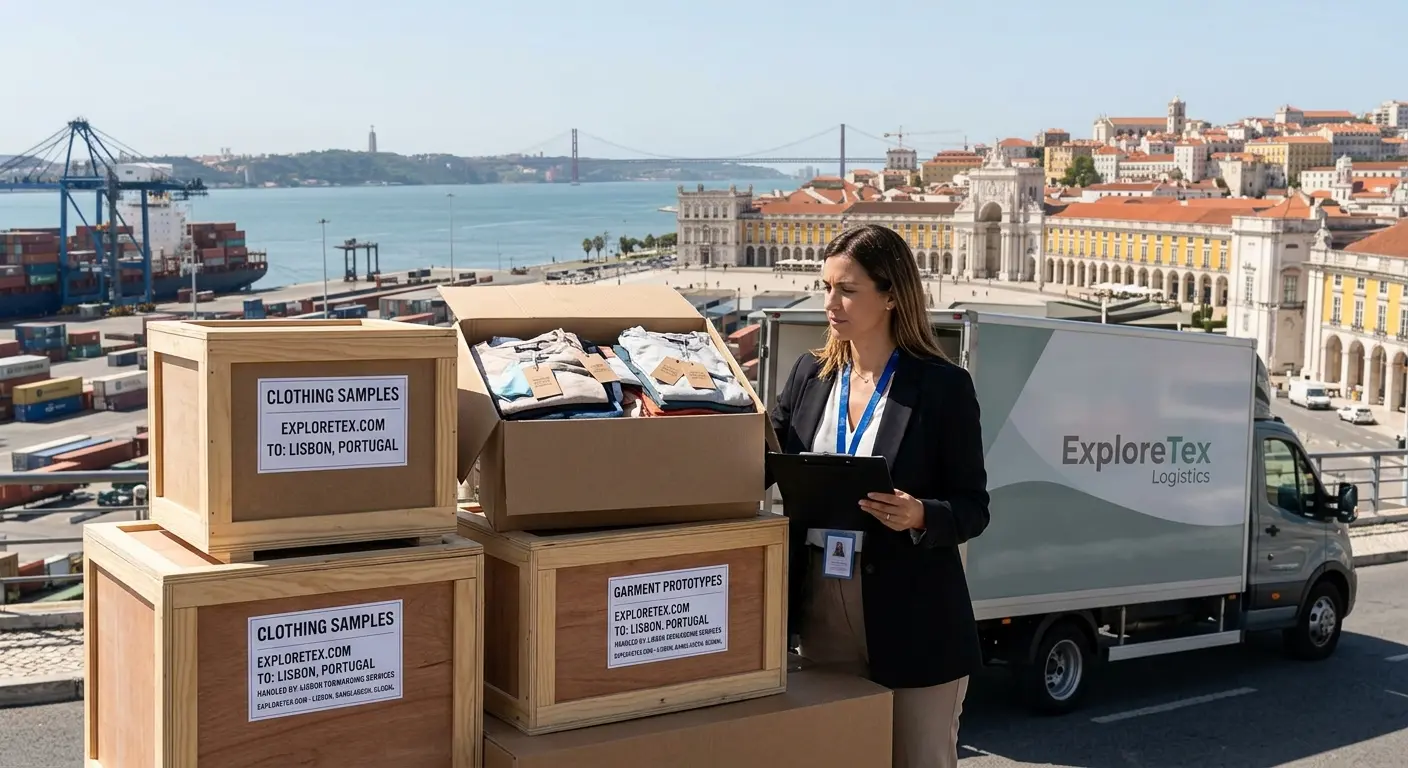
When shipping pre-production samples or urgent capsule drops, reducing weight is paramount. Brands utilizing our freight forwarding clothing samples Lisbon service benefit from lightweight kraft paper mailing envelopes, avoiding unnecessary plastic outer boxes and cutting air-freight carbon footprints by over 40%.
Split Shipment Logistics Optimization
For brands balancing speed-to-market with ocean freight economy, sustainable garment packaging logistics pairs naturally with split dispatch systems. By implementing garment factory split shipment logistics, brands can dispatch 15% to 20% of an order via express air freight using lightweight compact packaging, while the remaining 80% bulk order is packed in high-density compressed cartons for ocean transport.
For comprehensive supply chain planning, brands can review our guide on fashion supply chain resilience strategies to build a robust multi-modal sourcing architecture.
7. Step-by-Step Implementation Framework for B2B Fashion Brands
Transitioning an existing fashion supply chain to sustainable garment packaging logistics requires an organized, phase-by-phase rollout.
                 6-STEP SUSTAINABLE PACKAGING IMPLEMENTATION
 ┌──────────┐   ┌──────────┐   ┌──────────┐   ┌──────────┐   ┌──────────┐   ┌──────────┐
 │ Step 1:  │   │ Step 2:  │   │ Step 3:  │   │ Step 4:  │   │ Step 5:  │   │ Step 6:  │
 │ Material │──>│ Volumetric│──>│ Sample   │──>│ Custom   │──>│ Mass     │──>│ DPP QR   │
 │ Eco-Audit│   │ Folding  │   │ Transit  │   │ Barcode  │   │ Factory  │   │ Labeling │
 │          │   │ Design   │   │ Testing  │   │ & DDP    │   │ Rollout  │   │ Tracking │
 └──────────┘   └──────────┘   └──────────┘   └──────────┘   └──────────┘   └──────────┘
To discuss your production requirements, review the full range of custom apparel services on the ExploreTex main portal.
Visual Asset Strategy (Authority Visual Blueprint)
When publishing this article on exploretex.com, include the following original photography, engineering diagrams, and infographic assets to improve user engagement and GEO search visibility:
Infographic: Standard Flat-Pack vs. High-Density Roll-Pack Volumetric Diagram
Description: Visual comparison showing empty space in traditional garment packing versus tight space utilization in compressed roll-packing.
Alt Text: Diagram comparing volumetric container yield between standard flat packing and sustainable roll-packing logistics.
Factory Photo: Bio-Polybag Sealing Line at ExploreTex Facility
Description: Real factory-floor image showing apparel operators sealing garments into certified home-compostable bio-bags at the Bangladesh manufacturing hub.
Alt Text: Garment factory operators packaging organic apparel in compostable PLA polybags at ExploreTex.
Flowchart: EU Digital Product Passport (DPP) Packaging QR-Code Integration
Description: Step-by-step diagram showing how scanning a carton QR code provides customs and end-users with full material and carbon footprint traceability.
Alt Text: EU Digital Product Passport packaging traceability flowchart for apparel brands.
8. Specialized FAQ Section (GEO & Answer Engine Targets)
Q1: What are the primary bio-based material alternatives used in sustainable garment packaging logistics?
The main bio-based alternatives used in sustainable garment packaging logistics are PLA (Polylactic Acid) combined with PBAT (Polybutyrate Adipate Terephthalate) for home-compostable unit polybags, GRS-certified post-consumer recycled polyethylene (rPE) for heavy-duty outer covers, and FSC-certified unbleached kraft paper for garment wraps and master shipping cartons. These materials eliminate virgin petroleum plastics while maintaining full protective performance during international transport.
Q2: How does sustainable garment packaging logistics assist with EU Ecodesign and DPP compliance?
Sustainable garment packaging logistics incorporates serialized GS1-128 barcodes and QR codes directly onto packaging surfaces. These codes connect directly to Digital Product Passport (DPP) databases, giving customs authorities and consumers instant visibility into garment material composition, manufacturing location, packaging recyclability metrics, and total supply chain carbon footprint.
Q3: Can sustainable garment packaging logistics reduce overall landed manufacturing costs?
Yes. Although compostable polybags carry a higher per-unit material cost ($0.06 to $0.10 higher than virgin plastic), sustainable garment packaging logistics optimizes garment folding density, reducing overall carton volume by 20% to 30%. This allows brands to fit 18% to 25% more garments into every ocean shipping container, generating ocean freight savings that outweigh the initial material premium.
Q4: How does ExploreTex support sustainable garment packaging logistics across its dual-hub network?
ExploreTex combines high-volume vertical production in Bangladesh with nearshore, low-MOQ manufacturing partner facilities in Portugal. At our Bangladesh facility, we deploy automated roll-packing and industrial vacuum compression to maximize ocean container yield. At our Portuguese partner units, we utilize zero-plastic FSC tissue wrapping and reusable B2B transport crates for rapid, low-carbon European delivery.
Q5: What standard drop-testing protocols ensure sustainable packaging holds up during transport?
To verify packaging durability, sustainable garment packaging logistics follows ISTA 1A and ISTA 3A drop-testing standards. Master cartons packed with compostable unit bags are dropped from specific heights across ten different impact orientations (corners, edges, and faces) while undergoing temperature and relative humidity conditioning to ensure zero carton collapse or bag rupture occurs during real-world transit.
Q6: What is the difference between home-compostable and industrially compostable garment bags?
Home-compostable bags (certified under OK Compost Home or EN 13432) break down completely into natural organic matter in garden compost bins within 26 weeks at ambient temperatures (20°C to 30°C). Industrially compostable bags require specialized industrial facilities with elevated temperatures (58°C) and controlled moisture to decompose. Modern sustainable garment packaging logistics prioritizes home-compostable materials so end consumers can easily dispose of packaging responsibly without relying on commercial composting infrastructure.
 9. Partner with ExploreTex for Sustainable Apparel Manufacturing & Logistics
 9. Partner with ExploreTex for Sustainable Apparel Manufacturing & Logistics
As modern supply chains evolve toward total circularity, choosing the right manufacturing partner is essential to achieving both commercial scalability and environmental compliance.
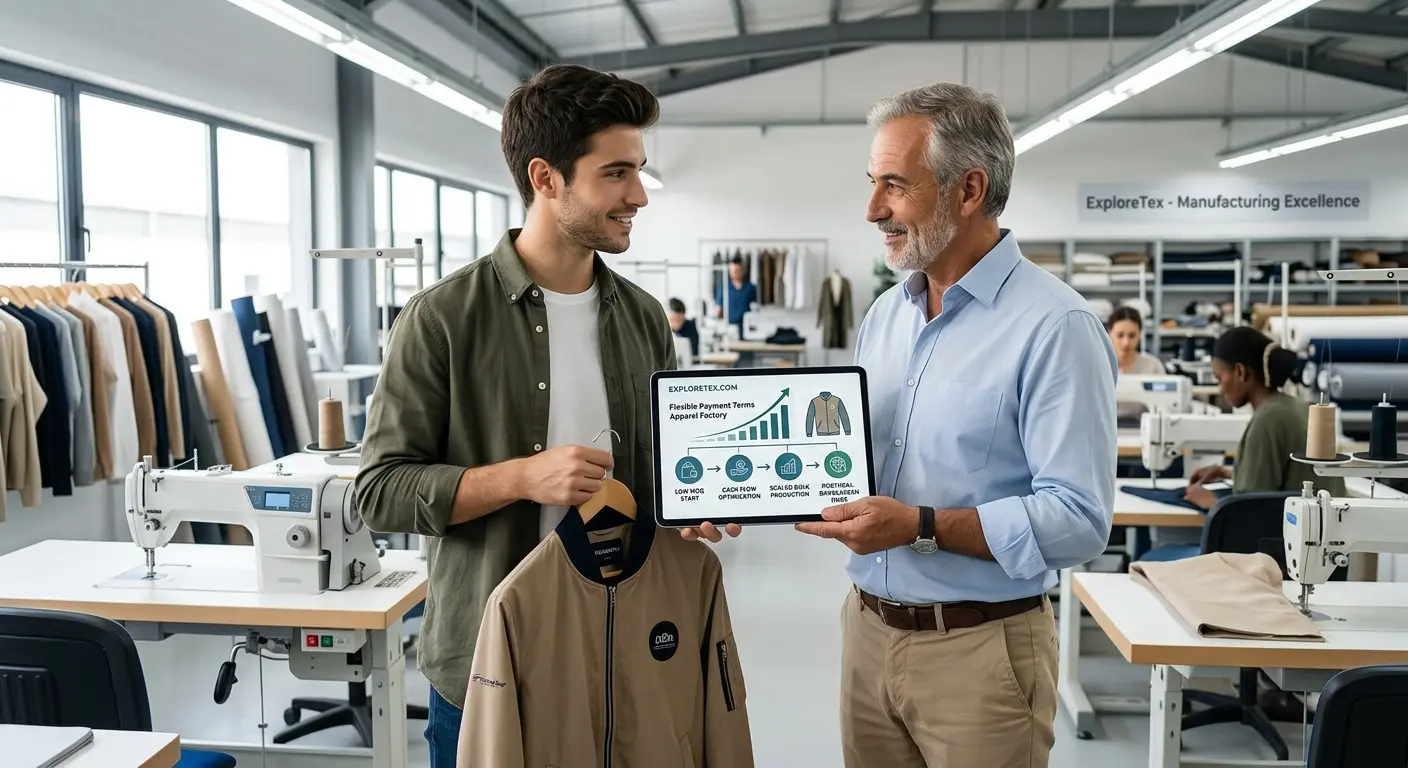
At ExploreTex, we bridge the gap between European design governance and large-scale manufacturing capability. As a registered Portuguese brand headquartered in Portugal with a vertical manufacturing facility in Bangladesh and an extensive network of partner factories in Portugal, we deliver complete, end-to-end full-package solutions—from initial 3D sample prototyping and certified fabric sourcing to advanced sustainable garment packaging logistics and direct door-to-door DDP global shipping.
                 EXPLORETEX DUAL-HUB ADVANTAGE AT A GLANCE
┌───────────────────────────────────────────────────────────────────────────┐
│                           EXPLORETEX ADVANTAGE                            │
├─────────────────────────────────────┬─────────────────────────────────────┤
│      Portugal Command Hub           │     Bangladesh Vertical Hub         │
├─────────────────────────────────────┼─────────────────────────────────────┤
│ • European Quality Oversight        │ • High-Capacity Volume Scaling      │
│ • Low MOQ & Luxury Nearshoring      │ • Competitive Manufacturing Costs   │
│ • Rapid EU Road Delivery            │ • Direct Port Chittagong Access     │
│ • Full EU ESPR / DPP Compliance     │ • Automated Packaging Line Control  │
└─────────────────────────────────────┴─────────────────────────────────────┘
Whether you are launching an eco-conscious private label collection or overhauling an enterprise apparel supply chain for EU sustainability compliance, ExploreTex provides the engineering expertise, factory capacity, and strategic logistics frameworks needed to elevate your brand.
Ready to transform your apparel manufacturing and packaging logistics?
Visit ExploreTex.com today to consult with our textile engineers and secure a tailored, eco-friendly manufacturing proposal for your upcoming collections.
Summary of External & Internal Links Included in Article
Internal Backlinks (10 Links to exploretex.com Pages):
ExploreTex Main Portal:
[https://exploretex.com/](https://exploretex.com/)ExploreTex Portugal Sourcing Services:
[https://exploretex.com/](https://exploretex.com/)Sustainable Clothing Manufacturers in Portugal:
[https://exploretex.com/sustainable-clothing-manufacturers-in-portugal/](https://exploretex.com/sustainable-clothing-manufacturers-in-portugal/)Sustainable Clothing Manufacturer for EU Brands:
[https://exploretex.com/sustainable-clothing-manufacturers-for-eu-brands/](https://exploretex.com/sustainable-clothing-manufacturers-for-eu-brands/)Fashion Supply Chain Resilience Strategies:
[https://exploretex.com/fashion-supply-chain-resilience-strategies/](https://exploretex.com/fashion-supply-chain-resilience-strategies/)Freight Forwarding Clothing Samples Lisbon:
[https://exploretex.com/freight-forwarding-clothing-samples-lisbon/](https://exploretex.com/freight-forwarding-clothing-samples-lisbon/)Consolidated Garment Shipping Asia Europe:
[https://exploretex.com/consolidated-garment-shipping-asia-europe/](https://exploretex.com/consolidated-garment-shipping-asia-europe/)Garment Factory Split Shipment Logistics:
[https://exploretex.com/garment-factory-split-shipment-logistics/](https://exploretex.com/garment-factory-split-shipment-logistics/)ExploreTex Production Solutions:
[https://exploretex.com/](https://exploretex.com/)ExploreTex Contact & Consultation Portal:
[https://exploretex.com/](https://exploretex.com/)
External Authoritative Backlinks:
Textile Exchange:
[https://textileexchange.org](https://textileexchange.org)Ellen MacArthur Foundation Circular Economy Framework:
[https://www.ellenmacarthurfoundation.org](https://www.ellenmacarthurfoundation.org)ISO Environmental Management Systems:
[https://www.iso.org](https://www.iso.org)