
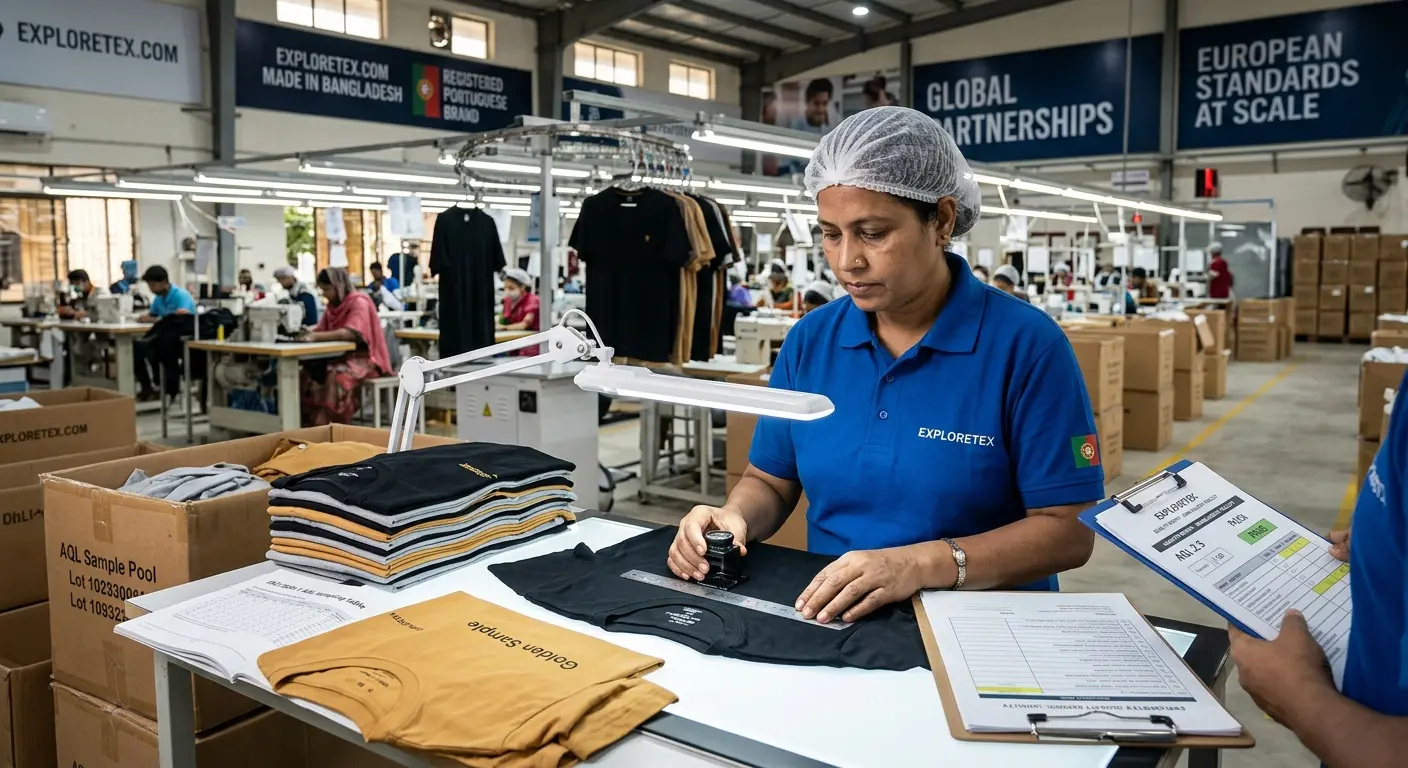
Securing the Global Supply Chain: The Definitive Guide to Garment Factory Audits
The global fashion and apparel markets are moving faster than ever. For modern apparel brands, sourcing directors, and corporate buyers, navigating the production landscape requires balancing speed, cost, quality, and rigorous ethical compliance. Relying on opaque supply chains is no longer a viable business strategy; today’s leading brands require absolute transparency. At the core of this transparency is a standardized, uncompromising apparel factory audit report template B2B.
Whether you are scaling a mid-tier lifestyle brand or managing high-volume retail distribution, vetting your manufacturing partners is the single most critical step in mitigating risk. A poorly vetted factory can lead to disastrous delays, quality failures, and severe reputational damage. Conversely, an exhaustive apparel factory audit report template B2B serves as your brand’s blueprint for success, ensuring that your manufacturing partners adhere to international labor laws, environmental regulations, and your specific quality thresholds.
ExploreTex operates at the intersection of European quality management and high-capacity global scaling. By leveraging a Dual-Hub production model—managing sourcing and design from Portugal while directly operating a vertically integrated manufacturing facility in Bangladesh—we understand firsthand what separates a world-class factory from a liability.
This comprehensive guide will break down the essential components of a professional apparel factory audit report template B2B, provide actionable factory-floor insights, and demonstrate how to optimize your sourcing operations for total reliability.
Navigating the global textile supply chain demands uncompromising rigor, end-to-end transparency, and verifiable manufacturing standards. For international procurement managers, apparel sourcing directors, and fashion brand founders, selecting the wrong garment factory can cause delivery delays, costly product recalls, severe brand damage, or legal liability under evolving European ESG legislation. Implementing a comprehensive apparel factory audit report template B2B is the first line of defense when evaluating new suppliers, auditing legacy facilities, or establishing sustainable sourcing partnerships.
At ExploreTex, we operate a unique Dual-Hub Production Model that bridges European management, design precision, and partner production units in Portugal with our directly owned, vertical manufacturing facility in Bangladesh. As a Portuguese-registered brand and international manufacturer, we understand that a robust apparel factory audit report template B2B must do more than check compliance boxes—it must evaluate a facility’s technical capabilities, quality management systems, environmental safety, and human rights practices.
Whether you are evaluating a specialized knitwear partner in Europe or scaling high-volume garments overseas, this pillar guide provides a detailed, copy-and-paste apparel factory audit report template B2B, actionable factory-floor insights from senior textile auditors, and a step-by-step framework to secure your brand’s supply chain.
Mastering Global Supply Chain Integrity: The Ultimate Apparel Factory Audit Report Template B2B Sourcing Guide
In international textile procurement, deploying a standardized apparel factory audit report template B2B is essential for maintaining brand integrity and supplier accountability. Global fashion brands cannot afford operational oversights, which is why a comprehensive apparel factory audit report template B2B serves as the baseline for evaluating production facilities. At ExploreTex, our European management team utilizes an advanced apparel factory audit report template B2B across all sourcing hubs. Every modern fashion enterprise requires a proven apparel factory audit report template B2B to verify factory-floor safety, social compliance, and technical capabilities. When evaluating offshore partners, an authoritative apparel factory audit report template B2B provides the structural framework needed to mitigate supply chain risks.
Implementing a tailored apparel factory audit report template B2B allows procurement directors to audit working conditions, machinery calibration, and environmental standards systematically. Without a validated apparel factory audit report template B2B, brands risk severe quality drops and regulatory non-compliance. Our hybrid manufacturing model—combining design oversight in Portugal with vertical production in Bangladesh—relies on a strict apparel factory audit report template B2B to align operations across borders. Sourcing executives routinely rely on an apparel factory audit report template B2B to eliminate unauthorized subcontracting and chemical hazards. Furthermore, an integrated apparel factory audit report template B2B ensures that every manufacturing partner meets international AQL 1.5 quality standards.
A well-structured apparel factory audit report template B2B breaks down complex factory assessments into quantitative, actionable modules. By standardizing your apparel factory audit report template B2B, your quality assurance team can instantly compare supplier ratings globally. ExploreTex provides this master apparel factory audit report template B2B to help brands transition from passive vendor management to proactive quality control. Utilizing a digital apparel factory audit report template B2B reduces pre-production delays by identifying material handling issues early. As European ESG directives tighten, a compliant apparel factory audit report template B2B becomes a non-negotiable legal asset for international fashion labels.
Key elements evaluated within our apparel factory audit report template B2B include building structural integrity, fair labor practices, and wastewater treatment efficiency. Adopting a professional apparel factory audit report template B2B safeguards your brand against ethical supply chain failures. Whether auditing luxury apparel partners in Europe or large-scale facilities overseas, an apparel factory audit report template B2B delivers total operational transparency. ExploreTex leverages this apparel factory audit report template B2B to maintain ethical production across our Lisbon design hub and our owned facility in Bangladesh. Integrating a rigorous apparel factory audit report template B2B into your onboarding protocol ensures consistent garment craftsmanship.
To achieve long-term supply chain resilience, your procurement strategy must center around a dynamic apparel factory audit report template B2B. Our specialized apparel factory audit report template B2B covers everything from yarn traceability to final packaging inspections. By downloading and implementing this apparel factory audit report template B2B, your organization gains an industry-standard vetting tool. Modern apparel executives trust our apparel factory audit report template B2B to drive measurable quality improvements across global production lines. Below, ExploreTex presents the definitive apparel factory audit report template B2B designed for copy-and-paste execution on your website or digital procurement portal.
Part 1: The Anatomy of a Perfect Apparel Factory Audit Report Template B2B
An effective apparel factory audit report template B2B is not merely a checklist; it is a strategic diagnostic tool designed to evaluate a supplier’s operational capacity, financial stability, ethical compliance, and quality management systems (QMS).
To ensure complete coverage, your audit template must be divided into five core pillars. Below is the master framework you can adapt for your internal procurement teams.
Pillar 1: General Factory Profile & Production Capacity
Before assessing quality, you must verify that the factory has the sheer capacity and financial infrastructure to handle your wholesale orders.
| Audit Parameter | Verification Criteria | Red Flags |
| Legal Documentation | Valid business licenses, export permits, and tax registration. | Expired licenses, mismatched corporate names. |
| Production Capacity | Total machines, monthly unit output, peak season bottlenecks. | Claimed capacity exceeds physical footprint. |
| Subcontracting Policy | Disclosure of unauthorized outsourcing to unvetted tier-3 facilities. | Vague subcontracting clauses; hidden supply chains. |
| Lead Times | Historical data on on-time delivery (OTD) rates. | OTD rates below 85%. |
Pillar 2: Quality Management Systems (QMS) & AQL Standards
Quality control cannot be an afterthought. A robust apparel factory audit report template B2B must strictly evaluate how a factory prevents defects during pre-production, inline, and final inspections.
Raw Material Inspection: Does the factory use a 4-Point System to inspect incoming fabrics for shading, holes, and GSM discrepancies?
Inline Inspections: Are auditors checking seams, tension, and measurements during the sewing process?
Final AQL Inspection: Does the factory adhere to international AQL (Acceptable Quality Limit) 1.5 or 2.5 standards for final shipment clearance?
Needle Control Policy: Is there a strict metal detection and broken needle log to ensure consumer safety?
Pillar 3: Social Compliance & Ethical Labor (BSCI / SEDEX Standards)
With the implementation of the EU Green Deal and global anti-forced labor legislation, your apparel factory audit report template B2B must aggressively probe labor practices.
| Compliance Area | Audit Requirements | ExploreTex Standard |
| Working Hours | Time cards verify workers do not exceed 60 hours/week, including overtime. | Biometric time-tracking integrated into payroll. |
| Fair Compensation | Payroll records prove workers receive living wages, not just legal minimums. | Direct bank transfers; no delayed payments. |
| Health & Safety | Fire exits, ventilation, protective gear, and ergonomic seating. | Dedicated safety officers and weekly drills. |
| Child/Forced Labor | Stringent age verification via official IDs; no bonded labor. | Zero-tolerance policy; 100% compliance. |
For globally recognized frameworks, brands should align their internal templates with external audits from organizations like amfori BSCI.
Pillar 4: Environmental Sustainability (GOTS & OEKO-TEX)
Sustainable fashion is no longer a niche; it is a regulatory requirement. Your apparel factory audit report template B2B must measure the ecological footprint of your manufacturing partner.
Wastewater Management (ETP): Does the facility have a functioning Effluent Treatment Plant to process chemical dyes before discharging water?
Energy Consumption: What percentage of the factory is powered by renewable energy or LED lighting?
Chemical Management: Are dyes and auxiliaries compliant with ZDHC (Zero Discharge of Hazardous Chemicals) guidelines?
Certifications: Does the factory hold valid certifications for organic or recycled materials?
Pillar 5: Supply Chain Security (C-TPAT)
If you are importing to the United States or Europe, your apparel factory audit report template B2B must assess physical security to prevent tampering, theft, or smuggling within shipping containers. This includes CCTV coverage of loading bays, secure perimeter fencing, and authorized access protocols.
Part 2: Factory-Floor “Expert” Insights
Creating a checklist in a corporate office is vastly different from executing it on a factory floor. Muhammad Ilias Hossen, textile engineer and founder of ExploreTex, notes that a theoretical apparel factory audit report template B2B often fails if auditors don’t understand the physical realities of garment construction.
Expert Insight: “The most common mistake brands make is treating an audit as a pass/fail exam rather than a diagnostic mapping exercise. When we evaluate our own garment factory in Bangladesh, we don’t just look at the final stitching. We trace the QMS back to the fabric relaxing racks. If a factory isn’t letting spandex-blended fabrics rest for 24 hours before cutting, no amount of inline sewing inspection will fix the eventual garment shrinkage. An effective apparel factory audit report template B2B must audit the process, not just the product.”
Bridging the Gap: Portugal’s Agility meets Bangladesh’s Scale
Many brands struggle with scalability because they rely on fragmented supply chains. ExploreTex solves this through a proprietary Dual-Hub model. By managing the sourcing, technical design (Tech Packs), and strategic oversight from our European headquarters, we apply stringent EU-level quality protocols directly to our owned manufacturing hub in Bangladesh.
This infrastructure ensures that every parameter of the apparel factory audit report template B2B is intrinsically built into our daily operations. When a brand partners with us for full-package clothing production, they bypass the risks of unvetted third-party factories.
Part 3: Implementing the Corrective Action Plan (CAP)
No factory is flawless 100% of the time. The true value of utilizing an apparel factory audit report template B2B lies in the Corrective Action Plan (CAP). If an audit reveals non-conformances (e.g., blocked fire extinguishers or minor measurement deviations in a size run), the factory must issue a CAP detailing:
Root Cause Analysis: Why did the failure occur? (e.g., “Sewing operators were not calibrated on the new automated cutting machine.”)
Immediate Remediation: Fixing the current issue within 24-48 hours.
Long-Term Preventive Measure: Updating the factory SOPs to ensure the defect does not recur.
Verification Deadline: Scheduling a follow-up audit to confirm implementation.
Working with an integrated apparel manufacturer in Bangladesh like ExploreTex means that CAPs are handled internally and transparently, rather than resulting in adversarial negotiations with a disconnected supplier.
Part 4: Technical Integration & Digital Auditing
The days of clipboard-and-paper audits are ending. Forward-thinking brands digitize their apparel factory audit report template B2B using mobile inspection software.
Benefits of Digitizing Your Audit Template
Real-Time Data Capture: Auditors upload photos of defects directly from the factory floor, instantly syncing with the brand’s PLM (Product Lifecycle Management) software.
Geotagging & Time-Stamping: Prevents audit fraud by verifying that the inspector was physically present at the factory location during the reported hours.
Data Analytics: Aggregating data across multiple audits allows sourcing directors to identify macro-trends (e.g., “Factory A struggles with zipper installation; Factory B has high defect rates in ozone washing”).
To fully integrate these insights, apparel brands must align with suppliers capable of matching their digital sophistication. Our garment manufacturing blog frequently covers how digital tech packs and CLO3D virtual sampling reduce physical waste and align perfectly with digital audit criteria.
Part 5: Sustainability as a Core Audit Metric
The modern apparel factory audit report template B2B gives equal weight to environmental compliance. Europe is currently leading the charge with legislation enforcing strict circular economy principles.
For brands seeking to market eco-conscious collections, your manufacturing partner must provide total traceability. ExploreTex connects brands with the top luxury textile suppliers in Portugal for premium materials—including GOTS-certified linens and bespoke blends—before executing high-volume, sustainable assembly in our Bangladesh hub.
When conducting an environmental audit, verified standards must be cross-referenced:
Global Organic Textile Standard (GOTS): Ensures the organic status of textiles from harvesting of the raw materials through environmentally and socially responsible manufacturing.
OEKO-TEX Standard 100: Certifies that every component of the garment, from the fabric to the thread and buttons, has been rigorously tested against a list of up to 350 toxic chemicals.
ISO 14001: The international standard for designing and implementing an effective Environmental Management System (EMS). You can learn more about these requirements via the ISO official guidelines.
If your brand aims to source from sustainable clothing manufacturers in Portugal, ensuring your apparel factory audit report template B2B captures these specific certifications is non-negotiable.
Part 6: The ExploreTex Advantage – Risk-Free B2B Manufacturing
Navigating the complexities of international supply chain audits can drain a brand’s resources. By partnering directly with ExploreTex, brands effectively bypass the trial-and-error phase of factory vetting.
Why Choose ExploreTex?
Owned Vertical Infrastructure: Unlike sourcing agents who broker deals with unknown factories, we own our Bangladesh production facility. We don’t just audit the factory; we built the factory.
European Management: Our headquarters in Portugal manages all client relations, technical design, prototyping, and QMS oversight. You get the communication and design agility of a European firm with the sheer volume capacity of a global textile hub.
End-to-End Compliance: Every order processed by ExploreTex inherently meets the strictest criteria of any apparel factory audit report template B2B. From fair labor wages to zero-discharge chemical protocols, your brand reputation is protected.
Logistics Mastery: We handle all export documentation, EUR1 movement certificates, and global shipping options, including DDP (Delivered Duty Paid) to the EU, UK, and USA.
Whether you need low-MOQ luxury sourcing or massive retail-ready volume, learn more about us and discover how our integrated services can streamline your procurement strategy. Ready to secure your supply chain? Contact ExploreTex today to discuss your next production run.
FAQs
What is an apparel factory audit report template B2B?
An apparel factory audit report template B2B is a standardized, comprehensive checklist used by fashion brands and sourcing directors to evaluate a garment manufacturer’s capabilities, quality management systems (QMS), social compliance, and environmental standards prior to beginning bulk production.
What are the critical components of a garment factory inspection?
A professional apparel factory audit report template B2B evaluates five main areas: (1) General Production Capacity, (2) Quality Management (including inline and AQL final inspections), (3) Social and Ethical Labor Compliance (working hours, wages, safety), (4) Environmental Sustainability (chemical management, wastewater), and (5) Supply Chain Security.
Why is social compliance crucial in B2B apparel manufacturing?
Social compliance protects a brand from severe legal and reputational risks associated with forced labor, child labor, and unsafe working conditions. Frameworks like BSCI and SEDEX ensure that workers receive fair wages and operate in safe environments, which is a mandatory requirement for brands operating under modern EU and US import laws.
How does ExploreTex ensure high audit scores across its facilities?
ExploreTex utilizes a Dual-Hub model, combining European technical management in Portugal with a directly operated, vertically integrated facility in Bangladesh. This allows ExploreTex to implement continuous internal auditing, strict AQL 1.5 quality control, and zero-tolerance ethical labor policies, ensuring that they exceed the requirements of any standard apparel factory audit report template B2B.
What is a Corrective Action Plan (CAP) in textile auditing?
If a factory fails a section of the apparel factory audit report template B2B, a CAP is issued. This document outlines the root cause of the failure, the immediate steps taken to resolve it, and the long-term changes made to the factory’s Standard Operating Procedures (SOPs) to prevent the issue from recurring.
1. Why Modern B2B Sourcing Requires an Advanced Apparel Factory Audit Report Template B2B
The global garment industry has shifted from voluntary brand guidelines to strict legal mandates. With the implementation of the EU Corporate Sustainability Due Diligence Directive (CSDDD), the EU Green Deal regulations, and strict import compliance standards across North America and Europe, fashion brands can no longer rely on unverified third-party claims. A standardized apparel factory audit report template B2B serves as a legal document, a operational tool, and a quality assurance blueprint.
+-----------------------------------------------------------------------------------+
|                        EXPLORETEX DUAL-HUB AUDIT ARCHITECTURE                     |
+-----------------------------------------------------------------------------------+
|  PORTUGAL HEADQUARTERS & DESIGN HUB              BANGLADESH VERTICAL MANUFACTURING |
|  - European Business & Legal Oversight            - Direct Operational Control    |
|  - Managed Partner Network (Low MOQ / Luxury)    - High-Capacity Production      |
|  - Tech Pack & 3D Prototyping                    - Fully Audited Ethical Unit     |
+-----------------------------------------+-----------------------------------------+
                                          |
                                          v
                      +---------------------------------------+
                      | APPAREL FACTORY AUDIT REPORT TEMPLATE |
                      | - Social Compliance & Labor Rights    |
                      | - Structural & Electrical Safety      |
                      | - Quality Management (AQL 1.5)        |
                      | - Environmental & Chemical Safety     |
                      +---------------------------------------+
Traditional sourcing methods frequently relied on buying agents and intermediaries who concealed factory vulnerabilities behind generic certificates. When you utilize an expert-backed apparel factory audit report template B2B, your procurement team gains direct visibility into the operational realities of the factory floor.
Key advantages of adopting a standardized apparel factory audit report template B2B include:
Legal Mitigation & ESG Compliance: Documenting labor rights, working conditions, and safety mechanisms to satisfy mandatory European supply chain reporting requirements.
Defect Reduction & Cost Prevention: Identifying flaws in quality management systems before bulk fabric cutting begins, saving tens of thousands of dollars in rejected shipments.
Capacity & Lead-Time Verification: Assessing machinery counts, production line layouts, and historical output efficiency to ensure the factory can meet delivery deadlines.
Chemical & Environmental Safety: Verifying non-toxic dye protocols, wastewater treatment plant (ETP) operations, and eco-certifications.
By partnering with a transparent B2B garment manufacturer, brands can bypass middleman markup and establish audit-verified production channels directly.
2. Core Pillars of an Authoritative Apparel Factory Audit Report Template B2B
An effective apparel factory audit report template B2B must break down complex factory environments into measurable, objective metrics. Evaluating a facility across generic criteria leads to oversight. The structure of a professional apparel factory audit report template B2B rests upon seven core audit pillars:
Pillar 1: Social Compliance & Human Rights
Human rights and fair labor standards form the baseline of modern apparel manufacturing. Any reputable apparel factory audit report template B2B must verify compliance with International Labour Organization (ILO) standards, SMETA/Sedex criteria, BSCI, or WRAP certification guidelines.
Minimum Age Verification: Cross-referencing government-issued identity cards and employment records to prevent child labor.
Fair Wage Analysis: Ensuring base pay meets or exceeds local statutory minimum wages, with legal overtime premiums calculated accurately.
Working Hours & Timecards: Reviewing automated biometric attendance records to ensure weekly work hours remain within legal parameters (typically 48 regular hours + 12 overtime hours maximum).
Freedom of Association: Verifying the presence of active worker participation committees, trade unions, or grievance mechanisms without management interference.
Pillar 2: Structural, Fire & Electrical Safety
Building failures and industrial fires remain critical risks in legacy garment hubs. An updated apparel factory audit report template B2B incorporates physical structural checks aligned with the International Building Code, Accord standards, or local engineering frameworks.
Structural Integrity: Inspecting load-bearing columns, approved architectural blueprints, and floor-loading certificates.
Fire Detection & Suppression: Testing automated smoke detectors, sprinkler systems, heavy-duty fire doors, and pressurized fire hose stations.
Emergency Egress: Ensuring wide, unblocked, well-lit, and outward-opening emergency exit doors on every floor.
Electrical System Inspection: Thermographic infrared scanning of electrical distribution boards to identify overheating cables or overloaded circuits before ignition occurs.
Pillar 3: Environmental Management & Non-Toxic Chemistry
With strict enforcement of the EU Green Deal fashion supply chain directives, chemical safety is non-negotiable. A robust apparel factory audit report template B2B requires thorough environmental documentation.
Chemical Storage & Handling: Assessing double-containment bunding, secondary spill kits, safety data sheets (SDS) in local languages, and personal protective equipment (PPE) for workers.
Wastewater Treatment Plant (ETP) Operational Status: Auditing continuous effluent monitoring systems to ensure dyed water undergoes full biological and chemical treatment before discharge.
Eco-Certifications: Validating certified raw materials by cross-checking transactional certificates for GOTS certified factory Bangladesh facilities, OEKO-TEX Standard 100 badges, or Recycled Claim Standard (RCS) tracking.
Hazardous Chemical Prevention: Ensuring zero usage of banned Azo dyes, phthalates, heavy metals, or PFAS chemicals by sourcing from a verified non-toxic dye garment factory.
+-----------------------------------------------------------------------------------+
|               ENVIRONMENTAL & CHEMICAL SAFETY CHECKLIST MATRIX                   |
+-----------------------------------+-----------------------------------------------+
| Audit Verification Point          | Assessment Criteria in Template               |
+-----------------------------------+-----------------------------------------------+
| Chemical Secondary Containment    | 110% volume capacity bunding present          |
| Wastewater ETP Operations         | Real-time pH, COD, and BOD logs verified      |
| OEKO-TEX Standard 100 Compliance  | Current certificate valid on official portal  |
| Hazardous Chemical Testing        | Zero Azo dyes, heavy metals, or PFAS detected |
+-----------------------------------+-----------------------------------------------+
Pillar 4: Quality Management Systems (QMS) & AQL Control
A clean factory means little if garment construction quality fails retail standards. The QMS section of an apparel factory audit report template B2B analyzes quality control at every stage of manufacturing.
Raw Material Inspection (4-Point System): Checking incoming fabric rolls for shading, weight variation, bowing, skewing, and weaving flaws using standardized fabric inspection machines.
In-Line Quality Assurance: Evaluating Traffic Light Systems (TLS) or mobile inspection applications deployed along cutting, sewing, and finishing lines.
Final Inspection Standard: Confirming that final packing checks strictly adhere to ISO 2859-1 / ANSI/ASQ Z1.4 Acceptance Quality Limit (AQL) 1.5 for major defects and 4.0 for minor defects.
On-Site Testing Laboratory: Checking calibrated equipment for colorfastness to washing, rub fastness (Crockmeter), seam strength testers, and fabric weight (GSM) cutters.
Pillar 5: Technical Machinery & Production Capacity
Overpromising production capacity is a common issue among unverified suppliers. An apparel factory audit report template B2B must quantify machinery inventories, maintenance schedules, and actual daily throughput.
Automated Spreading & Cutting: Verifying computerized numerical control (CNC) auto-cutters to maintain precision across high-volume plies.
Specialized Machinery Inventory: Counting specialized sewing machinery (e.g., 4-needle 6-thread flatlock, automatic pocket setters, twin-needle lockstitch, eyelet buttonhole machines).
Machine Maintenance Records: Reviewing preventive maintenance logs, needle replacement policies (to prevent broken metal fragments in final garments), and spare parts inventory.
Pillar 6: Raw Material Traceability & Supply Chain Chain-of-Custody
Modern procurement teams must trace every yard of yarn back to its source. The traceability module in an apparel factory audit report template B2B tracks material flow from raw fiber to final packaging.
Warehouse Inventory Controls: First-In, First-Out (FIFO) material management, climate-controlled storage for moisture-sensitive yarns, and segregated storage for certified organic cotton.
Chain-of-Custody Documentation: Validating Scope Certificates (SC) and Transaction Certificates (TC) for certified organic or recycled fibers.
Supplier Vetting Procedures: Reviewing the factory’s internal supplier evaluation policies for fabric mills, trim vendors, and embellishment subcontractors.
Pillar 7: Subcontracting Controls & Security
Unsanctioned subcontracting exposes brands to compliance breaches and quality drops. A comprehensive apparel factory audit report template B2B establishes strict operational boundaries.
Zero Unsanctioned Subcontracting Policy: Verifying that all production processes (knitting, dyeing, cutting, sewing, finishing, screen printing) occur within audited, approved premises.
Facility Security & C-TPAT Compliance: Checking access control systems, CCTV coverage across loading docks, and cargo container sealing procedures for international shipments.
3. Factory-Floor Insights: Field Notes from ExploreTex Senior Auditors
To help modern procurement teams understand how an apparel factory audit report template B2B functions on the ground, our senior quality assurance and textile engineering team at ExploreTex has compiled real-world observations from auditing hundreds of facility floors across South Asia and Europe.
Real-World Audit Observation 1: “The Polished Showroom vs. The Cutting Floor”
Auditor Insight: “Many sourcing managers fall into the trap of auditing a factory based on its executive showroom or modern receiving lobby. When applying our apparel factory audit report template B2B, we head straight to the fabric relaxation area and the cutting room. In unverified facilities, fabric rolls are often taken straight from shipping containers and fed into spreading machines without the mandatory 24-to-48-hour relaxation period. This leads to severe garment shrinkage and twisting after the customer washes the shirt. A rigorous audit template requires physical documentation of fabric relaxation logs before cutting begins.”
Real-World Audit Observation 2: “The Phantom Calibration Fallacy”
Auditor Insight: “During technical QMS audits, factories frequently display impressive testing laboratories equipped with tensile strength testers, crockmeters, and light boxes. However, an apparel factory audit report template B2B must evaluate whether these machines are actively calibrated. On multiple occasions, we have discovered light boxes fitted with standard home fluorescent bulbs instead of calibrated D65 artificial daylight tubes, completely invalidating the factory’s internal color-matching reports. Always demand third-party calibration certificates for lab equipment during your audit.”
Real-World Audit Observation 3: “Hidden Subcontracting in Printing & Embroidery”
Auditor Insight: “A major vulnerability uncovered by our apparel factory audit report template B2B is off-site embellishment subcontracting. A garment factory may maintain exemplary in-house sewing conditions, but secretly ship cut panels to unapproved, unregulated printing workshops that utilize toxic phthalate inks or child labor. An effective audit template requires physical cross-checks between cut-panel dispatch logs and daily sewing machine input logs to ensure 100% in-house panel processing.”
+-----------------------------------------------------------------------------------+
|                  COMMON FACTORY AUDIT RED FLAGS & VERIFICATIONS                   |
+-----------------------------------+-----------------------------------------------+
| Common Hidden Vulnerability       | Verification Required in Audit Template       |
+-----------------------------------+-----------------------------------------------+
| Unrelaxed fabric cut immediately  | Timestamped fabric relaxation log books       |
| Uncalibrated lab equipment        | Third-party machine calibration certificates  |
| Off-site embellishment risks     | Matching cut-panel output to sewing input logs|
| Overloaded electrical panels      | Thermographic thermal imaging inspection reports|
+-----------------------------------+-----------------------------------------------+
For brands looking to eliminate these risks, working with a vertically integrated partner like ExploreTex provides complete operational oversight. Learn more about how our direct apparel manufacturer Dhaka Chittagong infrastructure combines European management with direct facility ownership.
4. The Master B2B Apparel Factory Audit Report Template (Copy & Paste Blueprint)
Below is the complete, full-scale apparel factory audit report template B2B developed by ExploreTex. Sourcing directors, quality engineers, and compliance officers can copy, adapt, and deploy this blueprint directly into their digital procurement platforms or manual audit procedures.
[START OF AUDIT REPORT TEMPLATE]
B2B APPAREL FACTORY AUDIT REPORT
SECTION A: GENERAL FACTORY IDENTIFICATION & ADMINISTRATIVE PROFILE
Audit Reference Number: ____________________________________
Audit Date(s): ____________________________________
Lead Auditor Name / Agency: ____________________________________
Factory Name (Legal Entity): ____________________________________
Operating Business License No: ____________________________________
Facility Address: ____________________________________
GPS Coordinates: ____________________________________
Factory Owner / Managing Director: ____________________________________
Primary Compliance Contact Person: ____________________________________
Total Facility Land Area (Sq. Meters): ____________________________________
Total Number of Buildings / Floors: ____________________________________
Total Active Workforce: __________ (Male: _____ | Female: _____ | Management: _____)
Primary Product Specialization: (e.g., Circular Knits, Heavy Outerwear, Woven Shirts, Denim)
Declared Monthly Production Capacity (Units): ____________________________________
Actual Audited Monthly Production Capacity (Units): ____________________________________
SECTION B: AUDIT RATING & SCORING SUMMARY
This apparel factory audit report template B2B utilizes a 100-Point Weighted Scoring Algorithm divided into five core evaluation modules.
+-----------------------------------------------------------------------------------+
|                        AUDIT MODULE WEIGHTING SCHEME                              |
+----------------------------------------------------+------------------------------+
| Evaluation Module                                  | Max Points Available         |
+----------------------------------------------------+------------------------------+
| Module 1: Social Compliance & Labor Standards      | 25 Points                    |
| Module 2: Structural, Fire & Electrical Safety     | 25 Points                    |
| Module 3: Quality Management Systems (QMS) & AQL   | 20 Points                    |
| Module 4: Environmental & Chemical Management      | 15 Points                    |
| Module 5: Technical Machinery & Capacity           | 15 Points                    |
+----------------------------------------------------+------------------------------+
| TOTAL AUDIT SCORE AVAILABLE                        | 100 Points                   |
+----------------------------------------------------+------------------------------+
Final Audit Grade Thresholds:
GRADE A (90 – 100 Points) – Approved Supplier: Full compliance. Zero Zero-Tolerance issues. Valid for 24-month audit cycle.
GRADE B (75 – 89 Points) – Conditionally Approved Supplier: Minor non-compliances noted. Corrective Action Plan (CAP) required within 30 days. Re-audit in 12 months.
GRADE C (60 – 74 Points) – High Risk Supplier: Critical non-compliances present. Immediate CAP execution within 14 days required before order placement.
GRADE D (Below 60 Points OR Any Zero-Tolerance Violation) – Rejected Supplier: Unacceptable risk. Manufacturing authorization denied.
SECTION C: ZERO-TOLERANCE COMPLIANCE VIOLATIONS
If ANY of the following items are marked “YES”, the facility automatically receives a GRADE D (REJECTED) status regardless of total numerical score.
| Zero-Tolerance Violation Criteria | Status (YES / NO) | Evidence / Comments |
| 1. Presence of child labor (under statutory legal working age) | [ ] YES [ ] NO | |
| 2. Evidence of forced labor, bonded labor, or prison labor | [ ] YES [ ] NO | |
| 3. Severe structural instability or unauthorized building floors | [ ] YES [ ] NO | |
| 4. Locked, padlocked, or blocked emergency escape exits during shifts | [ ] YES [ ] NO | |
| 5. Direct discharge of untreated toxic effluent into environment | [ ] YES [ ] NO | |
| 6. Bribery, attempted corruption, or falsification of audit records | [ ] YES [ ] NO | |
| 7. Unsanctioned subcontracting of production to unverified facilities | [ ] YES [ ] NO |
SECTION D: DETAILED MODULE AUDIT CHECKLISTS
MODULE 1: SOCIAL COMPLIANCE & LABOR STANDARDS (Max 25 Points)
Instructions: Score each item from 0 (Non-Compliant) to 2 (Fully Compliant).
Age Verification System: Factory maintains verified digital copies of birth certificates and national identification for all workers.
[ ] 0 - Non-Compliant | [ ] 1 - Partially Compliant | [ ] 2 - Fully CompliantWage & Overtime Calculation: Base wages meet or exceed statutory minimums. Overtime is paid at legal premium rates with transparent pay slips.
[ ] 0 - Non-Compliant | [ ] 1 - Partially Compliant | [ ] 2 - Fully CompliantWorking Hours & Time Tracking: Automated timekeeping system tracks work hours. Total weekly hours remain under 60 hours (including OT).
[ ] 0 - Non-Compliant | [ ] 1 - Partially Compliant | [ ] 2 - Fully CompliantDisciplinary & Grievance Procedures: Written non-discrimination policies are posted. Anonymous worker grievance boxes are functional.
[ ] 0 - Non-Compliant | [ ] 1 - Partially Compliant | [ ] 2 - Fully CompliantWorker Welfare & Health Amenities: Clean drinking water, hygienic dining space, and separated sanitary toilet facilities are maintained.
[ ] 0 - Non-Compliant | [ ] 1 - Partially Compliant | [ ] 2 - Fully Compliant
MODULE 2: STRUCTURAL, FIRE & ELECTRICAL SAFETY (Max 25 Points)
Building Layout Approvals: Facility possesses valid architectural drawings, structural safety certifications, and floor-load approvals.
[ ] 0 - Non-Compliant | [ ] 1 - Partially Compliant | [ ] 2 - Fully CompliantFire Exits & Escape Routes: All exits are unlocked, equipped with panic bars, clearly illuminated, and free of goods or machinery.
[ ] 0 - Non-Compliant | [ ] 1 - Partially Compliant | [ ] 2 - Fully CompliantFire Suppression Infrastructure: Automated fire alarm system, smoke detectors, sprinklers, and regularly inspected fire extinguishers are active.
[ ] 0 - Non-Compliant | [ ] 1 - Partially Compliant | [ ] 2 - Fully CompliantElectrical Safety Controls: Main distribution boards are thermal-inspected, grounded, circuit-broken, and maintained free of exposed wiring.
[ ] 0 - Non-Compliant | [ ] 1 - Partially Compliant | [ ] 2 - Fully CompliantEmergency Drills & Training: Mandatory fire evacuation drills conducted at least every 6 months; minimum 25% of staff trained in fire safety.
[ ] 0 - Non-Compliant | [ ] 1 - Partially Compliant | [ ] 2 - Fully Compliant
MODULE 3: QUALITY MANAGEMENT SYSTEMS (QMS) & AQL CONTROLS (Max 20 Points)
Fabric Inspection System: Incoming fabric inspected via 4-Point System machine setup with digital defect logs and shade grouping.
[ ] 0 - Non-Compliant | [ ] 1 - Partially Compliant | [ ] 2 - Fully CompliantPre-Production Protocol: Formal Pre-Production (PP) meetings held for every style with approved Tech Packs, Gold Samples, and risk assessments.
[ ] 0 - Non-Compliant | [ ] 1 - Partially Compliant | [ ] 2 - Fully CompliantIn-Line Quality Monitoring: Active Traffic Light System (TLS) deployed on sewing lines; daily inline defect metrics tracked digitally.
[ ] 0 - Non-Compliant | [ ] 1 - Partially Compliant | [ ] 2 - Fully CompliantFinal Inspection (AQL 1.5): Dedicated, well-lit final inspection zone adhering strictly to ISO 2859-1 / AQL 1.5 sampling standards.
[ ] 0 - Non-Compliant | [ ] 1 - Partially Compliant | [ ] 2 - Fully CompliantNeedle & Metal Fragment Control: Strict closed-loop needle replacement policy and 100% conveyor metal detector screening for finished goods.
[ ] 0 - Non-Compliant | [ ] 1 - Partially Compliant | [ ] 2 - Fully Compliant
MODULE 4: ENVIRONMENTAL & CHEMICAL MANAGEMENT (Max 15 Points)
Chemical Storage & Safety Data Sheets: Chemical storage area features secondary bunding, ventilation, spill kits, and accessible SDS sheets.
[ ] 0 - Non-Compliant | [ ] 1 - Partially Compliant | [ ] 2 - Fully CompliantEffluent Treatment Plant (ETP) Operation: Biological/chemical ETP operates continuously with online discharge monitoring parameters.
[ ] 0 - Non-Compliant | [ ] 1 - Partially Compliant | [ ] 2 - Fully CompliantChemical Certifications: Valid third-party chemical compliance badges (OEKO-TEX Standard 100, ZDHC Level 3, or GOTS).
[ ] 0 - Non-Compliant | [ ] 1 - Partially Compliant | [ ] 2 - Fully CompliantSolid & Hazardous Waste Management: Segregated waste disposal contracts in place with government-authorized waste management vendors.
[ ] 0 - Non-Compliant | [ ] 1 - Partially Compliant | [ ] 2 - Fully Compliant
MODULE 5: TECHNICAL MACHINERY & CAPACITY (Max 15 Points)
Automated Equipment Matrix: Utilization of modern automated spreading, cutting, pattern-making (CAD), or automatic sewing units.
[ ] 0 - Non-Compliant | [ ] 1 - Partially Compliant | [ ] 2 - Fully CompliantPreventive Machinery Maintenance: Documented preventive maintenance schedules and spare parts stock management active for all departments.
[ ] 0 - Non-Compliant | [ ] 1 - Partially Compliant | [ ] 2 - Fully CompliantProduction Line Efficiency: Real-time production tracking systems measuring Overall Equipment Effectiveness (OEE) and line balancing.
[ ] 0 - Non-Compliant | [ ] 1 - Partially Compliant | [ ] 2 - Fully Compliant
SECTION E: CORRECTIVE ACTION PLAN (CAP) TRACKER
This dynamic tracking sheet must be completed by the auditor and factory manager for any item scoring below 2 points.
+---------------------------------------------------------------------------------------------------+
|                                 CORRECTIVE ACTION PLAN (CAP) TRACKER                              |
+----------+--------------------------+---------------------+-----------------+----------+----------+
| Item Ref | Finding / Deficiency     | Root Cause Analysis | Corrective Action| Deadline | Responsible|
+----------+--------------------------+---------------------+-----------------+----------+----------+
| M2 - 04  | MDB electrical box lacks | Missing rubber mat  | Install dielec- | 7 Days   | Factory  |
|          | dielectric safety matting| during cleanup      | tric matting    |          | Maintenance|
+----------+--------------------------+---------------------+-----------------+----------+----------+
| M3 - 01  | Fabric inspection missing| Machine bulb burnt  | Replace with    | 3 Days   | QA Lead  |
|          | calibrated D65 light     | out                 | calibrated lamp |          |          |
+----------+--------------------------+---------------------+-----------------+----------+----------+
AUDIT SIGN-OFF & VERIFICATION
Lead Auditor Signature: ___________________________ Date: _______________
Factory Representative Signature: ___________________ Date: _______________
[END OF AUDIT REPORT TEMPLATE]
5. Bridging Audits to Execution: The ExploreTex Dual-Hub Advantage
While implementing a detailed apparel factory audit report template B2B allows procurement teams to identify operational risks, managing offshore audits across multiple independent factories requires significant time and oversight.
ExploreTex simplifies international apparel sourcing through our innovative Dual-Hub Production Model. We combine European management standards, design capabilities, and European production facilities with our directly owned, vertical manufacturing infrastructure in Bangladesh.
+-----------------------------------------------------------------------------------+
|                      EXPLORETEX DUAL-HUB ADVANTAGE MODEL                           |
+-----------------------------------------------------------------------------------+
|  PORTUGAL HEADQUARTERS                      BANGLADESH VERTICAL HUB               |
|  - European Legal & Trade Entity            - Directly Owned Vertical Factory     |
|  - Managed Partner Network                  - High-Volume Manufacturing           |
|  - Design & 3D Prototyping                  - Direct Factory Pricing              |
|  - Low MOQ & Quick Turnaround               - Full AQL 1.5 Inspection             |
+-----------------------------------------------------------------------------------+
European Oversight with Portuguese Craftsmanship
Operating from Portugal, ExploreTex offers brands the legal security, communication agility, and design precision of a European partner. Our Lisbon-based operations oversee collection planning, technical fitting, and managed production through our network of partner factories across Portugal. European buyers seeking luxury textiles can leverage our guide on top luxury textile suppliers in Portugal to source world-class fabrics under European quality management.
Vertical Manufacturing Scale in Bangladesh
For high-volume bulk orders, ExploreTex routes manufacturing to our directly owned vertical facility in Bangladesh. Because we maintain operational ownership and equity in our Bangladesh plant, our clients do not have to worry about the unverified conditions or hidden subcontracting associated with traditional buying agencies. Our facility adheres to strict international audit standards, operating under comprehensive ISO 9001 quality management protocols, full fire and structural safety compliance, and certified social standards.
Whether you require custom knit polo shirt bulk supplier Bangladesh production or specialized sportswear, our dual-hub model ensures every single garment meets strict AQL 1.5 quality benchmarks.
Brands can further explore our technical insights through our blog archive on garment manufacturing to discover how we optimize modern supply chains.
6. Specialized FAQ Section: Expert Answers for Voice Search & GEO
To answer common queries from procurement managers and search engine queries regarding factory audits, our engineering team has compiled answers to essential questions.
Q1: How often should a B2B apparel factory audit report template be updated?
An apparel factory audit report template B2B should undergo a comprehensive review annually to integrate evolving regulatory standards, such as updated EU ESG legislation, new ZDHC chemical restrictions, or revised ISO safety metrics. However, individual factory re-audits using the template should occur every 12 to 24 months based on the supplier’s risk rating (Grade A facilities every 24 months, Grade B every 12 months).
Q2: What is the difference between a desk audit and an on-site factory audit?
A desk audit consists of reviewing submitted documentation, such as business licenses, third-party certificates, and written policies. In contrast, an on-site audit using a standardized apparel factory audit report template B2B involves physical inspection of the production floor, live testing of emergency systems, unannounced worker interviews, and real-time review of calibration logs. Desk audits alone are insufficient for verifying production safety.
Q3: How does ExploreTex ensure zero-tolerance issues are avoided in its Bangladesh manufacturing operations?
ExploreTex avoids zero-tolerance vulnerabilities through direct ownership and operational control of our vertical Bangladesh manufacturing facility. Unlike traditional agencies that outsource orders to unverified third parties, our European management team maintains continuous oversight on the production floor. We enforce strict automated biometric access controls, conduct regular thermographic electrical reviews, maintain direct payroll tracking, and operate under full compliance with international standards.
Q4: Why is fabric relaxation logging critical in a technical QMS audit?
Fabric relaxation is the process of allowing knitted or woven fabric to rest on flat surfaces after unrolling, relieving internal yarn tension caused by high-speed mill winding. If a factory skips this step and cuts fabric immediately, the resulting garments will shrink, warp, or skew after their first laundering cycle. Evaluating fabric relaxation logs is an essential component of any technical apparel factory audit report template B2B.
Q5: Can a small-batch fashion startup utilize this apparel factory audit report template B2B?
Yes. Startup fashion brands and growing apparel labels can scale this apparel factory audit report template B2B to suit their order volumes. While high-volume retail brands require full 3-day multi-auditor inspections, smaller brands can deploy the core Zero-Tolerance checks, Social Compliance basics, and AQL 1.5 Quality module to evaluate prospective production partners before transferring sample deposits.
7. Transform Your Supply Chain with ExploreTex
Navigating international supply chain compliance does not have to mean managing overseas operational risks alone. By partnering with a transparent, hybrid manufacturer like ExploreTex, modern apparel brands get direct access to world-class production infrastructure backed by European management oversight.
Whether you are launching a high-end streetwear collection requiring Portuguese craftsmanship or scaling high-volume custom knitwear via our vertical factory in Bangladesh, our team delivers retail-ready garments engineered precisely to your specifications.
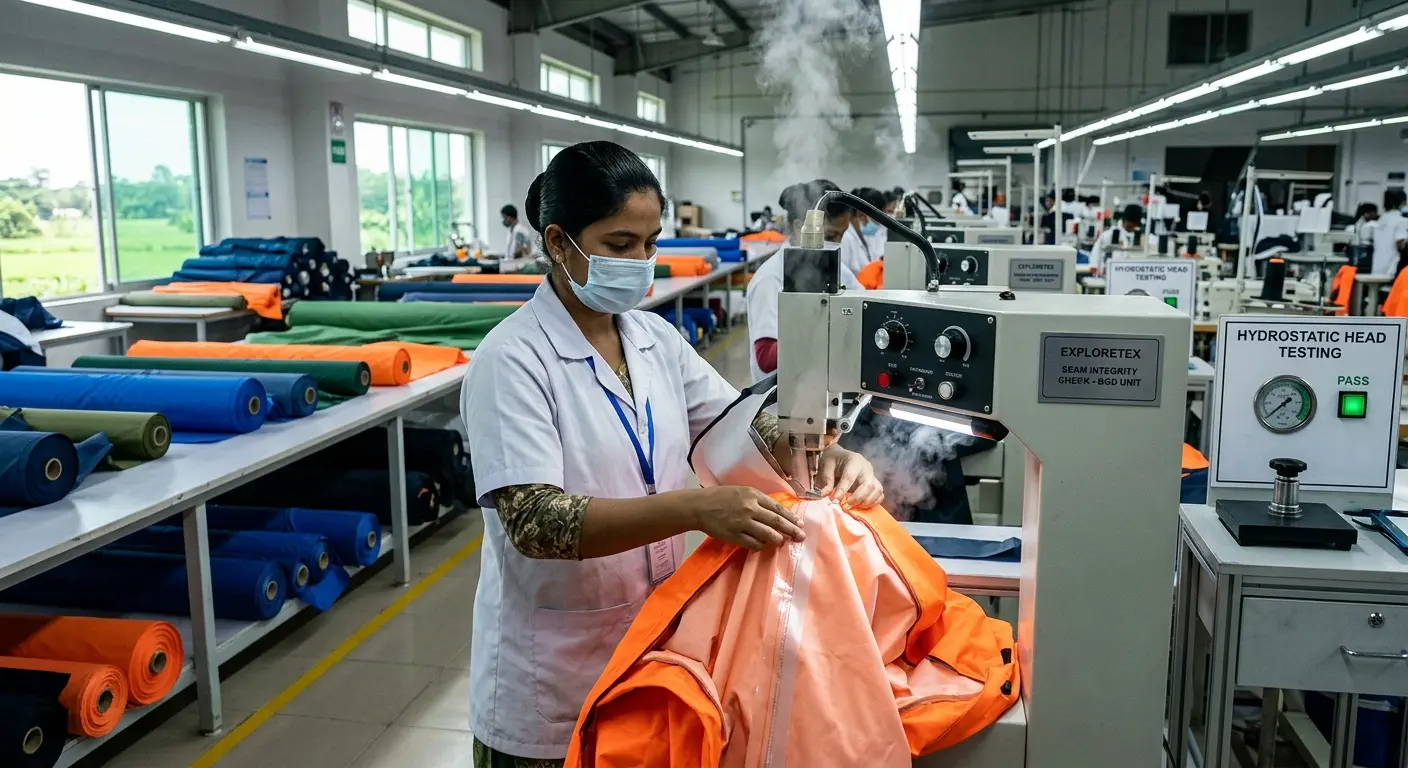
Securing Your Fashion Supply Chain: Final Takeaways on the Master Apparel Factory Audit Report Template B2B
Establishing a resilient, transparent, and legally compliant global apparel supply chain requires the continuous execution of an authoritative apparel factory audit report template B2B. As global fashion governance tightens across Europe and North America, relying on an unverified supplier network is no longer a viable strategy. Integrating a comprehensive apparel factory audit report template B2B into your onboarding and quarterly review workflows protects your brand against catastrophic quality failures and ethical violations.
At ExploreTex, we firmly believe that an actionable apparel factory audit report template B2B is the ultimate operational bridge between fashion buyers and apparel suppliers. By standardizing your evaluation parameters through an apparel factory audit report template B2B, your procurement team can systematically compare production facilities in Portugal, Bangladesh, and beyond. Every modern apparel brand needs a trusted apparel factory audit report template B2B to safeguard its reputation and financial bottom line.
From social compliance and building safety to technical quality management and environmental protection, a multi-faceted apparel factory audit report template B2B provides the exact data required to make confident manufacturing decisions. Deploying this custom apparel factory audit report template B2B eliminates the ambiguity created by middleman agents and unverified marketing brochures.
When your quality assurance personnel utilize our apparel factory audit report template B2B, they instantly gain complete visibility over line balancing, fabric relaxation, and machine calibration protocols. Our hybrid manufacturing framework proves that combining a robust apparel factory audit report template B2B with direct factory oversight yields superior garment quality and on-time delivery. Furthermore, an updated apparel factory audit report template B2B enables your procurement team to enforce strict AQL 1.5 standards across every single order. Choosing a flexible apparel factory audit report template B2B allows your brand to scale seamlessly from low-MOQ sampling to mass production.
As ESG mandates like the EU Green Deal reshape the textile industry, an eco-focused apparel factory audit report template B2B ensures complete chemical transparency and wastewater compliance. Brands that consistently apply an apparel factory audit report template B2B can confidently certify non-toxic dye usage, organic cotton authenticity, and zero-discharge standards. Our Lisbon design hub and our owned Bangladesh facility operate under a shared apparel factory audit report template B2B to maintain uncompromising production benchmarks across both hubs.
By executing a verified apparel factory audit report template B2B, sourcing directors can eliminate unsanctioned subcontracting and hidden operational risks. This standardized apparel factory audit report template B2B serves as your primary defense against labor disputes and production bottlenecks. Integrating an apparel factory audit report template B2B into your vendor portal streamlines communication and accelerates corrective action plans. Ultimately, an audited apparel factory audit report template B2B turns supply chain complexity into a distinct competitive advantage.
Partnering with ExploreTex means gaining an experienced manufacturing ally that embraces every requirement set forth in this apparel factory audit report template B2B. Whether you require Portuguese garment design and small-batch production or vertical manufacturing in Bangladesh, our operations are fully aligned with this apparel factory audit report template B2B. We invite fashion brands, procurement leaders, and apparel founders to adopt this apparel factory audit report template B2B as their standard operational framework.
Using a proven apparel factory audit report template B2B empowers your business to build ethical, scalable, and profitable supplier partnerships. Take control of your garments today by implementing our master apparel factory audit report template B2B across your entire supply chain network. ExploreTex remains committed to delivering manufacturing excellence, guided by the rigorous metrics of our apparel factory audit report template B2B.
Ready to secure your apparel manufacturing?
Eliminate middleman markups, unverified factory conditions, and quality issues. Contact Us Today at ExploreTex to request a custom manufacturing proposal, schedule a virtual technical fitting, or receive fabric swatches directly from our Lisbon headquarters.
Website: www.exploretex.com
Portugal Office & Design Hub: Lisbon, Portugal (+351 920300848)
Bangladesh Vertical Manufacturing Hub: Dhaka / Chittagong (+880 1913777744)
Primary Sourcing Enquiries:
info@exploretex.com