
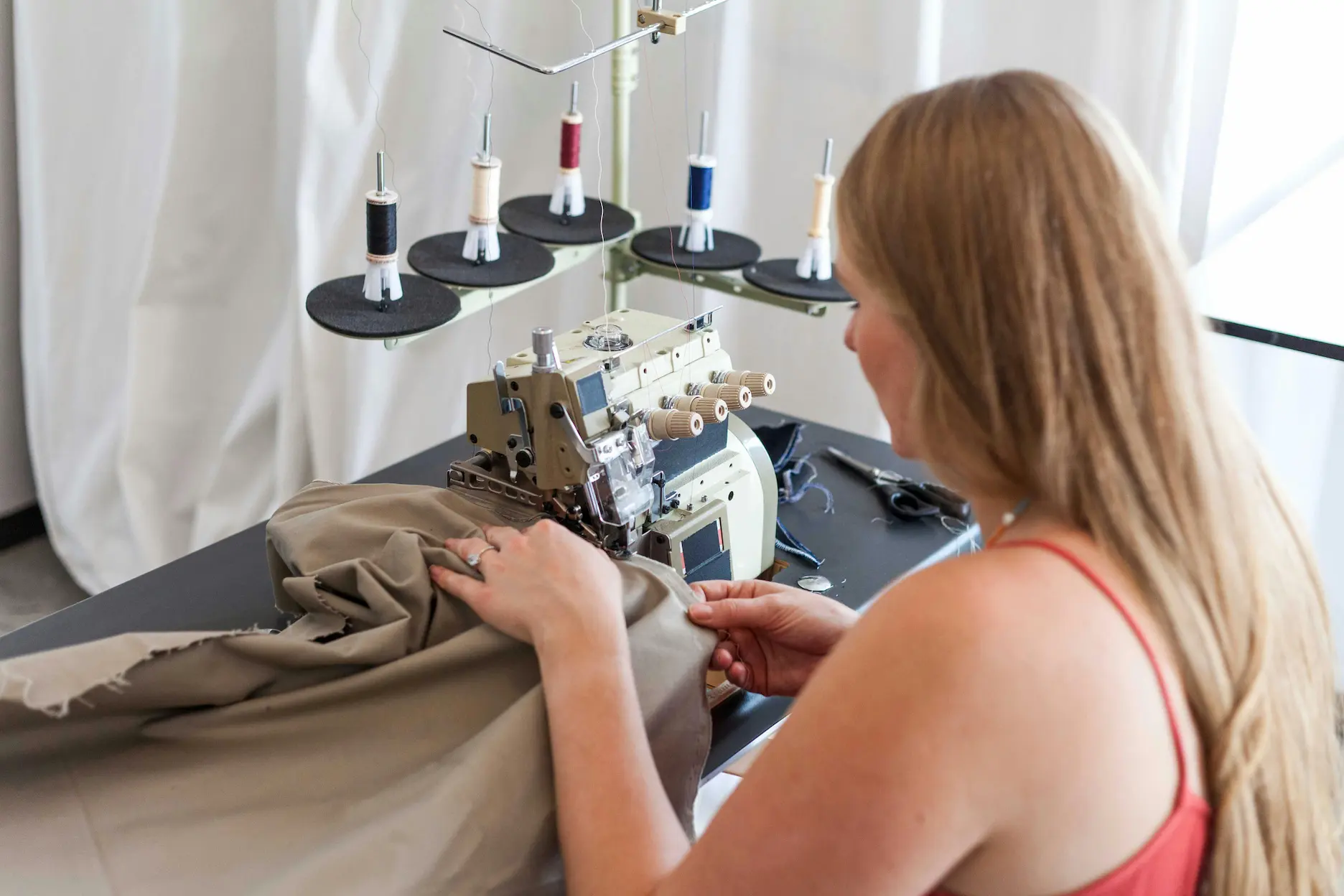
The Complete Guide to the Stitching Process in Textile Industry: Factory-Floor Insights for Brand Success
When launching or scaling an apparel brand, the difference between a high-quality luxury garment and a fast-fashion reject often comes down to one critical phase: the stitching process in textile industry. For brand owners, understanding how flat fabric transforms into a three-dimensional, wearable product is essential for maintaining quality, controlling costs, and ensuring ethical production.
As a premium Clothing Manufacturer in Portugal with a highly efficient dual-hub manufacturing setup bridging Europe and Bangladesh, ExploreTex has mastered the technical execution of the stitching process in textile industry.
In this comprehensive guide, we will break down everything you need to know about garment stitching, industrial sewing techniques, and how a managed production network elevates your final product.
The stitching process in textile industry is far more than the simple act of joining fabric; it is the structural engineering of fashion. For a brand, the seam is where quality meets durability, and where a design transcends from a sketch to a retail-ready masterpiece. At ExploreTex, we view the stitching line as the heartbeat of our vertical manufacturing facilities.
Whether we are producing high-end luxury garments through our clothing manufacture in Portugal or managing high-volume orders at our production in Bangladesh, understanding the technicality of the stitch is what separates market leaders from the rest.
1. What is the Stitching Process in Textile Industry?
Answer Summary: The stitching process in textile industry is the core manufacturing phase where cut fabric panels are joined together using specialized industrial sewing machines and threads to create a finished garment. It involves various stitch types (such as lockstitch, chainstitch, and overlock) and requires strict adherence to technical tech packs, tension control, and Quality Assurance (QA) protocols to ensure seam strength, durability, and aesthetic perfection.
In modern Full Package Clothing Production, the stitching process in textile industry is not just about needles and thread; it is an engineered workflow. It sits between the cutting room and the finishing/pressing department.
The Key Phases of the Stitching Workflow
Preparation and Bundling: Cut parts are bundled by size and color and brought to the sewing floor.
Sub-Assembly: Small parts (collars, cuffs, pockets) are stitched first.
Main Assembly: The front, back, and sleeves are joined.
Final Stitching: Hems, zippers, and buttons are applied.
ExploreTex Factory-Floor Expert Insight:
“Many emerging brands overlook the importance of thread tension in their tech packs. If the tension in the stitching process in textile industry is too tight, the seam will pucker after the first wash. If it’s too loose, the garment will fall apart. At our ExploreTex Dual-Hub Setup, we calibrate our industrial Juki and Brother machines daily based on the specific GSM and stretch of the fabric before bulk production begins.”
The Anatomy of the Stitching Process in Textile Industry
To understand the stitching process in textile industry, one must look at it as a sequence of mechanical interlooping and interlacing. It is the final assembly stage in the garment production chain, sitting critically between cutting and finishing.
The Three Pillars of Stitch Integrity
Every seam produced in an industrial setting relies on three variables:
The Needle: Selecting the correct point (ballpoint vs. sharp) based on fabric density.
The Thread: Matching the tensile strength of the thread to the expected life cycle of the garment.
The Feed Mechanism: How the fabric moves through the machine to prevent puckering or uneven tension.
For brands looking for a reliable manufacturing partner, these technical details are non-negotiable. A failure in the stitching process in textile industry often results in “seam slippage,” where the fabric yarns pull apart under stress, a common defect in low-tier manufacturing that ExploreTex strictly avoids.
Industrial Stitch Classes: The Global Standard
In professional garment assembly, we categorize stitches based on the International Standard ISO 4915:1991. Understanding these classes is vital for creating accurate tech pack development documents.
Class 100: Chain Stitches
Produced with a single thread, these are often used for temporary applications or decorative embroidery. While cost-effective, they are prone to unraveling.
Class 300: Lockstitches
The most common “workhorse” in the stitching process in textile industry. It uses two threads—one needle thread and one bobbin thread. It is the gold standard for woven fabrics, providing a flat, secure seam that looks identical on both sides.
Class 500: Overedge Stitches (Serging)
Essential for knitwear and stretch fabrics. This stitch wraps around the edge of the fabric to prevent fraying while allowing the seam to expand without snapping. Our private label clients often request 4-thread overlocks for premium hoodies and tees.
2. Essential Types of Stitches Used in Garment Manufacturing
To fully grasp the stitching process in textile industry, you must understand the international classification of stitches. The International Organization for Standardization (ISO) categorizes industrial stitches into six main classes, each serving a specific structural purpose.
Class 100: Single-Thread Chainstitch
Primarily used for temporary basting or blind hemming. It is flexible but can unravel easily if broken.
Class 300: Lockstitch
The most common stitch in the stitching process in textile industry. It uses a top thread and a bobbin thread that interlock in the middle of the fabric. It is highly secure, making it ideal for woven fabrics, denim, and topstitching.
Class 400: Multi-Thread Chainstitch
Used for high-stress seams like the inseams of denim jeans. It offers more stretch than a lockstitch, making it highly valuable for premium apparel.
Class 500: Overedge Stitch (Overlock/Serger)
Crucial for knits and preventing fraying on raw fabric edges. Our Private Label Services rely heavily on 4-thread and 5-thread overlock machines to ensure durable, retail-ready interiors for luxury streetwear.
Class 600: Coverstitch
Essential for activewear and athleisure. It provides a flat seam with high stretch, perfect for hemming t-shirts and hoodies.
3. The Role of Machinery in the Stitching Process in Textile Industry
The efficiency of the stitching process in textile industry is directly tied to the technology on the factory floor. Unlike domestic sewing, industrial manufacturing utilizes highly specialized machines.
Single Needle Lockstitch Machines: The workhorse of the factory.
Buttonhole and Button-Attach Machines: Automated systems that ensure perfect alignment and security.
Flatlock Machines: Used extensively for seamless activewear.
At ExploreTex, whether we are operating out of our high-end Premium Custom Clothing Manufacturer hub in Portugal or our high-volume scaling facility in Bangladesh, our machinery is regularly audited for efficiency. This ensures that the stitching process in textile industry remains fast without ever compromising the “Made in Portugal” standard of luxury.
4. Quality Control (QC) in the Stitching Phase
Quality cannot be an afterthought; it must be built into the stitching process in textile industry. Major defects often occur on the sewing line, which is why in-line inspections are mandatory.
Common stitching defects include:
Skipped Stitches: Weakens the seam and looks unprofessional.
Puckering: Wavy seams caused by incorrect machine tension or needle size.
Needle Cutting: When a blunt needle damages the fabric yarns during the stitching process in textile industry.
Uneven SPI (Stitches Per Inch): Inconsistent stitch density.
To prevent this, our Quality Control Teams utilize the AQL (Acceptable Quality Limit) system. Traffic light systems (Red, Yellow, Green) are placed at operator stations to monitor defect rates in real-time. By catching errors during the stitching process in textile industry, we minimize textile waste and protect your brand’s reputation.
ExploreTex Factory-Floor Expert Insight:
“Quality control during stitching starts before the machine is even turned on. It begins during Tech Pack Development. If a tech pack clearly defines the required SPI (Stitches Per Inch) and thread composition, the sewing operator can execute flawlessly.”
Factory-Floor Expert Insights: The Human Element
“Machinery provides the speed, but the operator provides the soul. In our Bangladesh facility, we utilize a ‘Sectional Work System’ where each operator specializes in one specific part of the stitching process in textile industry. This specialization ensures that a sleeve attachment is just as precise on the 1,000th garment as it was on the first.” — Production Manager, ExploreTex Bangladesh
Quality in the stitching process in textile industry is a combination of artisan skill and industrial rigor. By maintaining high sustainability standards and fair labor practices, we ensure our workers are focused and precise, which directly translates to lower defect rates for your brand.
Technology and Automation in Stitching
The stitching process in textile industry is currently undergoing a digital revolution. At ExploreTex, we integrate automated sewing units for repetitive tasks like pocket setting and buttonholing.
| Machine Type | Primary Use Case | Advantage |
| Flatlock Machine | Activewear & Base layers | Creates a seam that is flat against the skin to prevent chafing. |
| Bar-Tack Machine | Stress points (pockets, belt loops) | Reinforces areas prone to tearing. |
| Automatic Template Sewer | Collars and Cuffs | Ensures 100% symmetry across every size. |
By choosing a Portuguese-based company with global reach, you gain access to European technology and management styles, even when manufacturing at scale.
5. Sustainability and Ethics on the Sewing Floor
The modern stitching process in textile industry must account for environmental and social impacts. Fast fashion has historically exploited labor during the sewing phase.
At ExploreTex, we ensure our Ethical Manufacturing Practices meet the highest global standards. Our facilities comply with BSCI, WRAP, and OEKO-TEX certifications. We ensure:
Fair Wages & Safe Environments: Ergonomic seating, proper lighting, and climate control for all operators.
Eco-Friendly Threads: Utilizing recycled polyester threads and organic cotton trims sourced through our global Fabric Sourcing network.
Waste Reduction: Organizations like Textile Exchange highlight the importance of reducing pre-consumer waste. Our advanced pattern grading and optimized stitching layouts reduce offcuts significantly.
Quality Control: The Zero-Defect Protocol
No discussion on the stitching process in textile industry is complete without mentioning quality control. We implement a 4-point inspection system:
In-Line Inspection: Checking the first few pieces of every batch.
Broken Needle Policy: Ensuring metal detection is used to protect end-consumers.
Seam Strength Testing: Measuring the “Newtons” required to break a seam.
Final Random Audit: Using AQL (Acceptable Quality Level) standards.
6. How ExploreTex Optimizes the Stitching Process in Textile Industry
Why should you partner with ExploreTex over a traditional, single-location factory? Because we engineer the stitching process in textile industry to suit your exact needs through our Dual-Hub Production Model.
The Portugal Hub (Luxury & Precision)
For brands requiring the prestigious “Made in Portugal” label, our Lisbon, Porto, and Braga units focus on high-end tailoring, complex jersey knits, and luxury streetwear. The stitching process in textile industry here is meticulous, tailored for low MOQ (Minimum Order Quantity) and ultra-premium finishing.
The Bangladesh Hub (Volume & Scaling)
When your brand is ready to scale, our directly operated facility in Bangladesh takes over. By standardizing the stitching process in textile industry under European management, we deliver high-volume retail orders at cost-effective prices without ever sacrificing ethical oversight or stitch quality.
Q: Why is the stitching process in textile industry important for brand scaling? A: The stitching process in textile industry determines the durability and “perceived value” of your garment. High-quality stitching reduces return rates and builds consumer trust, which is essential for long-term scaling.
Q: What is the difference between stitching in Portugal vs. Bangladesh? A: Portugal centers on high-fashion, low-volume, and luxury finishes. Bangladesh focuses on high-efficiency, large-scale vertical production. ExploreTex bridges both, offering the best of both worlds.
Q: How does thread tension affect the stitching process? A: Incorrect tension leads to puckering (too tight) or “looping” (too loose). Our technicians calibrate machines daily to ensure the stitching process in textile industry remains consistent across different fabric weights.
FAQ: Answer Engine Optimized (AEO) Targets
Q: What is the most common machine used in the stitching process in textile industry?
A: The most common machine used is the Single Needle Lockstitch machine. It creates the Class 300 lockstitch, which is the foundational seam for woven shirts, trousers, and general garment assembly due to its strength and neat appearance.
Q: How does SPI (Stitches Per Inch) affect garment quality?
A: SPI is a critical metric in the stitching process in textile industry. A higher SPI (e.g., 12-14) generally creates a stronger, more premium-looking seam, ideal for luxury shirting. A lower SPI (e.g., 6-8) is faster to sew but may be weaker and is often found in cheaper, fast-fashion garments.
Q: Can I use different color threads in the stitching process?
A: Yes. Brands often use contrast stitching (like gold thread on blue denim) as a design element. This must be explicitly detailed in your tech pack so the factory can sequence the stitching process in textile industry correctly.
Q: How do I ensure my custom clothing is stitched perfectly?
A: Partner with a transparent manufacturer. By utilizing a managed production network like ExploreTex, you receive regular production updates, real-time photo/video reports from the factory floor, and guaranteed AQL standard inspections.
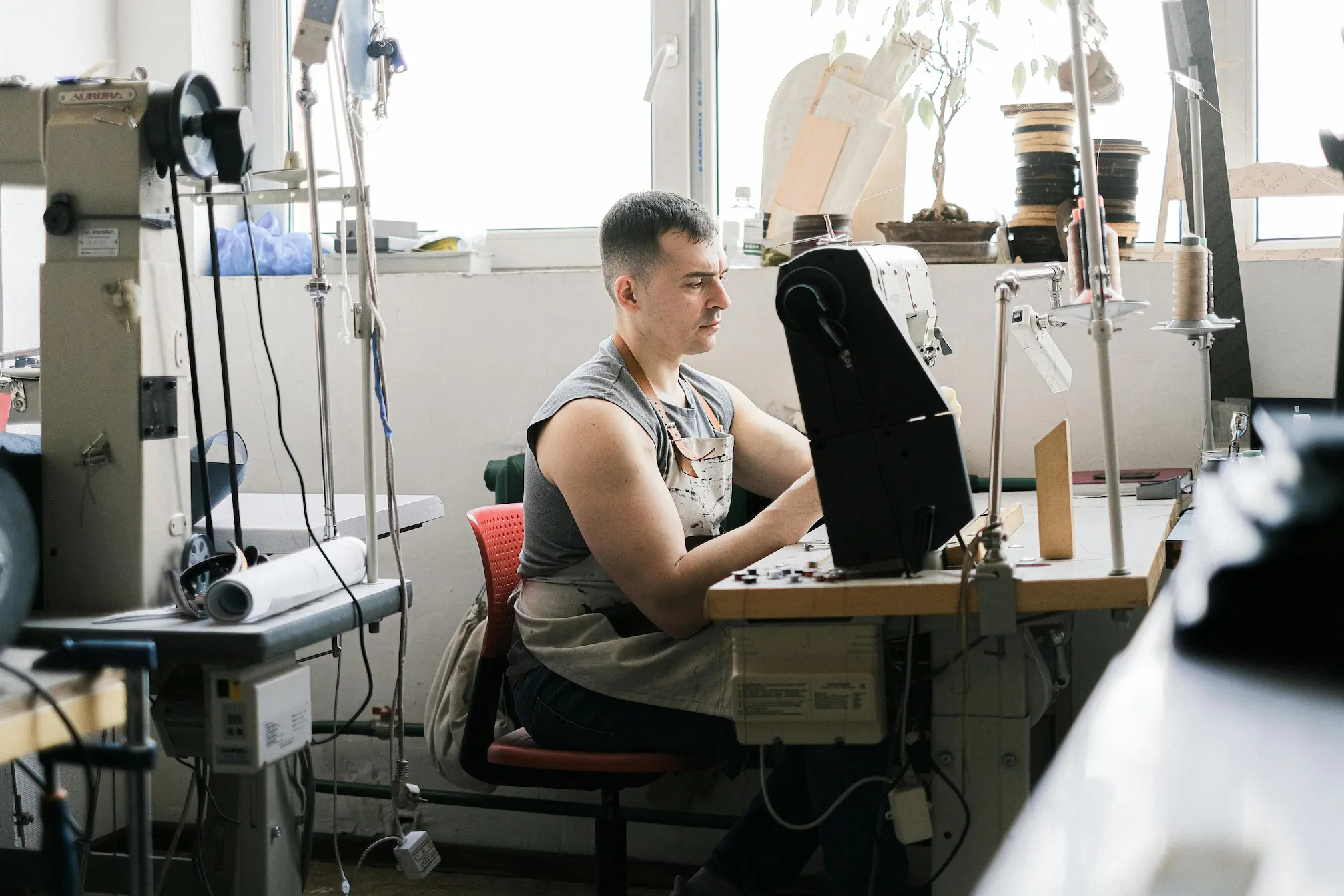
Summary: Your Manufacturing Partner for Excellence
Navigating the stitching process in textile industry requires a partner who understands both the micro-mechanics of a needle and the macro-logistics of global supply chains. ExploreTex is more than a manufacturer; we are your technical consultants.
From initial design to the final stitch, we ensure your vision is realized with precision. If you are ready to elevate your production quality, contact us today for a consultation.
For more insights into the world of fashion production, visit our blog.
Conclusion: Partner with Manufacturing Experts
Mastering the stitching process in textile industry is the secret to building a fashion brand that commands loyalty, high retail prices, and long-term success. It requires technical precision, the right machinery, and a deeply experienced workforce.
Whether you are launching a new streetwear line or scaling an established activewear brand, you need a partner who understands the nuances of fiber to fashion.
Ready to elevate your apparel quality? Contact ExploreTex Today to discuss your tech packs, sample development, and how we can optimize your brand’s manufacturing journey from Europe to the world.