
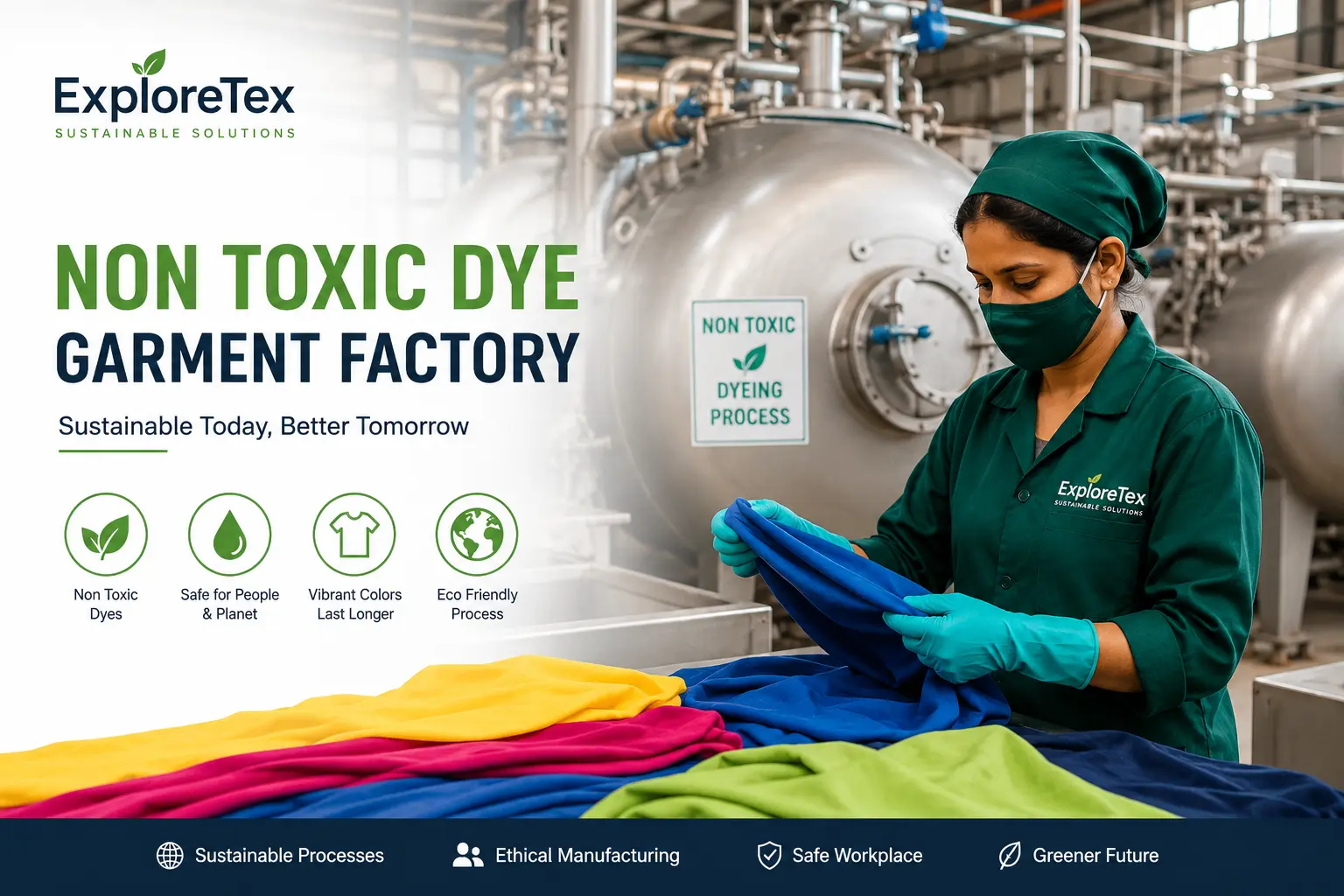
The Definitive Guide to Partnering with a Non Toxic Dye Garment Factory for Private Label Apparel
The global fashion landscape is undergoing a profound structural shift. For decades, the commercial apparel sector relied heavily on opaque supply chains, prioritizing high output speeds and low margins at the expense of ecological integrity. Today, regulatory frameworks, corporate ESG mandates, and consumer expectations demand absolute transparency. For modern apparel brands, the choice of a production partner is no longer just about cost per unit; it is about chemical accountability.
Transitioning your supply chain to a dedicated non toxic dye garment factory is the single most effective way to eliminate carcinogenic amines, heavy metals, and endocrine disruptors from your collections. However, finding a manufacturing partner that combines clean chemistry with world-class scalability remains a major challenge for many brands.
This is where ExploreTex changes the equation. As a premier, Portuguese-based clothing manufacturer with a registered European brand, we bridge the gap between advanced textile engineering and competitive global production.
Through our specialized Dual-Hub Production Model, we manage a curated network of elite partner facilities within the northern Portuguese textile clusters (such as Porto, Braga, and Barcelos) for low-MOQ luxury apparel development, alongside our own high-capacity, vertically integrated manufacturing facility in Bangladesh for high-volume commercial scaling.
This hybrid architecture ensures that whether your garments are crafted by artisanal mills in Europe or produced at scale in Asia, every single piece aligns with strict global ecological benchmarks.
Introduction: The Urgent Shift to Clean Chemistry in Fashion
The global textile industry is undergoing a systemic transformation. Historically characterized by immense water consumption and hazardous chemical runoff, the sector is now being fiercely regulated by international bodies and scrutinized by eco-conscious consumers. For modern fashion brands, partnering with a strictly audited non toxic dye garment factory is no longer a niche marketing angle—it is a fundamental requirement for legal compliance, risk mitigation, and long-term brand survival.
When a brand chooses to manufacture its collections inside a certified non toxic dye garment factory, it actively eliminates the heavy metals, formaldehyde, and toxic azo dyes that have long plagued standard supply chains. At the forefront of this industrial shift is Exploretex, a premier custom clothing manufacturer that has engineered a sophisticated Dual-Hub Production Model. By integrating the design leadership of our headquarters in Portugal with our wholly-owned, vertically integrated non toxic dye garment factory in Bangladesh, we deliver uncompromising sustainability without sacrificing high-volume scalability or cost-efficiency.
This comprehensive guide serves as a pure educational blueprint for fashion designers, procurement officers, and brand executives. We will dissect the exact chemical, mechanical, and logistical frameworks that define a true non toxic dye garment factory, providing unparalleled transparency into how ethical apparel is engineered from fiber to fashion.
What is a non toxic dye garment factory?
A non toxic dye garment factory is an advanced apparel manufacturing facility that exclusively utilizes eco-friendly, low-impact colorants, completely banning hazardous chemicals such as carcinogenic azo dyes, phthalates, and heavy metals. A genuine non toxic dye garment factory operates under strict closed-loop water management systems, employs advanced Effluent Treatment Plants (ETP) to purify wastewater, and holds rigorous global certifications like OEKO-TEX Standard 100, GOTS, and ZDHC (Zero Discharge of Hazardous Chemicals). By operating as a non toxic dye garment factory, the facility ensures the safety of the local ecosystem, factory workers, and the end consumer while producing premium textile goods.
The Baseline of Clean Manufacturing
The operational baseline of a non toxic dye garment factory is built on elimination and innovation. Standard dyeing facilities rely heavily on cheap, synthetic dyes that require massive amounts of water and thermal energy to fix the color to the fabric. In contrast, a non toxic dye garment factory utilizes low-impact reactive dyes and organic pigments.
Every stage of production within a non toxic dye garment factory is meticulously monitored. From the moment the raw yarn enters the facility to the final wash-care label being stitched, a non toxic dye garment factory tracks the chemical footprint of the garment. This level of traceability is exactly what full package clothing production requires in the modern era of the Digital Product Passport (DPP).
The Hidden Costs of Conventional Textile Dyeing
To understand the immense value of a non toxic dye garment factory, we must first examine the critical failures of conventional textile dyeing.
The Chemical Burden
Standard garment production utilizes over 8,000 synthetic chemicals. The most dangerous among these are azo dyes. While effective at producing vibrant, fast colors, certain azo dyes break down into aromatic amines under specific conditions—compounds that are known carcinogens. A certified non toxic dye garment factory completely prohibits these substances.
Furthermore, conventional dyeing requires the use of heavy metal mordants (such as chromium, copper, and zinc) to force the dye to adhere to the textile fibers. When these metals are discharged into local waterways, they devastate aquatic ecosystems and infiltrate agricultural water supplies. A non toxic dye garment factory mitigates this by using advanced fixing agents that are biodegradable and free of heavy metals.
The Water Crisis in Textile Production
Traditional dyeing is extraordinarily water-intensive. It can take up to 200 liters of water to produce a single kilogram of conventionally dyed fabric. A modern non toxic dye garment factory radically reduces this footprint. By utilizing advanced dyeing machinery with ultra-low liquor ratios, a non toxic dye garment factory can process the same kilogram of fabric using as little as 20 to 30 liters of water.
This drastic reduction is achieved through specialized airflow dyeing technologies and super-critical $CO_2$ dyeing techniques, which represent the pinnacle of innovation inside a modern non toxic dye garment factory.
The Chemistry of Clean Textiles: What Defines a Non Toxic Dye Garment Factory?
To understand why a specialized non toxic dye garment factory is essential to your brand’s survival, we must examine the chemical realities of traditional textile finishing. Conventional garment processing utilizes thousands of synthetic compounds, many of which remain trapped within the fabric matrices long after the product hits retail shelves.
+------------------------------------------------------------------------+
|                      TRADITIONAL TEXTILE DYEING                        |
|  [Raw Fabrics] -> [Azo Dyes & Heavy Metals] -> [Formaldehyde Finishes] |
|                                   |                                    |
|                                   v                                    |
|             [High Ecological Toxins & Regulatory Risks]                |
+------------------------------------------------------------------------+
                                    VS.
+------------------------------------------------------------------------+
|                     CLEAN TEXTILE ENGINEERING                          |
|  [Certified Fibers] -> [Low-Impact Dyes] -> [Closed-Loop Treatment]    |
|                                   |                                    |
|                                   v                                    |
|             [Zero Toxic Residue & Global Market Compliance]            |
+------------------------------------------------------------------------+
The Hazards of Conventional Garment Dyeing
In a standard, unvetted garment processing facility, synthetic organic colorants known as Azo dyes are widely used due to their cost efficiency and vivid color retention. However, under certain reductive conditions—such as contact with human sweat or body heat—a significant percentage of these azo compounds cleave to release aromatic amines. Many of these amines are classified as known human carcinogens.
Furthermore, traditional fixation agents frequently rely on heavy metals such as chromium, lead, cadmium, and copper to bind pigments to cellulose or synthetic fibers. These metals build up in human tissue and cause severe environmental damage when released into local waterways.
Another common toxic component is formaldehyde, which is typically applied during final finishing stages to provide wrinkle resistance and dimensional stability. This compound can cause severe skin irritation, respiratory issues, and long-term systemic health complications.
The Technical Framework of Non-Toxic Dyeing
A true, audited non toxic dye garment factory completely replaces these hazardous substances with sophisticated, low-impact alternatives. The clean manufacturing methodologies employed across the ExploreTex production network include:
Low-Impact Fiber-Reactive Dyes: These synthetic dyes establish a direct covalent bond with the structural molecules of the fiber (such as organic cotton or TENCEL™). This high molecular fixation rate reduces dye wash-off, resulting in excellent colorfastness while completely avoiding harmful aromatic amines.
Natural and Bio-Based Pigments: For advanced sustainable collections, our mills utilize colorants derived from agricultural byproducts, plant matter, and non-edible organic waste. These formulas ensure that the finished product remains entirely biodegradable.
Heavy Metal-Free Mordants: To fix color securely without environmental contamination, our production systems use clean, bio-synthesized alternatives that completely replace traditional chrome or heavy-metal fixation agents.
Formaldehyde-Free Performance Finishes: To achieve anti-wrinkle or soft-hand performance characteristics, our technical teams use natural bio-enzymes (such as cellulase) and mechanical stabilization techniques instead of harsh chemical resins.
By shifting production to a verified non toxic dye garment factory, fashion brands can safeguard consumer health while gaining full access to strict international markets. This proactive chemical management ensures compliance with major global regulations, including Europe’s REACH framework and California’s Proposition 65.
Core Technologies Inside a Non Toxic Dye Garment Factory
Building a non toxic dye garment factory requires multi-million-dollar investments in infrastructure, chemical engineering, and digital monitoring systems.
1. High-Fixation Low-Impact Dyes
The foundational technology of any non toxic dye garment factory is the dye itself. Low-impact dyes have a significantly higher absorption rate than conventional dyes. In a state-of-the-art non toxic dye garment factory, the dye fixation rate is a critical metric of success.
The formula for calculating the dye fixation rate ($F_{rate}$) within a non toxic dye garment factory is expressed as:
Where $C_{initial}$ is the initial concentration of dye, and $C_{effluent}$ is the concentration of unfixed dye remaining in the water. A premium non toxic dye garment factory achieves an $F_{rate}$ of 90% or higher, meaning less dye is wasted and less chemical runoff requires treatment.
2. Biological Effluent Treatment Plants (ETP)
You cannot operate a non toxic dye garment factory without a world-class Effluent Treatment Plant. Unlike basic chemical ETPs that simply separate sludge, a true non toxic dye garment factory utilizes biological ETPs. These systems use specific microbial cultures to digest and neutralize organic dye waste. The water that leaves a top-tier non toxic dye garment factory is often clean enough to be safely reintroduced into agricultural irrigation systems.
3. Zero Liquid Discharge (ZLD) Systems
The ultimate goal of a non toxic dye garment factory is to achieve Zero Liquid Discharge. In this setup, a non toxic dye garment factory recycles 100% of its wastewater back into the production cycle. The water efficiency equation used by engineers at a non toxic dye garment factory is:
When a non toxic dye garment factory achieves 95-100% $W_{efficiency}$, it effectively insulates the surrounding environment from any industrial footprint.
Global Compliance Frameworks: GOTS, OEKO-TEX, and ZDHC Execution
Operating an authentic non toxic dye garment factory requires rigorous external auditing and verifiable certifications. For a fashion brand, relying on unverified factory claims is a major liability. True compliance means every chemical input, processing stage, and wastewater treatment step is documented and certified by independent global bodies.
At ExploreTex, we integrate these regulatory standards directly into our dual-hub production system. Every partner mill in Portugal and our vertical manufacturing plant in Bangladesh operate under the world’s most stringent social, chemical, and environmental frameworks.
| Certification / Standard | Operational Focus | Compliance Requirement within our Network |
| GOTS (Global Organic Textile Standard) | Full supply chain traceability from organic agricultural fiber to finished product. | 100% exclusion of toxic inputs, heavy metals, and aromatic amines; mandatory effluent water treatment. |
| OEKO-TEX® Standard 100 | Strict laboratory testing of the final consumer garment for toxic residues. | Garment components (including fabrics, threads, buttons, and zippers) must be proven safe from harmful chemical concentrations. |
| ZDHC (Zero Discharge of Hazardous Chemicals) | Input chemical management at the factory level to eliminate hazardous emissions. | Elimination of priority chemical groups (MRSL compliance) and strict regular testing of factory wastewater discharge. |
GOTS: Total Organic Traceability
When utilizing our sustainable clothing manufacturers in Portugal network, brands can tap into comprehensive GOTS-certified supply loops. GOTS goes beyond evaluating the agricultural cultivation of the raw material; it strictly regulates every processing phase.
A GOTS-compliant non toxic dye garment factory must evaluate every single dye formulation, lubricant, and wetting agent against rigid environmental toxicity criteria. Biodegradability parameters are meticulously logged, and all conventional synthetic processing aids are systematically banned.
OEKO-TEX Standard 100: Consumer Product Safety
While GOTS focuses on the manufacturing journey, OEKO-TEX Standard 100 tests the final product. It provides absolute assurance that the finished garment is safe for close contact with human skin.
Across the ExploreTex ecosystem, our manufacturing processes are calibrated to meet Class I standards—the strictest classification level, designed specifically for infants and toddlers. This means our textiles are free from harmful levels of formaldehyde, pesticides, chlorinated phenols, and phthalates.
ZDHC: The Roadmap to Zero Discharge
To protect ecosystems surrounding our high-capacity production zones, ExploreTex aligns its input chemistry with the Zero Discharge of Hazardous Chemicals (ZDHC) framework. This strategy aims to eliminate hazardous chemicals from global apparel manufacturing loops.
By utilizing a ZDHC-compliant Manufacturing Restricted Substances List (MRSL), our technical teams ensure that dangerous chemicals never enter the facility in the first place. This approach effectively protects both factory workers and local water systems from chemical exposure.
The Exploretex Dual-Hub Model: European Management, Global Scale
Transitioning to a non toxic dye garment factory supply chain often presents a dilemma for fashion brands: European factories offer exceptional eco-standards but lack high-volume affordability, while standard Asian factories offer scale but often fail to meet strict toxicological limits.
Exploretex solves this through our proprietary Dual-Hub model, combining our top luxury textile suppliers in Portugal with our vertically integrated, wholly-owned non toxic dye garment factory in Dhaka.
Hub 1: The Portuguese Command Center
Located in Lisbon and Northern Portugal, our headquarters acts as the strategic command center. Here, we partner with the finest luxury textile suppliers in Portugal to develop high-end, low-MOQ runs requiring the prestigious “Made in Portugal” label. Our Portuguese tech team engineers the tech packs, establishes the zero-toxicity parameters, and selects the chemical formulations that our non toxic dye garment factory will use.
Hub 2: The Vertically Integrated Non Toxic Dye Garment Factory in Bangladesh
For high-volume retail scaling, we utilize our directly operated clothing manufacturer in Bangladesh. Because we own the facility, it operates as a strict non toxic dye garment factory under European management protocols. We do not outsource our eco-compliance. Our non toxic dye garment factory in Bangladesh operates with the exact same chemical restrictions and ethical mandates as our Portuguese ateliers.
By running our own non toxic dye garment factory, we bypass the middleman ambiguity that plagues standard sourcing. We enforce a strict zero-tolerance policy for exploitative labor, exceeding local labor laws to meet European expectations, making us the ultimate ethical clothing manufacturer in Bangladesh.
ExploreTex’s Dual-Hub Supply Chain: Portugal & Bangladesh Integrated
The most significant hurdle fashion brands face when adopting sustainable manufacturing is the trade-off between flexible development and large-scale cost efficiency. Small-scale boutique factories often lack the production capacity to handle massive commercial rollouts, while traditional high-volume facilities rarely support agile, low-MOQ premium development.
ExploreTex eliminates this barrier through our innovative Dual-Hub Production Model. By pairing European management, design, and premium prototyping with cost-effective, high-capacity vertical production, we offer an ideal manufacturing solution for growing fashion brands.
                  +----------------------------------------+
                  |               EXPLORETEX               |
                  |     Porto & Lisbon Headquarters        |
                  +-------------------+--------------------+
                                      |
                 +--------------------+--------------------+
                 |                                         |
                 v                                         v
+---------------------------------+       +---------------------------------+
|      PORTUGAL PRODUCTION HUB    |       |     BANGLADESH PRODUCTION HUB   |
|  - Elite Northern Mills Cluster  |       |  - Wholly Owned Vertical Plant  |
|  - Luxury Prototyping & Sampling|       |  - High-Volume Commercial Scale |
|  - Low MOQ Agile Development    |       |  - Cost-Effective Mass Output   |
+---------------------------------+       +---------------------------------+
The European Hub: Luxury Development and Low-MOQ Flexibility
Headquartered in Porto, Portugal, ExploreTex operates within one of Europe’s most advanced textile regions. Our close proximity to the market makes us a highly agile reliable apparel manufacturing partner in Europe for brands requiring rapid product development and quick turnaround times.
Our specialized European network focuses on high-end streetwear, premium heavy-weight jersey, and detailed tailoring. When brands partner with our network of best clothing manufacturers in Portugal, they gain access to small-batch production lines starting at 100 pieces per style.
This infrastructure allows you to test new, clean-chemistry capsule collections without committing capital to massive inventory runs. Furthermore, our direct collaboration with elite luxury textile suppliers in Portugal gives our clients first access to innovative, sustainable fabrics—including zero-dye organic cottons, closed-loop TENCEL™ blends, and advanced bio-synthetics.
The Asian Hub: Vertically Integrated Scalability
Once a collection is developed, refined, and validated in Europe, brands can seamlessly scale their volume through our directly operated vertical manufacturing facility in Bangladesh. Unlike conventional sourcing brokers who simply hand off tech packs to unvetted third parties, ExploreTex maintains direct management and equity control over its high-capacity facility.
This vertical integration ensures that our strict chemical standards remain consistent across both hubs. Our factory in Bangladesh operates as a highly advanced non toxic dye garment factory, equipped with cutting-edge automated dye-dispensing machinery, modern fabric processing technology, and fully compliant social and environmental practices (audited via BSCI and WRAP).
This allows us to handle high-volume retail distributions of hundreds of thousands of units while delivering up to 40% cost savings compared to purely European production, all without compromising on environmental ethics or product safety.
Interactive Tool: Textile Sustainability & Chemical Compliance Calculator
To help your brand evaluate the environmental and compliance profile of your next collection, use the interactive calculator below. This tool estimates the eco-impact reductions and certification requirements for your production run based on whether you utilize a standard facility or a verified non toxic dye garment factory.
Factory-Floor “Expert” Insights: Inside the Operations
To truly understand how a non toxic dye garment factory operates, we must look at the highly controlled standard operating procedures implemented by the Exploretex technical team.
Step 1: Material Fingerprinting
Before a single yard of fabric enters the dyeing vats of our non toxic dye garment factory, it undergoes Material Fingerprinting. “We vet every raw fiber for pesticide residue and synthetic contamination,” explains Muhammad Ilias Hossen, Founder of Exploretex. “If the raw material is tainted, running it through a non toxic dye garment factory defeats the purpose. We ensure the baseline canvas is pure.”
Step 2: The 48-Hour Relaxation Period
A common hallmark of discount factories is cutting fabric immediately after it is dyed and rolled, leading to massive shrinkage issues for the consumer. Inside our non toxic dye garment factory, we enforce a mandatory 24-48 hour fabric relaxation period. This allows the natural fibers to recover from the thermal stress of the eco-dyeing process, ensuring absolute dimensional stability.
Step 3: In-Line Quality Gates and Color Spectrophotometry
In a non toxic dye garment factory, color matching without the use of harsh chemical levelers requires extreme precision. Our non toxic dye garment factory utilizes advanced digital spectrophotometers. These machines analyze the exact light reflectance of the dyed fabric, ensuring that the eco-friendly pigments match the brand’s exact Pantone requirements without resorting to toxic chemical shortcuts.
Factory-Floor “Expert” Insights: The Technical Production Process
To truly understand how a modern non toxic dye garment factory functions, we must look beyond executive summaries and examine the actual engineering processes on the factory floor. Clean textile manufacturing requires strict control over every stage of production, from raw fiber prep to the final garment wash.
+------------------------------------------------------------------------+
|                      CLEAN PROCESSING FLOWLINE                         |
|                                                                        |
|  [Stage 1: Bio-Scouring]      --> Uses natural pectinase enzymes to    |
|                                   remove natural wax without NaOH.     |
|              |                                                         |
|              v                                                         |
|  [Stage 2: Gentle Bleaching]  --> Uses Hydrogen Peroxide (H2O2) breaking|
|                                   down into water & oxygen. No chlorine.|
|              |                                                         |
|              v                                                         |
|  [Stage 3: Precision Dyeing]  --> Automated low-impact smart machines   |
|                                   ensuring 90%+ molecular fixation.    |
|              |                                                         |
|              v                                                         |
|  [Stage 4: Closed-Loop ETP]   --> Advanced Biological Treatment plants  |
|                                   purifying 99% of process water.      |
+------------------------------------------------------------------------+
Stage 1: Advanced Pre-Treatment and Bio-Scouring
Before raw yarn or knitted fabric can accept dye pigments, it must undergo a thorough scouring process to remove natural waxes, proteins, and agricultural residues. Traditional manufacturing plants rely heavily on high concentrations of sodium hydroxide ($\text{NaOH}$), which generates highly alkaline, toxic wastewater streams.
In the ExploreTex factory network, this harsh method is replaced with advanced bio-scouring. This technique uses specialized pectinase enzymes to targetedly break down pectin and surface impurities without degrading the structural integrity of the cellulose fiber.
This process reduces water consumption by up to 30% and allows the scouring bath to be processed safely by standard biological treatment systems.
Stage 2: Eco-Friendly Bleaching
For pastel shades and bright white garments, fabrics must be bleached to remove their natural cream or beige undertones. Conventional textile mills historically used chlorine-based bleaching agents, which generate highly toxic organochlorine compounds and dioxins.
Our certified non toxic dye garment factory lines utilize exclusively hydrogen peroxide ($\text{H}_2\text{O}_2$) systems stabilized with organic biodegradable agents. Hydrogen peroxide breaks down safely into pure water and oxygen molecules, ensuring zero toxic residues remain on the fabric or enter the environment.
Stage 3: High-Fixation Automated Dyeing
During the core color-application phase, precision is critical to preventing environmental waste. Unautomated dye houses often suffer from poor dye bath exhaustion rates, which can leave up to 40% of the pigment unbound in the wastewater.
Traditional Exhaustion Rate: ~60% (40% pigment wasted in effluent water)
ExploreTex Exhaustion Rate:    ||||||||||||||||||||||||||||| 92%+ (Ultra-efficient fixation)
ExploreTex utilizes computer-controlled, low-liquor-ratio machines that precisely manage temperature, pH, and salt concentrations. This level of automation keeps dye fixation rates consistently above 92%.
By ensuring that the pigments form secure covalent bonds with the fabric fibers, we minimize the chemical load on our water treatment facilities and guarantee excellent wash fastness for the end consumer.
Stage 4: Advanced Biological Effluent Treatment Plants (ETP)
The defining feature of a reliable non toxic dye garment factory is its wastewater management infrastructure. Our vertical production facilities are supported by advanced multi-stage Effluent Treatment Plants (ETPs) that combine physical separation, chemical flocculation, and biological purification.
Technical Wastewater Analysis: Industrial process water passes through specialized bioreactors where active microorganisms consume organic carbon compounds and neutralize dye residues. The water then undergoes advanced membrane filtration, removing 99% of particulate matter and chemicals. This closed-loop system allows a significant percentage of the processed water to be safely recycled back into the production cycle, protecting local water resources.
Navigating the Certifications of a Non Toxic Dye Garment Factory
A facility cannot simply claim to be a non toxic dye garment factory; it must be backed by relentless, third-party scientific auditing. When evaluating a non toxic dye garment factory, you must verify the following global frameworks:
1. OEKO-TEX® Standard 100
This is the gold standard for a non toxic dye garment factory. OEKO-TEX tests every component of the garment—from the fabric to the thread and buttons—for harmful substances. When a non toxic dye garment factory achieves OEKO-TEX certification, it guarantees the product is harmless to human health.
2. Global Organic Textile Standard (GOTS)
A premium non toxic dye garment factory will often work with GOTS-certified organic cotton. The Global Organic Textile Standard (GOTS) ensures the organic status of textiles, from the harvesting of raw materials through environmentally and socially responsible manufacturing. A non toxic dye garment factory holding this certification utilizes strictly regulated colorants and auxiliaries.
3. The EU REACH Framework
Because Exploretex operates as a European entity, our non toxic dye garment factory operations adhere strictly to the REACH framework (Registration, Evaluation, Authorisation and Restriction of Chemicals). This European regulation is the strictest chemical legislation in the world, and we mandate that our non toxic dye garment factory in Bangladesh complies with it fully.
Why European Brands Are Switching to Non Toxic Dye Garment Factories
The migration toward the non toxic dye garment factory model is not purely altruistic; it is a highly calculated business strategy.
Legislative Pressure
Governments across the EU and North America are actively blocking the import of textiles containing hazardous chemicals. Brands that fail to utilize a certified non toxic dye garment factory face the catastrophic risk of their inventory being seized at customs. Partnering with Exploretex’s non toxic dye garment factory completely neutralizes this legislative risk.
Consumer Demand for Transparency
Modern consumers are fiercely loyal to brands that prioritize Ethical Sourcing & Sustainable Textile Innovation. Being able to market a product as “Manufactured in a certified non toxic dye garment factory” dramatically increases brand equity, justifies higher retail price points, and fosters deep customer trust.
Reduced Fabric Waste
A highly efficient non toxic dye garment factory leverages predictive modeling and automated cutting systems, achieving fabric utilization rates exceeding 85%. This efficiency inside a non toxic dye garment factory directly lowers the per-unit cost for the brand, offsetting the slightly higher cost of eco-friendly dyes.
Operational Economics: Scaling Sustainable Apparel Without Margin Destruction
A common concern for fashion brand executives is that migrating production to a certified non toxic dye garment factory will drive up manufacturing costs and erode retail margins. While sustainable inputs do command a minor premium over unvetted, toxic chemicals, strategic supply chain management can offset these costs entirely.
By utilizing ExploreTex’s optimized manufacturing network, brands can maintain highly competitive margins through clear financial planning and targeted logistics:
+-------------------------------------------------------------------------+
|                      SUPPLY CHAIN OPTIMIZATION                          |
|                                                                         |
|  [Low-Volume Development]  --> Sourced via nimble Portuguese Mills      |
|                                (Low capital risk / Rapid market testing)|
|                                                                         |
|  [High-Volume Scaling]     --> Shifted to our Vertical Bangladesh Plant |
|                                (Up to 40% cost reduction at scale)      |
+-------------------------------------------------------------------------+
1. Eliminating Sourcing Intermediaries
Traditional clothing production often relies on multiple independent brokers, fabric mills, dye houses, and sewing facilities. Each layer adds markups, communication friction, and quality risks.
ExploreTex functions as a fully integrated clothing manufacture in Portugal and supply chain manager. We control the journey from raw material sourcing through our network of luxury textile suppliers in Portugal directly to our production lines. This streamlined structure eliminates agent fees and passes those savings directly to your brand.
2. Reducing Inventory Risk with Nearshoring
For European retailers, using our Portuguese network for fast-turnaround production allows for efficient, demand-driven inventory management. Instead of ordering mass inventory months in advance from overseas suppliers, brands can launch tight, curated collections and restock popular styles in just a few weeks.
This agility significantly reduces end-of-season markdown waste and frees up working capital, easily offsetting the slightly higher per-unit cost of local European manufacturing.
3. Cost-Effective Scaling via Bangladesh
When your product lines reach high commercial volumes, transitioning production to our vertical hub in Bangladesh unlocks massive economies of scale. Our facility provides competitive labor and operational costs while maintaining identical non-toxic chemical standards and international compliance certifications.
This dual-hub agility allows your brand to enjoy the security of European quality oversight alongside the cost-efficiencies of high-capacity Asian manufacturing.
The Economic Advantage of Eco-Friendly Production
It is a common misconception that manufacturing inside a non toxic dye garment factory destroys profit margins. Through Exploretex’s integrated supply chain, a non toxic dye garment factory actually optimizes economics over the long term.
Because we operate our own non toxic dye garment factory in Bangladesh, we remove the multi-tiered markup applied by sourcing agents. Brands interact with our European headquarters for seamless communication, while benefiting from the factory-direct pricing of our non toxic dye garment factory.
Furthermore, Exploretex manages the complexities of international trade through DDP (Delivered Duty Paid) shipping. We handle the export documentation directly from our non toxic dye garment factory, clear customs, and deliver straight to your global warehouses, ensuring no hidden logistical fees erode your margin.
Specialized FAQ Section: Mastering the Non Toxic Dye Garment Factory
To further address Answer Engine queries and provide immediate value to technical sourcing teams, we have curated the most critical questions regarding operations within a non toxic dye garment factory.
Q1: Does a non toxic dye garment factory compromise on color vibrancy or fastness?
No. A modern non toxic dye garment factory utilizes high-quality reactive dyes that form covalent bonds with the cellulose fibers (like cotton). This chemical bond ensures that the colors produced in a non toxic dye garment factory are incredibly vibrant, resistant to fading from UV exposure, and possess superior wash-fastness compared to cheap synthetic dyes.
Q2: How does a non toxic dye garment factory impact the Minimum Order Quantity (MOQ)?
While traditional sustainable mills demand massive MOQs, Exploretex is highly adaptable. As a premium custom clothing manufacturer, we leverage our dual-hub model to offer flexible MOQs starting from just 500 pieces per design, allowing startups to access a world-class non toxic dye garment factory without over-leveraging their capital.
Q3: Can a non toxic dye garment factory handle complex blends and performance wear?
Absolutely. A sophisticated non toxic dye garment factory is equipped with specialized dyeing vessels capable of handling delicate organic silks, heavy-duty organic canvas, and recycled polyester blends. Our non toxic dye garment factory engineers precise thermal and chemical profiles for each specific fabric matrix.
Q4: How does Exploretex ensure compliance inside its non toxic dye garment factory in Bangladesh?
Because we maintain direct ownership and operational control over our vertical manufacturing facility in Bangladesh, our compliance is an operational mandate, not a mere suggestion to a third-party vendor. We implement permanent on-ground European management inside the non toxic dye garment factory to conduct daily inspections, ensuring 100% adherence to our safety, wage, and chemical standards.
Q5: What is the process for testing the fabrics produced by your non toxic dye garment factory?
Every batch of fabric dyed within our non toxic dye garment factory is subjected to rigorous lab testing. We test for shrinkage, pilling, color fastness to washing, and rubbing. More importantly, we conduct third-party toxicological screens to verify that the output of our non toxic dye garment factory is completely free of restricted substances.
Q6: Why is an ETP so critical to a non toxic dye garment factory?
Without an ETP (Effluent Treatment Plant), a facility cannot be classified as a non toxic dye garment factory. Even non-toxic dyes alter the pH and biological oxygen demand (BOD) of water. The biological ETP inside our non toxic dye garment factory restores the water’s natural balance before it is ever released or recycled, protecting the local hydrology.
Q7: How do I transition my current production to a non toxic dye garment factory?
The transition begins with a comprehensive technical review of your current tech packs. When you contact our apparel development team, we will analyze your current fabric compositions, recommend sustainable alternatives, and provide a transparent cost breakdown for migrating your production into our certified non toxic dye garment factory.
What parameters define a certified non toxic dye garment factory?
A certified non toxic dye garment factory is an industrial apparel manufacturing plant that excludes hazardous inputs from its textile finishing loops. Key requirements include using dyes free from carcinogenic aromatic amines (Azo-free), utilizing heavy metal-free fixation agents, eliminating formaldehyde resins, and maintaining full compliance with international environmental standards like GOTS, OEKO-TEX Standard 100, and the ZDHC MRSL guidelines.
How does ExploreTex enforce chemical safety across its dual-hub production network?
ExploreTex enforces uniform chemical safety across its European and Asian production hubs through a centralized quality management team based in Porto, Portugal. Fabric inputs are sourced exclusively from certified finding knitwear factories in Portugal and audited partner mills. Bulk manufacturing at our vertical factory in Bangladesh is monitored via on-site quality control teams, regular chemical testing of input dye lots, and strict multi-stage wastewater monitoring to ensure complete compliance with EU market regulations.
Why should apparel brands prioritize zero liquid discharge and biological ETP systems?
Apparel brands must prioritize biological Effluent Treatment Plants (ETPs) because traditional garment dyeing processes generate highly alkaline, chemical-heavy wastewater. Biological ETP systems utilize specialized microbial colonies to naturally break down organic matter and neutralize pigments. This treatment method removes over 99% of liquid toxins, allowing processed water to be safely reused within the factory and preventing hazardous chemicals from contaminating local agricultural water systems.
Engineering the Future of Clean Apparel
The era of chemically reckless fashion production is drawing to a rapid close. Consumers demand purity, legislation demands compliance, and the planet demands responsibility. Transitioning your brand’s supply chain to a non toxic dye garment factory is the single most effective action you can take to future-proof your business in this new landscape.
A true non toxic dye garment factory requires more than just good intentions—it requires rigorous scientific infrastructure, relentless quality control, and deep supply chain mastery. At Exploretex, our commitment to this model is absolute. We have engineered a manufacturing ecosystem where the precision of European design seamlessly integrates with the immense scale and ethical rigor of our non toxic dye garment factory in Bangladesh.
We do not just find you a non toxic dye garment factory; we are the non toxic dye garment factory. We eliminate the friction of global sourcing, absorb the complexities of chemical compliance, and deliver retail-ready, flawlessly constructed garments that you can be proud to stand behind.
Whether you are an emerging eco-conscious startup or an established international retailer looking to clean up your supply chain, the operational excellence of a dedicated non toxic dye garment factory is your ultimate competitive advantage. It is time to stop compromising between ethical manufacturing and profitable scaling.
Take the definitive step toward clean, profitable, and scalable fashion. Align your brand with the industry’s most advanced dual-hub production model and experience the uncompromising quality of a genuine non toxic dye garment factory.
Ready to build a collection that stands the test of time and conscience?
Contact Exploretex today to schedule a strategic consultation and transition your brand’s manufacturing to a world-class non toxic dye garment factory.
Specialized FAQ Section
Are non-toxic dyes as durable and colorfast as conventional chemical dyes?
Yes. Modern low-impact fiber-reactive dyes form a direct covalent bond with the structural molecules of the textile fiber. This molecular adhesion yields excellent colorfastness, wash resistance, and rub fastness that matches or exceeds traditional synthetic pigments. Across our entire production network, every fabric batch undergoes rigorous laboratory testing, including colorfastness assessments under ISO 105 standards, ensuring your garments maintain their vibrant color throughout their consumer lifecycle.
What is the minimum order quantity (MOQ) for production at a non toxic dye garment factory?
Through ExploreTex’s flexible dual-hub manufacturing model, minimum order quantities are tailored to your brand’s growth stage. Our European development hub in Portugal supports agile capsule developments starting at 100 pieces per style, drawing from our network of specialized sustainable knitwear production Portugal lines. For high-volume commercial scaling, our vertical facility in Bangladesh handles large-scale production runs, offering optimal cost efficiencies for major retail collections.
How can our brand verify that our garments were produced without hazardous chemicals?
Verification is supported by comprehensive documentation at every stage of production. When you partner with ExploreTex, your production run is backed by official Transaction Certificates (TCs) for GOTS-certified fabrics, alongside official test reports verifying compliance with OEKO-TEX Standard 100 parameters. We provide full transparency into our supply chain, giving your brand the verified proof required to confidently present your sustainability credentials to retail buyers and eco-conscious consumers.
Does your clean manufacturing setup support specialized knitwear and streetwear lines?
Absolutely. Our advanced production facilities are fully equipped to manufacture premium streetwear, complex heavyweight jerseys, and intricate knitwear. By partnering with leading custom knitwear manufacturers Portugal, we combine cutting-edge textile technologies—such as Shima Seiki WHOLEGARMENT® zero-waste flat-bed knitting—with eco-friendly chemistry. This allows your brand to deliver premium, heavy-soft hand-feel garments that meet the highest standards of clean luxury.
How does ExploreTex manage customs clearance and international logistics?
Our dedicated logistics team manages the entire export process, including all documentation, customs filings, and compliance certificates of origin. Whether your brand operates under FOB (Free on Board) terms or requires complete DDP (Delivered Duty Paid) delivery directly to your distribution centers across Europe, North America, or Oceania, we ensure a smooth, worry-free supply chain from the factory floor to your warehouse.
 Conclusion: Choosing ExploreTex as Your Clean Manufacturing Partner
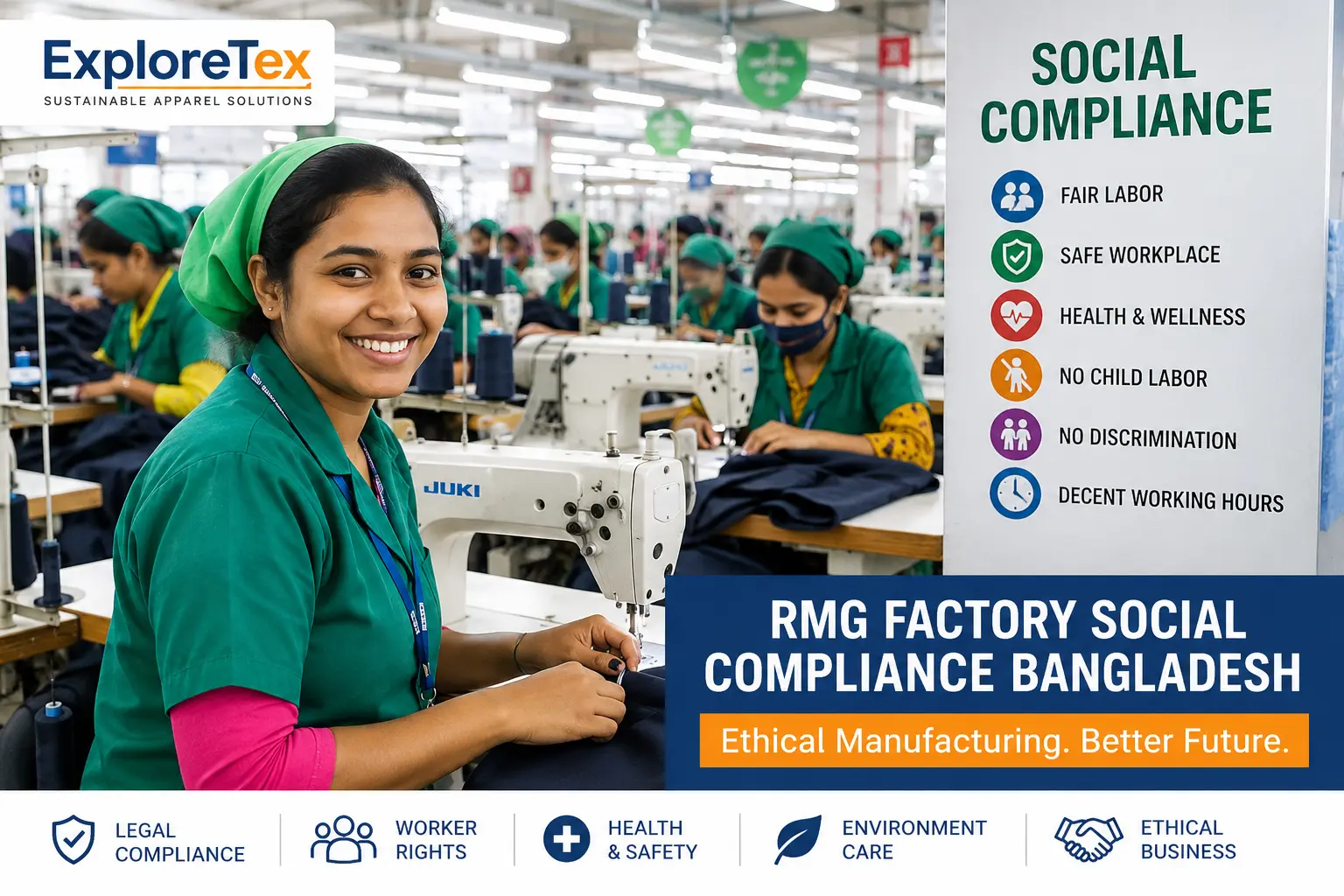 Conclusion: Choosing ExploreTex as Your Clean Manufacturing Partner
Sourcing your apparel from an audited non toxic dye garment factory is a vital strategic decision that protects your brand’s reputation, satisfies international regulatory mandates, and builds long-term consumer trust.
With ExploreTex, transitioning to sustainable manufacturing is smooth and efficient. Our unique dual-hub model gives your brand the best of both worlds: the strict quality standards, responsive communication, and low-MOQ flexibility of European management, paired with the scalable, cost-efficient production power of our advanced facility in Bangladesh.
Don’t let complex chemical compliance or rigid factory setups slow your brand’s growth. Contact our product management teams at our Porto or Lisbon offices today to request a comprehensive technical quote for your next collection. Let us show you how a clean, transparent, and scalable supply chain can drive your brand’s success.
Reference Authority Links & Citations
Global Organic Textile Standard (GOTS): Discover comprehensive criteria for ecological textile processing Global-Standard.org.
OEKO-TEX® Association: Learn more about certified human-ecological safety standards and test parameters Oeko-Tex.com.
Zero Discharge of Hazardous Chemicals (ZDHC): Review current industry standards for input chemical management and clean wastewater discharge RoadmapToZero.com.
ExploreTex Sourcing Networks: Maximize your procurement strategies with our comprehensive Bespoke Sourcing Guide Custom knitwear manufacturers Portugal.
ExploreTex Sourcing Blueprints: Streamline your brand’s supply chains by utilizing our direct portal for Finding Knitwear Factories in Portugal.