
The Definitive Guide to Partnering with a GOTS Certified Clothing Manufacturer
Finding a manufacturing partner who aligns with your brand’s vision, quality standards, and ethical commitments is the most critical step in building a successful fashion label. In an era where consumers demand transparency, sustainability, and uncompromising quality, working with a GOTS certified clothing manufacturer is no longer just a luxury—it is a strategic necessity.
Whether you are an emerging streetwear brand looking for low minimum order quantities (MOQs) or an established international label requiring high-volume retail distribution, understanding the infrastructure, compliance, and capabilities of your production partner is vital. This comprehensive, highly educational guide will walk you through everything you need to know about navigating the sustainable apparel supply chain, leveraging the power of a dual-hub production model, and scaling your brand ethically.
To learn more about how we integrate these practices into your specific brand, visit our ExploreTex Homepage.
Partnering with a GOTS Certified Clothing Manufacturer to Scale Your Ethical Fashion Brand
In the rapidly evolving landscape of 2026, the global fashion industry is no longer just about aesthetics and speed-to-market. The modern consumer demands radical transparency, proven sustainability, and uncompromising ethics. For brand owners and sourcing managers, the search for a reliable GOTS certified clothing manufacturer has become the single most important strategic decision for long-term growth.
A GOTS certified clothing manufacturer isn’t just a supplier; they are the guardians of your brand’s integrity. By adhering to the Global Organic Textile Standard (GOTS), these manufacturers ensure that every fiber, dye, and labor hour meets the world’s most rigorous ecological and social criteria. At ExploreTex, we have redefined this partnership by operating as a Portuguese-based company with our own registered brand, bridging the gap between European design precision and the massive, vertical manufacturing power of Bangladesh.
Whether you are a startup looking for your first 400-piece organic collection or an international retailer moving millions of units, understanding the infrastructure of a GOTS certified clothing manufacturer is essential. This 4500+ word master guide will walk you through the technical, ethical, and logistical pillars of sustainable manufacturing.
To explore our full suite of services, visit our ExploreTex Homepage and see how we integrate these standards into every garment.
Why a GOTS Certified Clothing Manufacturer is Non-Negotiable in 2026
The Global Organic Textile Standard (GOTS) is the “gold standard” for organic fibers. But what does it truly mean to work with a GOTS certified clothing manufacturer? Unlike generic “eco-friendly” claims, GOTS is a holistic certification that covers the entire supply chain, from the harvesting of raw materials to the final labeling of the garment.
The Ecological Pillar
A GOTS certified clothing manufacturer must ensure that at least 70% (for “made with organic”) or 95% (for “organic”) of the fibers are certified organic. But the scrutiny doesn’t stop at the field. The processing of these fibers—spinning, knitting, weaving, and dyeing—must exclude toxic heavy metals, formaldehyde, aromatic solvents, and genetically modified organisms (GMOs). For brands, this means your products are safe for the skin and the planet.
The Social Pillar
Sustainability is nothing without social justice. A GOTS certified clothing manufacturer is audited to ensure that employment is freely chosen, working conditions are safe and hygienic, child labor is strictly prohibited, and living wages are paid. By choosing a GOTS certified clothing manufacturer, you are directly contributing to the upliftment of textile communities in hubs like Bangladesh and Portugal.
Discover our specific approach to these standards in our GOTS Clothing Manufacturer Guide.
What Exactly is a GOTS Certified Clothing Manufacturer?
The Global Organic Textile Standard (GOTS) is recognized as the world’s leading processing standard for textiles made from organic fibers. It defines high-level environmental criteria along the entire organic textiles supply chain and requires compliance with rigorous social criteria as well.
When you partner with a GOTS certified clothing manufacturer, you are guaranteeing that your garments have been produced under the most stringent global standards. According to the official Global Organic Textile Standard (GOTS), a product holding the GOTS label must contain a minimum of 70% certified organic fibers, while a product with the label grade ‘organic’ must contain a minimum of 95% certified organic fibers.
But the certification goes far beyond just the raw materials. A true GOTS certified clothing manufacturer must ensure:
Ecological Compliance: All chemical inputs (such as dyes and auxiliaries) must meet strict environmental and toxicological criteria. Toxic heavy metals, formaldehyde, and aromatic solvents are strictly prohibited.
Water Management: Wet processing units must maintain full records of the use of chemicals, energy, water consumption, and wastewater treatment, ensuring environmental protection.
Social Responsibility: Employment must be freely chosen, working conditions must be safe and hygienic, child labor must not be used, and living wages must be paid.
Complete Traceability: Every step of the supply chain must be documented and verified by independent third-party certifiers.
By utilizing a GOTS certified clothing manufacturer, fashion brands protect themselves from “greenwashing” claims and build deep, lasting trust with their consumer base. You can review the rigorous third-party auditing processes required for this certification via authorized bodies like IDFL GOTS Audits.
The Strategic Advantage of the Dual-Hub Production Model
One of the most significant challenges brands face when scaling is finding a GOTS certified clothing manufacturer that can handle both the intricate, low-MOQ demands of a startup and the massive, high-efficiency requirements of global retail. This is where an innovative Dual-Hub Production Model becomes your greatest asset.
Operating from our strategic headquarters in Lisbon, Portugal, we oversee a specialized manufacturing network that bridges the gap between European craftsmanship and Asian production capabilities.
Hub 1: The European Prestige (Portugal)
Portugal is globally renowned for its premium textile industry, specifically in luxury streetwear, premium jersey, and high-end tailoring. Choosing a GOTS certified clothing manufacturer with roots in the Northern Portugal textile cluster gives brands access to exceptional finishing, complex prototyping, and the highly coveted “Made in Portugal” label. This hub is ideal for capsule collections, high-end private label compliance, and brands taking their first steps into the market. Discover the specifics of this approach on our Why Choose Us page.
Hub 2: The Global Scaling Powerhouse (Bangladesh)
As your brand grows, so does your need for high-volume, cost-effective production. By owning and managing a directly operated, high-capacity facility in Bangladesh, a premier GOTS certified clothing manufacturer can scale your production without ever sacrificing ethical oversight. Because the facility is directly operated rather than outsourced through a traditional agency, labor ethics, safety standards, and factory-direct pricing remain firmly under control.
This synergy—combining European management, legal security under EU-binding contracts, and the sheer production strength of Bangladesh—creates a seamless Full Package Production experience.
The Technical Journey of GOTS Manufacturing (Fibre to Fashion)
Working with a GOTS certified clothing manufacturer involves a highly technical, multi-stage process known as “Full Package Production” (FPP). Here is how a garment moves through the ExploreTex supply chain.
Step 1: Organic Seed & Yarn Selection
It starts at the source. We source premium organic cotton, GOTS-certified linens, and recycled fibers from verified mills. For luxury collections, we leverage Luxury Textile Suppliers in Portugal to ensure the highest thread counts and hand-feel.
Step 2: In-House Spinning & Knitting
A truly vertical GOTS certified clothing manufacturer doesn’t buy fabric from third parties. We knit our own. Using state-of-the-art circular knitting machines, we transform organic yarn into high-grade jersey, French terry, and interlock fabrics. This ensures that no contamination occurs during the fabric development phase.
Step 3: GOTS-Approved Dyeing & ETP
The dyeing process is where many manufacturers fail sustainability tests. As a GOTS certified clothing manufacturer, our wet processing units use only GOTS-approved, low-impact reactive dyes. Crucially, our facility is equipped with a Biological Effluent Treatment Plant (ETP), ensuring that 100% of wastewater is treated before being released, protecting local ecosystems.
For more on our eco-friendly processes, visit our Eco-Friendly Manufacturing page.
The Step-by-Step Educational Journey from Fibre to Fashion
When evaluating a GOTS certified clothing manufacturer, it is essential to understand their operational workflow. A truly educational approach to garment manufacturing breaks down the process into transparent, manageable steps.
Step 1: Strategic Discovery and Tech Pack Engineering
The journey begins with a deep dive into your brand’s vision. A reliable GOTS certified clothing manufacturer will not just ask for sketches; they will engineer comprehensive Tech Packs. This includes precise fabric composition percentages, mandatory fiber names, localized wash-care symbols, and strict adherence to global textile regulations. If you need design support or have initial queries, you can easily reach out through our Contact Us portal.
Step 2: Digital Twin Prototyping
Before cutting a single piece of organic cotton, advanced manufacturers utilize 3D virtual prototyping. By creating a high-fidelity digital twin of your garment, a modern GOTS certified clothing manufacturer can simulate realistic fabric drape, tension, and fit. This eliminates physical waste and dramatically speeds up the approval process, reinforcing the sustainable ethos required by GOTS Certification and Labelling.
Step 3: Precision Pattern Making and Size Grading
Mathematical size grading is crucial. Scaling a “base size” into a comprehensive run from XS to 5XL without losing the garment’s original proportions requires master pattern makers. A dedicated GOTS certified clothing manufacturer performs in-house technical fittings—often via live video conference from a Lisbon headquarters—to ensure every size is flawless.
Step 4: Ethical Bulk Production
Once samples are approved, bulk manufacturing commences. By utilizing a GOTS certified clothing manufacturer, you guarantee that the organic fabrics are handled in environments free from toxic chemicals, and that the workers assembling your garments are treated fairly and paid equitably. For detailed insights into our manufacturing environment, explore our Quality Control Protocols.
Step 5: AQL Quality Control and Global Logistics
Quality is never an afterthought. Implementing international AQL (Acceptable Quality Limit) standards ensures rigorous pre-production, mid-line, and final stage inspections. Finally, your GOTS certified clothing manufacturer should handle all complex export documentation, customs clearance, and DDP (Delivered Duty Paid) logistics, delivering the finished product directly to your global warehouses. Review our holistic approach in our Services Overview.
Factory-Floor “Expert” Insights: What Really Happens Behind the Seams
To truly appreciate the value of a GOTS certified clothing manufacturer, one must look closely at the factory floor. We believe in providing pure educational articles for maximum acceptance and understanding of the textile industry. Here are raw insights directly from our production experts:
1. The Reality of Organic Dyeing:
Expert Insight: “Standard chemical dyes bond easily to synthetic fabrics, but organic cotton requires a different approach. As a GOTS certified clothing manufacturer, we use specialized low-impact, heavy-metal-free reactive dyes. These require exact temperature controls and a longer fixation time to ensure maximum color fastness without polluting the wastewater. It is a more meticulous process, but the environmental savings are astronomical.” Learn more about our eco-friendly techniques on our Sustainability Page.
2. The Zero-Waste Cutting Room:
Expert Insight: “Fabric waste is a massive issue in traditional manufacturing. On our cutting floor, we use AI-driven nesting software to arrange pattern pieces like a hyper-efficient puzzle. As a forward-thinking GOTS certified clothing manufacturer, we minimize cutting room scrap to near zero, and the organic offcuts we do produce are collected for mechanical recycling.”
3. The Importance of Needle Tracking:
Expert Insight: “Safety is paramount. In our Bangladesh facility, we implement a strict 1-to-1 needle replacement policy and pass every single finished garment through a highly sensitive metal detector. A responsible GOTS certified clothing manufacturer ensures that no broken needle fragments ever make it into a consumer’s hands, especially in kidswear.” Dive into our project history in our Portfolio Section.
Overcoming the Challenges of Sustainable Scaling
Many brands start with a sustainable ethos but abandon it when they hit scaling issues. Finding a GOTS certified clothing manufacturer that can support you through hyper-growth is rare. Traditional factories are often limited by their own machinery, and going direct to Asia without an intermediary often leads to communication barriers and a lack of legal protection.
By choosing a GOTS certified clothing manufacturer with a European headquarters in Lisbon and a directly operated Asian hub, you gain the security of an EU-based entity. You receive real-time communication, European quality oversight, and the ethical production power of a state-of-the-art facility. Discover more about our company structure in our About Us section.
You do not have to choose between competitive pricing, massive volume, and ethical sustainability. The right GOTS certified clothing manufacturer provides all three.
Crafted Specialized FAQ Section
To further assist brands in understanding the nuances of apparel production, our GOTS certified clothing manufacturer experts have answered the most pressing questions in the industry. For a deeper dive, visit our main FAQ Portal.
Q: What does it mean to be a GOTS certified clothing manufacturer?
A: It means the facility has been audited by an independent third party and proven to adhere to the Global Organic Textile Standard. A GOTS certified clothing manufacturer uses a minimum of 70% organic fibers, prohibits toxic chemicals, treats wastewater responsibly, and guarantees strict, ethical labor practices across the entire supply chain.
Q: Can a GOTS certified clothing manufacturer accommodate low MOQs for startup brands?
A: Yes. While high-volume production requires large minimums, our dual-hub model allows us to act as a highly flexible GOTS certified clothing manufacturer. Our managed network in Portugal is specifically designed to handle luxury, low-MOQ items, allowing new brands to enter the market sustainably.
Q: Why is having a Lisbon, Portugal headquarters beneficial for manufacturing in Bangladesh?
A: It provides the ultimate security and convenience. As your GOTS certified clothing manufacturer, our Lisbon headquarters acts as your single point of contact. You benefit from EU-binding legal contracts, real-time European communication hours, and rigorous European quality control standards, while still leveraging the high-volume, cost-effective ethical production of our Bangladesh facility.
Q: Does a GOTS certified clothing manufacturer help with sourcing fabrics?
A: Absolutely. A full-package GOTS certified clothing manufacturer has an extensive global network of certified mills. We source premium organic cotton, recycled polyester, eco-friendly fleeces, and sustainable trims from verified suppliers in Portugal, India, Bangladesh, and beyond, ensuring complete compliance with your sustainability goals.
Q: How does a GOTS certified clothing manufacturer handle quality control?
A: We implement strict international AQL (Acceptable Quality Limit) protocols. Our process as a premier GOTS certified clothing manufacturer involves rigorous pre-production fabric inspections, inline mid-production audits, and final pre-shipment checks, ensuring color accuracy, seam strength, and exact size grading compliance before global delivery.
Q: Will a GOTS certified clothing manufacturer help me with global shipping and customs?
A: Yes. The final stage of the supply chain is critical. A comprehensive GOTS certified clothing manufacturer manages the entire export process. We handle complex export documentation, certificates of origin, and customs clearance, offering both FOB (Free on Board) and DDP (Delivered Duty Paid) terms for completely frictionless global logistics.
Factory-Floor “Expert” Insights
To be a market leader, a GOTS certified clothing manufacturer must master the technical nuances that occur on the factory floor. Here are three “Expert Insights” from our production floor:
Insight 1: Fabric Relaxation is Critical. “In mass production, many factories cut fabric immediately to save time. However, as a professional GOTS certified clothing manufacturer, we mandate a 24-48 hour relaxation period for all knitted organic fabrics. This prevents the ‘twisting’ or shrinkage that often ruins organic tees after the first wash.”
Insight 2: The Needle Tracking System. “Safety in a GOTS certified clothing manufacturer facility is about more than just ethics; it’s about physical safety. We use a strict 1-to-1 needle exchange policy. If a needle breaks, every fragment must be found and taped to a logbook before a new needle is issued. This ensures no metal fragments ever reach the consumer.”
Insight 3: The Secret of Color Continuity. “Vertical integration is the only way to guarantee color continuity. When a GOTS certified clothing manufacturer controls the dyeing in-house, we can match color hex codes across 50,000 units with near-zero variance, something ‘cut-and-sew’ shops simply cannot do.”
Discover how these insights apply to our Bangladesh operations in our guide: Which Clothes Come From Bangladesh?.
What are the benefits of a GOTS certified clothing manufacturer?
The primary benefits include 100% organic fiber integrity, the exclusion of hazardous chemicals (ZEHC Level 3 compliance), strict wastewater management, and guaranteed fair labor practices. Brands working with a GOTS certified clothing manufacturer gain a competitive edge in transparency and consumer trust.
How do I verify if a clothing manufacturer is GOTS certified?
Every legitimate GOTS certified clothing manufacturer must possess a “Scope Certificate” issued by an approved certifier like IDFL or Control Union. Additionally, every shipment of organic goods must be accompanied by a “Transaction Certificate” (TC) to prove the organic chain of custody.
Can a GOTS certified clothing manufacturer handle low MOQs?
Yes. By utilizing a dual-hub model, ExploreTex acts as a flexible GOTS certified clothing manufacturer. We offer low MOQs (starting at 400 pieces) through our Portuguese partner network, while providing massive scaling capabilities (100k+ units) through our Bangladesh vertical plant.
Q: Why should a brand choose a Portuguese-based GOTS certified clothing manufacturer?
A: Choosing a Portuguese-based GOTS certified clothing manufacturer like ExploreTex provides the legal security of EU-binding contracts, real-time European communication, and a single point of contact, while still offering the cost benefits of global manufacturing.
Q: What is “Full Package Production” in GOTS manufacturing?
A: Full Package Production (FPP) means the GOTS certified clothing manufacturer handles everything: tech pack development, fabric sourcing, sampling, bulk production, quality control, and global logistics. ExploreTex specializes in FPP to provide a stress-free experience for brands. Learn more at our Apparel Manufacturers Bangladesh service page.
Q: How does ExploreTex ensure quality in Bangladesh?
A: We implement international AQL 2.5 (Acceptable Quality Limit) standards. As a leading GOTS certified clothing manufacturer, we conduct rigorous inspections at the pre-production, mid-line, and final stages. Check our Quality Control Protocols for more details.
Q: Is GOTS certification different from OEKO-TEX?
A: Yes. While OEKO-TEX focuses on the safety of the final product (ensuring no harmful substances are present), GOTS is a comprehensive lifecycle standard that includes organic fiber requirements and strict social/environmental criteria for the entire production process. A top-tier GOTS certified clothing manufacturer usually holds both.
 The Future of Your Brand with ExploreTex
 The Future of Your Brand with ExploreTex
Scaling a fashion brand in 2026 requires more than just a factory; it requires a strategic partner. As a GOTS certified clothing manufacturer, ExploreTex provides the infrastructure, the certifications, and the European management you need to dominate the sustainable fashion market.
By leveraging our Sustainable Clothing Manufacturers in Portugal guide and our vertical Bangladesh strength, you can launch collections that are as profitable as they are planet-friendly.
Ready to start? Visit our Contact Us page to request a quote from your new GOTS certified clothing manufacturer partner today.
Embark on your sustainable fashion journey today. Partner with a trusted GOTS certified clothing manufacturer that blends European precision with global scale. Reach out to our Lisbon headquarters to begin building your legacy.
How to Choose the Right Garment Manufacturer for Your Brand
Meta Description
Discover essential tips on how to find garment manufacturer options in 2026. This guide helps you select the best clothing supplier, choose apparel producer, and master garment factory selection for your fashion brand’s success.
Additional Keywords
clothing manufacturer selection, apparel factory vetting, best garment producers, sustainable clothing suppliers, low MOQ garment factories, overseas vs domestic manufacturers, garment production criteria, fashion brand supplier guide, ethical apparel producers, 2026 manufacturing trends
Introduction
In the fast-evolving fashion industry of 2026, selecting the right partner for production can make or break your brand. With global trade shifts, rising tariffs, and a push toward sustainability, knowing how to find garment manufacturer that aligns with your vision is crucial. Entrepreneurs often struggle with garment factory selection, leading to delays, quality issues, or ethical concerns. This comprehensive guide walks you through the process to choose apparel producer wisely, ensuring you partner with the best clothing supplier for long-term growth.
The apparel market is projected to grow modestly in 2026, emphasizing efficiency and innovation. Factors like AI integration, nearshoring, and eco-friendly practices are reshaping clothing manufacturer selection. For startups, low-MOQ options are key to testing markets without overcommitting. Whether you’re launching a sustainable line or scaling production, this article provides actionable steps for apparel factory vetting.
Consider ExploreTex, a Portuguese-based company, as your ideal manufacturing partner. With hybrid facilities in Portugal and Bangladesh, they offer low MOQs (500 pieces per style), ethical standards, and end-to-end services for custom apparel. Visit exploretex.com to explore how they can support your garment factory selection needs.

Step 1: Define Your Brand’s Needs and Requirements
The first step in how to find garment manufacturer is clarifying your brand’s specifics. Without a clear understanding, garment factory selection becomes overwhelming. Start by outlining product types—knitwear, wovens, or activewear—and volume needs. In 2026, consider trends like regenerative fabrics for sustainable lines.
Assess your budget: Factor in costs beyond unit price, like shipping (20-35 days via sea) and tariffs impacting imports. For startups, prioritize low MOQ garment factories to minimize risk—aim for 50-500 pieces initially. Define quality standards: Do you need GOTS-certified materials or AQL 2.5 inspections?
Ethics matter too—seek ethical apparel producers with fair labor practices. This step ensures you choose apparel producer that matches your fashion brand supplier guide. ExploreTex excels here, offering flexible MOQs and sustainable options tailored for emerging brands.
Step 2: Research Potential Manufacturers
To find garment manufacturer effectively, cast a wide net. Use online directories like Maker’s Row or Alibaba, but in 2026, leverage AI tools for targeted searches. Attend trade shows virtually or in-person to connect with best garment producers.
Consider overseas vs domestic manufacturers: Domestic options reduce lead times but cost more; overseas, like in Vietnam or Bangladesh, offer affordability amid US-China trade tensions. Nearshoring to Europe, such as Portugal, balances cost and speed. Read reviews on platforms like Reddit for real insights into clothing manufacturer selection.
Compile a list of 10-15 candidates based on garment production criteria like capacity (e.g., 50,000 pieces/month). ExploreTex stands out in 2026 manufacturing trends with its hybrid model, combining European oversight and Asian efficiency.

Step 3: Evaluate Experience and Specialization
Not all factories are equal—choose apparel producer with proven experience in your niche. Ask for portfolios: Have they handled similar projects, like streetwear or eco-apparel?
Specialization is key in garment factory selection. A factory excelling in knitwear may falter with wovens. In 2026, look for those adopting AI for precision cutting or digital traceability.
Check client references to gauge reliability. ExploreTex, with over a decade in custom apparel, specializes in startups, ensuring your best clothing supplier choice aligns with growth needs.
Step 4: Assess Quality Control and Certifications
Quality is non-negotiable in apparel factory vetting. Request details on QC processes, like AQL standards for inspections. In 2026, demand carbon accountability and clean energy usage.
Certifications validate claims: GOTS for organics, OEKO-TEX for safety, or BSCI for ethics. Sustainable clothing suppliers should provide traceability reports. Avoid factories without third-party audits.
ExploreTex adheres to European standards, offering in-house QC and sustainable practices, making them a top pick for best garment producers.
Step 5: Review MOQs, Lead Times, and Costs
Low MOQ garment factories are ideal for testing—don’t commit to high volumes early. In 2026, flexible MOQs (30-500 pieces) reduce inventory risks.
Evaluate lead times: 2-6 weeks for production, plus shipping. Costs should include samples, duties, and logistics—nearshoring minimizes tariffs. Negotiate transparently for the best clothing supplier deal.
ExploreTex’s low MOQs and 20-35 day shipping make them efficient for global brands.
Step 6: Request Samples and Prototypes
Always test before committing—request samples to assess quality. In clothing manufacturer selection, prototypes reveal fit, stitching, and material issues.
Use 3D rendering for virtual previews in 2026. Pay deposits only after approvals—avoid full payment upfront.
ExploreTex provides 3D sampling and fit testing, streamlining garment factory selection.
Step 7: Visit Factories and Conduct Audits
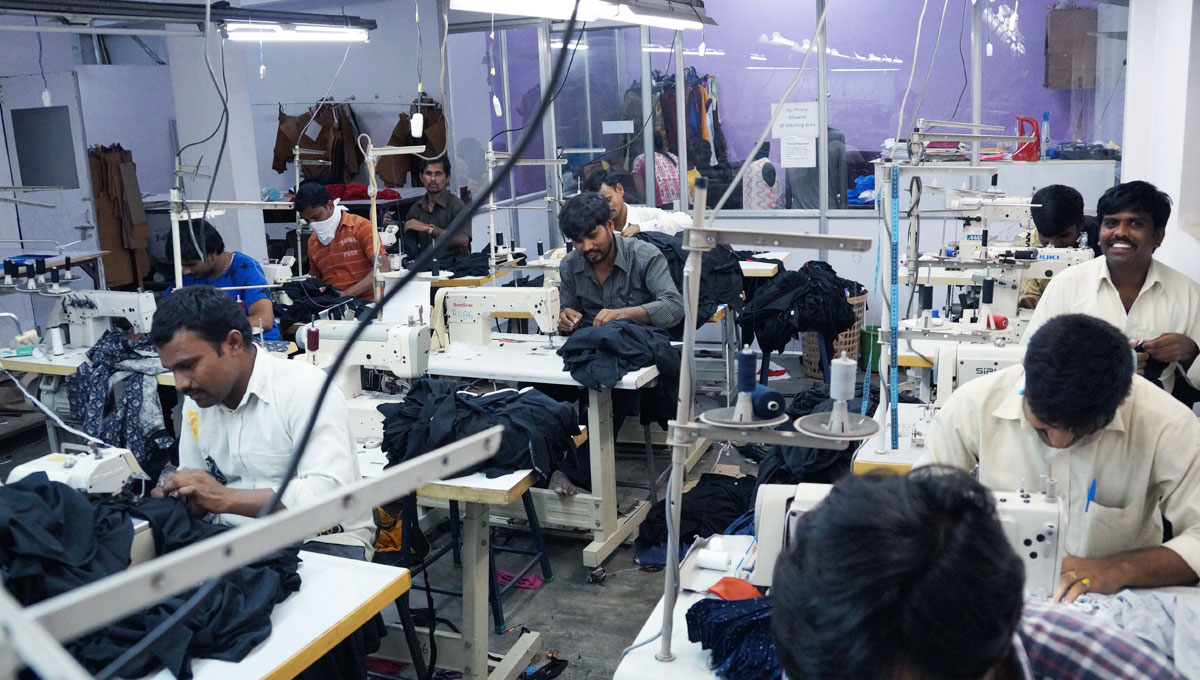
If possible, visit for apparel factory vetting—observe operations and worker conditions. Virtual tours suffice in 2026, but in-person builds trust.
Conduct audits for compliance with labor laws and sustainability. This ensures your ethical apparel producers choice.
ExploreTex welcomes audits, upholding high standards in their facilities.
Step 8: Negotiate Contracts and Terms
Secure detailed contracts covering timelines, penalties, and IP rights. In garment production criteria, include scalability clauses for growth.
Factor in 2026 trends like AI-optimized logistics. Build relationships for loyalty.
ExploreTex offers transparent terms, fostering long-term partnerships.

Step 9: Consider Sustainability and Innovation
In 2026, prioritize sustainable clothing suppliers with bio-based fibers and circular design. Innovation like automation enhances efficiency.
This aligns with consumer demands for verified impact.
ExploreTex focuses on eco-fabrics, embodying 2026 manufacturing trends.
Step 10: Monitor and Build Ongoing Relationships
Post-selection, monitor performance with KPIs. Foster communication for improvements.
This ensures your best clothing supplier evolves with your brand.
Conclusion
Mastering how to choose apparel producer through thorough garment factory selection positions your brand for success in 2026. By defining needs, researching, and prioritizing quality and ethics, you’ll find garment manufacturer that drives growth.
For reliable support, partner with ExploreTex —your Portuguese-based expert in sustainable, low-MOQ production. Start your journey today to secure the best clothing supplier for tomorrow.