
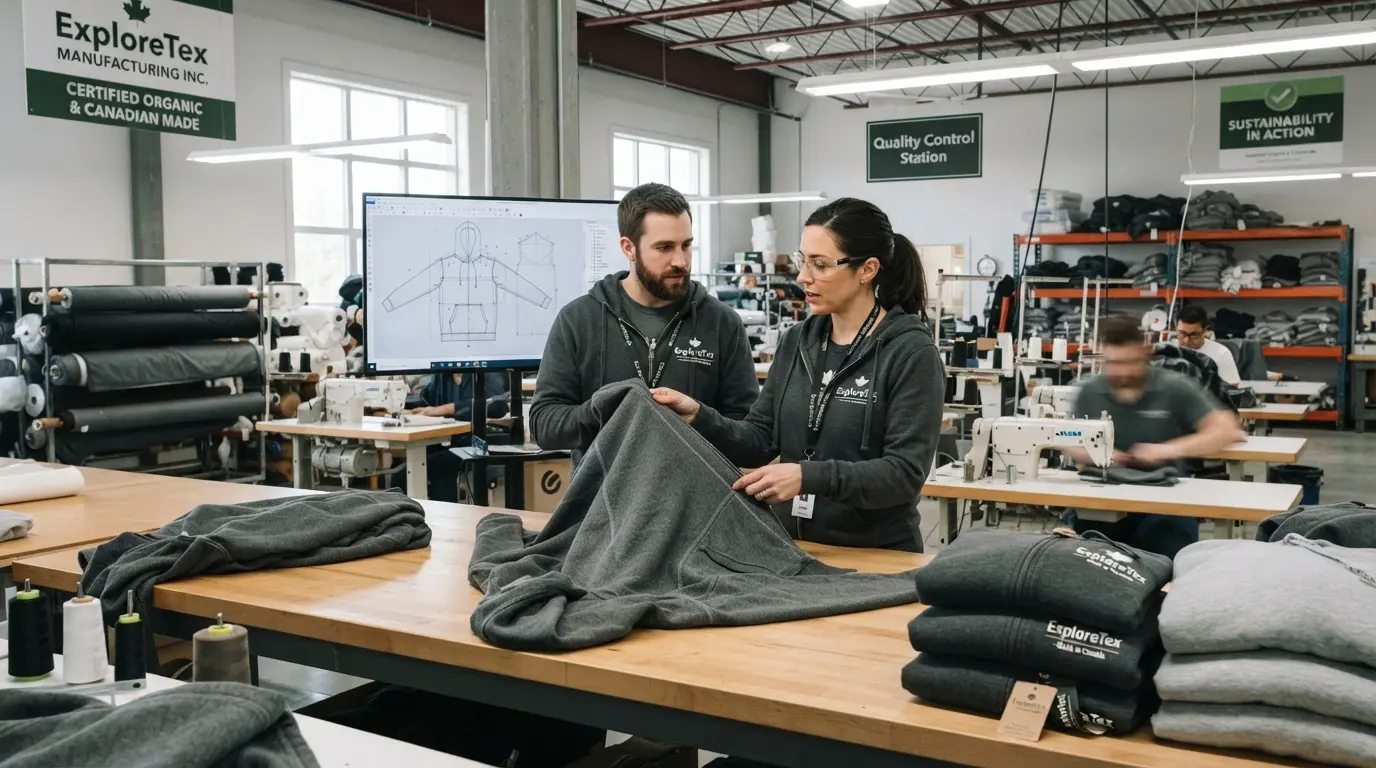
Canadian Clothing Factories: The Complete 2027 Sourcing, Costing & Hybrid Manufacturing Guide for Scaling Fashion Brands
Executive Summary: Navigating the Reality of Canadian Clothing Factories in 2027
Searching for reliable Canadian clothing factories has become one of the most critical—and financially complex—decisions facing fashion founders, retail buyers, and private-label procurement directors across North America. Whether you are launching an independent streetwear label in Toronto, scaling an activewear line in Vancouver, or managing seasonal replenishment for a heritage outerwear brand in Montreal, the domestic manufacturing landscape presents an immediate strategic dilemma. While Canadian clothing factories offer geographic proximity, shared time zones, and strong domestic craftsmanship, severe labor shortages, high minimum wage floors, limited vertical textile milling, and elevated overhead expenses frequently push per-unit cut-and-sew prices beyond sustainable retail margins.
At the same time, blind offshoring to unvetted overseas brokers exposes apparel brands to communication breakdowns, inconsistent sizing, intellectual property risks, and punitive import duties. This structural gap is why forward-thinking apparel executives who initially evaluate Canadian clothing factories are increasingly adopting a dual-continent hybrid manufacturing model.
As a registered Portuguese brand and corporate entity headquartered in Lisbon, ExploreTex bridges the divide between North American brand expectations, European technical governance, and high-capacity vertical manufacturing. By operating vetted partner facilities across Northern Portugal’s renowned textile cluster alongside directly owned, debt-free vertical manufacturing infrastructure in Dhaka, Bangladesh, ExploreTex delivers what isolated Canadian clothing factories cannot: single-point-of-contact accountability under European Union contract law, PhD-led textile engineering, and 0% duty-free import access into Canada under both the Canada-European Union Comprehensive Economic and Trade Agreement (CETA) and Canada’s Least Developed Country Tariff (LDCT) framework.
In this comprehensive pillar guide, our technical leadership dissects the true economics of Canadian clothing factories, compares domestic cut-and-sew operations against dual-hub European and South Asian production, shares proprietary factory-floor quality engineering protocols, and provides an actionable roadmap to scale your apparel brand profitably.
Finding reliable Canadian clothing factories is the first step for most North American fashion startups, streetwear labels, and retail buyers launching a new apparel collection. Whether you operate out of Toronto, Vancouver, or Montreal, evaluating Canadian clothing factories quickly reveals a sharp commercial dilemma. While local Canadian clothing factories offer geographic proximity, shared time zones, and zero ocean transit delays, high domestic labor wages, steep urban overhead, and limited local textile milling push per-unit production costs far beyond sustainable retail margins.
Because most domestic Canadian clothing factories operate strictly on a Cut, Make, Trim (CMT) basis, brands working with Canadian clothing factories must still import raw fabrics from abroad before paying high North American sewing rates. Furthermore, aging workforces mean many Canadian clothing factories struggle to absorb sudden bulk scaling when a collection sells out.
That structural bottleneck is why scaling apparel founders who initially search for Canadian clothing factories are adopting a hybrid global production strategy. As a registered Portuguese brand and corporate entity headquartered in Lisbon, ExploreTex bridges the gap between North American expectations, European technical governance, and high-capacity vertical manufacturing. Instead of forcing brands to choose between overpriced Canadian clothing factories and risky unvetted overseas brokers, ExploreTex connects your design team directly to vetted partner facilities across Northern Portugal alongside our own debt-free vertical manufacturing infrastructure in Bangladesh.
For apparel executives comparing domestic Canadian clothing factories against international alternatives, our hybrid network delivers unmatched unit economics and legal security. Brands that transition from local Canadian clothing factories to ExploreTex benefit from PhD-led textile engineering, automated Lectra CAD cutting, and strict AQL 2.5 quality inspections. Even better, sourcing through ExploreTex eliminates the import tariff fears that normally keep buyers tied to Canadian clothing factories. Garments manufactured in our Portuguese partner network enter Canada 0% duty-free under the CETA trade agreement, while garments produced in our vertical Bangladesh facility enter Canada 100% duty-free under Canada’s Least Developed Country Tariff (LDCT).
Whether you are benchmarking quotes from Canadian clothing factories for a 500-piece startup capsule or scaling a 50,000-unit wholesale program, ExploreTex functions as your unified apparel manufacturing company across two continents. Rather than juggling multiple fragmented Canadian clothing factories for knitting, dyeing, washing, and sewing, you gain a single European-governed partner handling everything from 3D virtual sampling to Delivered Duty Paid (DDP) warehouse delivery in Toronto or Vancouver.
Explore how our turnkey clothing manufacturing services and sustainable garment factory network outperform traditional Canadian clothing factories on speed, certified organic fabrics, and gross profit margins. Ready to compare your current quotes from Canadian clothing factories against transparent factory-direct pricing? Connect with our Lisbon engineering team via the ExploreTex Contact Portal to launch your next collection with confidence.
The Current Landscape of Canadian Clothing Factories: Strengths, Bottlenecks, and Hidden Costs
To make an informed supply chain decision, brand founders must look past surface-level directory listings and examine the industrial mechanics of Canadian clothing factories today. Canada’s apparel manufacturing sector—concentrated primarily in Montreal’s Chabanel district, Toronto’s Spadina and Liberty Village corridors, and Vancouver’s garment district—generates billions in annual output, yet its structural composition has shifted dramatically over the past two decades.
Where Domestic Canadian Clothing Factories Excel
Rapid Domestic Replenishment and Zero Ocean Transit: Working with local Canadian clothing factories eliminates international ocean freight windows (typically 25 to 38 days from Asia or 14 to 21 days from Europe) and removes cross-border customs clearance from the immediate equation. For ultra-fast micro-drops or emergency in-season restocks of core basics, domestic facilities offer immediate physical proximity.
Specialized Technical Outerwear and Cold-Weather Gear: Canada retains world-class institutional knowledge in down-filled parkas, extreme-weather shells, and specialized technical workwear. A select tier of Canadian clothing factories specializes in seam-sealed waterproof outerwear and heavy-duty industrial uniforms.
In-Person Fit Sessions and Cultural Alignment: Operating in the same regulatory environment and time zone simplifies early-stage communication for founders who prefer visiting a local cutting room in person before finalizing their first tech pack.
The Four Structural Bottlenecks Limiting Canadian Clothing Factories
Despite these advantages, over 85% of brands that begin their sourcing journey researching Canadian clothing factories eventually hit four hard commercial ceilings when attempting to scale past initial prototypes:
Prohibitive Cut-and-Sew Labor Economics: Skilled industrial sewing machine operators in Ontario, Quebec, and British Columbia command hourly wages—plus payroll taxes, benefits, and facility overhead—that are 6x to 12x higher than vertical industrial hubs in South Asia and roughly 2.2x to 2.8x higher than specialized apparel clusters in Northern Portugal. A heavyweight 460 GSM organic cotton hoodie that costs $11.50 to $14.00 USD FOB in a vertical facility or €22.00 to €26.00 EUR in Portugal routinely quotes between $38.00 and $52.00 CAD at domestic Canadian clothing factories.
Absence of Domestic Vertical Textile Milling: Very few Canadian clothing factories are vertically integrated from raw fiber spinning and circular knitting through reactive dyeing and garment assembly. Most domestic workshops operate strictly on a Cut, Make, Trim (CMT) basis. As a result, brands using Canadian clothing factories must still import rolls of greige or finished fabric from the United States, Europe, or Asia—paying import tariffs and freight on raw textiles before paying Canadian labor rates to sew them.
Aging Workforce and Capacity Constraints: Canada’s apparel manufacturing workforce faces acute demographic turnover. When a fast-growing DTC brand suddenly needs to scale from 500 units to 15,000 units for Q4 holiday demand, most Canadian clothing factories lack the automated multi-line floor capacity to absorb bulk volume without missing delivery windows.
Limited Finishing, Washing, and Embellishment Infrastructure: Complex garment washes—such as enzyme bio-polishing, vintage potassium-free acid washes, ozone denim finishing, or high-density puff screen printing—often require subcontracting across multiple third-party facilities in Canada, adding weeks of transit time and compounding defect rates.
For brands evaluating how to structure their supply chain from inception, reviewing a structured step-by-step blueprint on how to start a clothing line helps clarify exactly where domestic sampling ends and global full-package manufacturing must begin.
Comprehensive Comparison: Canadian Clothing Factories vs. ExploreTex’s Dual-Hub Model (Portugal & Bangladesh)
When procurement teams compare Canadian clothing factories against international alternatives, they often fall into a false binary: either pay unsustainable domestic prices in Canada or gamble on unverified trading agents overseas. ExploreTex eliminates that compromise by uniting a registered Portuguese brand and Lisbon engineering office with two complementary production hubs.
As detailed in our breakdown of how a unified apparel manufacturing company operates across borders, ExploreTex clients do not have to choose permanently between Europe and Asia. Many Canadian brands engineer their initial tech packs and 3D prototypes with our Lisbon team, produce an initial market-validation capsule in Portugal, and then transfer the exact graded digital patterns and sealed Golden Samples to our vertical Bangladesh facility for high-margin bulk scaling.
Trade Economics & Duty-Free Advantage: How Canadian Brands Save 18% on Import Tariffs Without Using Domestic Canadian Clothing Factories
A persistent myth among emerging founders searching for Canadian clothing factories is that importing finished garments into Canada automatically triggers heavy customs duties that erase overseas cost savings. In reality, Canada’s Most-Favored-Nation (MFN) tariff on knitted and woven apparel (HS Chapters 61 and 62)—which normally imposes an 18% import duty on garments sourced from non-preferential countries like China—is completely bypassed when sourcing through ExploreTex’s dual-hub network.
1. Duty-Free Access via CETA (Portugal to Canada)
Under the Canada-European Union Comprehensive Economic and Trade Agreement (CETA), garments manufactured in ExploreTex’s Northern Portuguese partner facilities qualify for 0% preferential tariff treatment upon entry into Canada, provided they satisfy CETA Rules of Origin. According to trade data monitored by the European Commission’s CETA Trade Portal, bilateral EU-Canada textile and apparel trade continues to expand as North American brands leverage European technical textiles and duty-free customs clearance.
When your luxury streetwear hoodies, organic Supima cotton T-shirts, or tailored knitwear are knitted, dyed, cut, and sewn in Porto or Braga, your brand captures both the prestigious “Made in Portugal” retail label—which commands higher perceived consumer value in Toronto, Montreal, and Vancouver boutiques—and zero Canadian customs duty.
2. Duty-Free Vertical Scale via LDCT (Bangladesh to Canada)
For high-volume programs where unit cost efficiency drives gross margin, ExploreTex’s directly operated vertical manufacturing infrastructure in Dhaka, Bangladesh unlocks one of the most powerful trade advantages in global apparel: Canada’s Least Developed Country Tariff (LDCT).
As verified by the Canada Border Services Agency (CBSA) Customs Tariff Schedule, eligible apparel products cut and sewn in Bangladesh enter Canada 100% duty-free and quota-free. Furthermore, updated Canadian origin rules allow Bangladesh factories to source high-performance yarns and specialty fabrics globally while still conferring Bangladeshi origin through cutting and sewing on the factory floor—and Finance Canada’s transition framework extends duty-free stability well into the 2030s.
Landed Cost Breakdown: 2,500-Unit Heavyweight Hoodie Order (480 GSM Organic Cotton)
To illustrate why brands looking at Canadian clothing factories achieve superior profitability with ExploreTex, examine the real landed cost math for a 2,500-unit production run delivered to a distribution warehouse in Mississauga, Ontario:
Option A: Local Canadian Clothing Factories (CMT + Imported Fabric):
Imported Organic Fleece Fabric & Trims: $11.20 CAD/unit
Domestic Canadian Cut, Make, Trim & Screen Print: $34.50 CAD/unit
Local Trucking & Packaging: $1.80 CAD/unit
Total Landed Cost: $47.50 CAD / unit (Retail MSRP $110 CAD → 56.8% Gross Margin)
Option B: ExploreTex Portugal Hub (Full-Package EU Production):
Complete FPP Garment (Knitted, Dyed, Cut, Sewn & Printed in Porto): €23.50 EUR (~$34.80 CAD/unit)
Air/Sea Consolidated Freight + Insurance to Toronto: $2.40 CAD/unit
Canadian Customs Duty (CETA Preferential 0%): $0.00 CAD
Total Landed Cost: $37.20 CAD / unit (Retail MSRP $125 CAD “Made in Portugal” → 70.2% Gross Margin)
Option C: ExploreTex Bangladesh Vertical Hub (Full-Package Vertical Scale):
Complete FPP Garment (Spun, Knitted, Dyed, Cut, Sewn & Printed in Dhaka): $12.80 USD (~$17.65 CAD/unit)
Ocean Freight (DDP to Mississauga Warehouse) + Insurance: $1.55 CAD/unit
Canadian Customs Duty (LDCT Preferential 0%): $0.00 CAD
Total Landed Cost: $19.20 CAD / unit (Retail MSRP $110 CAD → 82.5% Gross Margin)
By shifting bulk production from domestic Canadian clothing factories to ExploreTex’s vertical Bangladesh facility, a brand saves $28.30 CAD per garment—generating $70,750 CAD in additional net gross profit on a single 2,500-unit order while maintaining European quality governance.
Inside ExploreTex: How a Registered Portuguese Brand Bridges European Governance and Vertical Scale
Many apparel buyers hesitate to move beyond Canadian clothing factories because they fear losing operational control. When dealing with traditional overseas sourcing agents, brands often suffer from opaque markups, unverified subcontracting, and zero legal recourse if a shipment arrives late or off-spec.
ExploreTex was engineered specifically to eliminate those structural vulnerabilities:
Registered Portuguese Brand & EU Legal Jurisdiction: ExploreTex Unipessoal Lda is a legally registered Portuguese company and fashion brand based in Lisbon. Every manufacturing agreement is governed by strict European Union commercial law, protecting your intellectual property, graded CAD patterns, and proprietary fabric developments. Moreover, because ExploreTex operates its own registered Portuguese retail brand, our executive team understands seasonal cash-flow cycles, fit consistency, and retail sell-through pressures firsthand.
Zero-Debt Vertical Infrastructure in Bangladesh: Unlike trading middlemen who auction your tech pack to the cheapest bidder, ExploreTex owns and operates its vertical manufacturing infrastructure in Bangladesh outright with zero corporate debt. Direct ownership gives us absolute command over production line scheduling, raw yarn procurement, biological wastewater treatment, and worker safety compliance.
Cross-Hub Textile Synergy: Our clients routinely source specialized European yarns or eco-certified textiles—such as Portuguese organic cotton jersey, Italian technical nylon, or Tencel™ Lyocell—through our Lisbon procurement network and ship those exact fabrics directly to our Dhaka vertical plant for precision cutting and sewing. You get European material luxury combined with vertical Asian assembly economics.
Explore how our unified apparel manufacturer architecture synchronizes design, prototyping, and mass production across both continents.
Factory-Floor “Expert” Insights: Engineering Protocols That Prevent Costly Production Defects
True manufacturing authority is measured on the sewing floor, not in a sales brochure. Whether you work with local Canadian clothing factories or an international partner, 90% of post-wash shrinkage, seam puckering, and shade variation stems from skipped pre-production engineering steps. At ExploreTex, every garment produced across our Portugal and Bangladesh hubs undergoes five non-negotiable technical protocols overseen by our PhD-led textile engineering team:
1. Mandatory 24-to-48-Hour Tension-Free Fabric Relaxation Protocol
Circular knit fabrics—such as single jersey, French terry, and brushed fleece—emerge from dyeing and compacting machines under intense mechanical tension. If a factory unrolls knit fabric and cuts it immediately (a common shortcut in rushed workshops), the textile relaxes after sewing, causing finished garments to shrink unpredictably or twist along the side seams (torque/spirality).
The ExploreTex Factory-Floor Standard: Every roll of knit fabric is unrolled, layered loosely onto tension-free resting tables inside climate-controlled cutting rooms, and rested for a full 24 to 48 hours before automated plotting begins. This guarantees post-wash dimensional stability within strict ±3%\pm 3\% tolerances.
2. Automated Lectra CAD/CAM Cutting & Zero-Waste Marker Nesting
Manual hand-shearing introduces millimeter deviations across stacked fabric plies, resulting in sleeves that misalign at the armscye and inconsistent garment sizing between XS and XXL.
The ExploreTex Factory-Floor Standard: Our master pattern makers digitize every graded size block in CAD software and run algorithmic marker nesting on automated Lectra CAD/CAM cutting tables. Vacuum hold-down systems compress multi-ply lays uniformly while precision reciprocating blades execute exact cuts—achieving 88% to 92% fabric yield efficiency (slashing raw material waste and lowering your unit fabric cost).
3. Spectrophotometer Lab-Dip & Shade Banding Control (ΔE<1.0\Delta E < 1.0)
Visual color matching under inconsistent fluorescent factory lighting leads to dye-lot mismatches where a hoodie body and its rib-knit cuff appear subtly different shades under retail store LEDs.
The ExploreTex Factory-Floor Standard: All lab-dips and bulk dye lots are measured under calibrated D65 daylight and TL84 retail lightboxes using precision spectrophotometers. We enforce a strict Delta E (ΔE\Delta E) tolerance below 1.0, ensuring undetectable color variance across separate fabric constructions and repeat seasonal orders.
4. Needle-Point & Core-Spun Thread Calibration by Fabric GSM
Using an incorrect needle geometry or low-tensile spun polyester thread causes microscopic yarn severing (pinholes around seams after the first wash) or seam bursting under athletic stretch.
The ExploreTex Factory-Floor Standard: Our line mechanics calibrate machine setups to exact fabric weight and fiber composition—deploying SES (light ballpoint) or SUK (medium ballpoint) titanium-coated needles for delicate knits alongside silicone-lubricated core-spun threads and four-needle, six-thread flatlock machines for high-stress activewear seams.
5. Dual-Sealed Physical “Golden Samples” & AQL 2.5 Inline Audits
Relying solely on a final warehouse inspection is too late to fix a systemic stitching error.
The ExploreTex Factory-Floor Standard: Once your brand approves the Pre-Production Sample (PPS), we seal two identical physical Golden Samples. One sealed sample is archived at our Lisbon quality headquarters, while its twin sits directly on the sewing line in Porto or Dhaka as the immutable physical benchmark. Inline quality inspectors audit semi-finished bundles at critical assembly checkpoints (collar joining, placket setting, pocket alignment), followed by a statistical AQL 2.5 / 4.0 pre-shipment inspection before cargo seals.
To inspect our full technical quality parameters and apparel categories, visit our garment manufacturer and apparels and clothing manufacturer engineering overviews.
Core Product Verticals Engineered for Canadian & North American Apparel Brands
Canadian consumers demand garments engineered for distinct four-season climates—from breathable organic cotton essentials for humid Toronto summers to ultra-heavyweight brushed fleece and weather-resistant outerwear for prairie and coastal winters. Unlike fragmented Canadian clothing factories that limit you to a single garment silhouette, ExploreTex’s segmented production lines manufacture complete multi-category seasonal collections under one roof:
Luxury Streetwear & Heavyweight Knitwear: 380–550 GSM loopback French terry and triple-brushed fleece hoodies, boxy drop-shoulder T-shirts (240–320 GSM combed organic cotton), pigment-dyed crewnecks, and structured sweatpants.
Technical Activewear & Athleisure: Moisture-wicking GRS-certified recycled polyester/elastane tops, squat-proof nylon/spandex compression leggings with four-needle flatlock seams, seamless circular-knit performance gear, and bonded windbreakers.
Tailored Wovens, Shirting & Contemporary Ready-to-Wear: Garment-washed Oxford button-downs, crisp poplin dress shirts, stretch cotton twill chinos with reinforced gussets, flannel overshirts, and structured resort wear.
Rugged Denim & Heritage Workwear: 12–16 oz rigid and comfort-stretch selvedge denim jeans, heavyweight duck canvas chore coats, multi-pocket utility trousers, and commercial hospitality uniforms.
Sustainable & Eco-Certified Collections: Full production backed by formal Transaction Certificates (TCs) for GOTS (Global Organic Textile Standard) cotton, GRS (Global Recycled Standard) fibers, OEKO-TEX® Standard 100 chemical safety, Tencel™ Lyocell, and hemp-cotton blends.
Review our complete capabilities across garments manufacturing services and turnkey clothing manufacturing services to see how each category is engineered from raw fiber to retail-ready packaging.
Canadian Regulatory Compliance: Bilingual Labeling, Flammability & Ethical Supply Chain Audits
Selling apparel legally in Canada requires strict adherence to federal consumer protection laws—an area where generic overseas factories frequently make costly errors that result in CBSA border holds or retail chargebacks. Even brands accustomed to working with Canadian clothing factories must verify that their manufacturing partner executes these compliance details accurately:
Bilingual English/French Textile Labeling (Competition Bureau Canada): Under the Textile Labelling Act and Textile Labelling and Advertising Regulations, all consumer textile articles sold in Canada must display generic fiber content by percentage weight in both English and French (e.g., 100% Organic Cotton / 100% Coton Biologique), alongside either the manufacturer/dealer’s full Canadian postal address or a registered CA Identification Number issued by the Competition Bureau Canada. ExploreTex’s compliance team verifies every woven neck label and satin care tag prior to bulk trimming.
Flammability & Children’s Sleepwear Regulations (Health Canada): All garments must meet Canada Consumer Product Safety Act (CCPSA) surface-burning standards, while children’s garments (sizes 0–14X) require specialized flame-resistance testing and strict drawstring prohibitions under Health Canada guidelines.
Bill S-211 (Canada’s Fighting Against Forced Labour and Child Labour in Supply Chains Act): Canadian apparel importers and retailers face mandatory annual supply chain transparency reporting. Partnering with unverified brokers or opaque Canadian clothing factories that quietly subcontract stitching to unmonitored workshops exposes your brand to severe legal and reputational liability. Every ExploreTex facility in Bangladesh and partner unit in Portugal maintains active, third-party social compliance audits—including amfori BSCI, WRAP, SEDEX SMETA, and ISO 9001—giving Canadian compliance officers complete, auditable traceability from fiber to finished carton.
Step-by-Step Workflow: How Canadian Brands Launch & Scale with ExploreTex
Transitioning from local Canadian clothing factories—or launching your very first collection without domestic sourcing headaches—follows a transparent, milestone-gated workflow managed by your dedicated Lisbon Project Manager:
Strategic Discovery & Tech Pack Engineering: Share your initial sketches, reference garments, target FOB price, and order volume. If you do not have a factory-ready technical package, our Lisbon pattern engineers construct a complete Tech Pack with graded North American measurement specs, Bill of Materials (BOM), and stitch callouts.
Fabric Sourcing, Lab-Dips & 3D CLO Virtual Prototyping: Within 48 to 72 hours, we generate photorealistic 3D virtual prototypes to validate drape, graphic placement, and fit proportions before cutting physical fabric—reducing sample iterations and textile waste. Simultaneously, we dispatch physical fabric swatches and spectrophotometer-verified lab-dips to your Canadian office.
Physical Fit & Pre-Production Sample (PPS) Approval: Our master pattern makers sew your physical prototype and conduct live video technical fittings with your team. Once approved, we seal the twin Golden Samples.
Agile Bulk Production (Portugal or Bangladesh): Depending on your MOQ, origin positioning, and margin target, bulk manufacturing executes in 3 to 6 weeks in Portugal (from 500 pieces/style) or 5 to 10 weeks in our vertical Bangladesh facility (from 500–1,500 pieces/style up to 50,000+ units).
Inline QC, AQL 2.5 Final Audit & Door-to-Door DDP Delivery: Every shipment undergoes multi-stage inspection before retail-ready polybagging, barcoding, and carton packing. ExploreTex manages air freight (5–8 days to Toronto, Vancouver, or Montreal) or ocean freight (25–38 days) under Delivered Duty Paid (DDP) terms, clearing Canadian customs under CETA or LDCT 0% duty preferences directly to your warehouse door.
Learn more about how our apparel production management company coordinates every milestone from idea to production garments.
Frequently Asked Questions (FAQ) About Canadian Clothing Factories & Global Hybrid Manufacturing
1. Why are Canadian clothing factories so expensive compared to Portugal and Bangladesh?
Domestic Canadian clothing factories face high minimum wages, steep commercial real estate costs in Toronto, Montreal, and Vancouver, and a lack of local vertical textile mills. Because most Canadian facilities operate strictly on a Cut, Make, Trim (CMT) basis, brands must pay import duties and freight on raw fabrics before paying high domestic sewing rates. By contrast, ExploreTex’s vertical Bangladesh facility controls spinning, knitting, dyeing, and sewing under one roof, while our Portuguese partner network leverages mature European textile clusters—delivering 35% to 75% lower landed unit costs.
2. Do Canadian brands pay import duties when manufacturing with ExploreTex in Portugal or Bangladesh?
No—when structured correctly, Canadian brands pay 0% import duty from both hubs. Garments manufactured in ExploreTex’s Portuguese partner factories enter Canada duty-free under the Canada-European Union Comprehensive Economic and Trade Agreement (CETA). Garments cut and sewn in ExploreTex’s vertical Bangladesh facility enter Canada 100% duty-free under Canada’s Least Developed Country Tariff (LDCT), bypassing the standard 18% MFN apparel tariff.
3. What is the Minimum Order Quantity (MOQ) to work with ExploreTex instead of local Canadian clothing factories?
ExploreTex offers startup-friendly MOQs designed to let emerging Canadian brands launch without tying up capital in excess inventory. Standard custom private-label programs start at 500 pieces per style (1,000 pieces per total order across styles/colorways), while specialized Portuguese capsule runs can begin at 150 to 300 pieces per style. As your retail demand grows, you can scale seamlessly to 50,000+ units in our vertical Bangladesh lines using the exact same patterns.
4. Can ExploreTex handle Canadian bilingual labeling and retail compliance requirements?
Yes. Our Lisbon technical and compliance team ensures all woven neck labels, care tags, hangtags, and carton markings strictly comply with Competition Bureau Canada’s bilingual English/French fiber content rules, CA registration numbers, and Health Canada flammability standards before bulk production begins.
5. How long does shipping take from ExploreTex’s factories to Toronto, Vancouver, or Montreal?
Once bulk production and AQL 2.5 quality inspections are completed, express air freight reaches Toronto (YYZ), Montreal (YUL), or Vancouver (YVR) in 5 to 8 days. Cost-effective ocean freight takes approximately 14 to 21 days from Portugal to East Coast Canadian ports and 30 to 38 days from Bangladesh to Vancouver or Montreal. We offer full Delivered Duty Paid (DDP) door-to-door logistics.
6. How can I verify factory ethics and sustainability if I move away from Canadian clothing factories?
Every ExploreTex vertical plant in Bangladesh and partner unit in Portugal undergoes regular third-party social and environmental audits, including amfori BSCI, WRAP, SEDEX SMETA, and ISO 9001. Our Dhaka facility operates a biological Effluent Treatment Plant (ETP) for closed-loop water purification, and we provide official Transaction Certificates (TCs) for GOTS organic cotton, GRS recycled fibers, and OEKO-TEX® Standard 100 textiles—fully supporting your brand’s Canadian Bill S-211 supply chain disclosures.
7. What if I only have sketches or mood boards and no finished Tech Pack?
You do not need a finished Tech Pack to start. ExploreTex’s in-house technical designers and master pattern makers in Lisbon will translate your sketches, reference garments, or brand brief into complete production-ready Tech Packs, graded North American size charts, and 3D virtual prototypes before physical sampling begins.
 Conclusion: Outgrowing Local Constraints Without Compromising Quality
 Conclusion: Outgrowing Local Constraints Without Compromising Quality
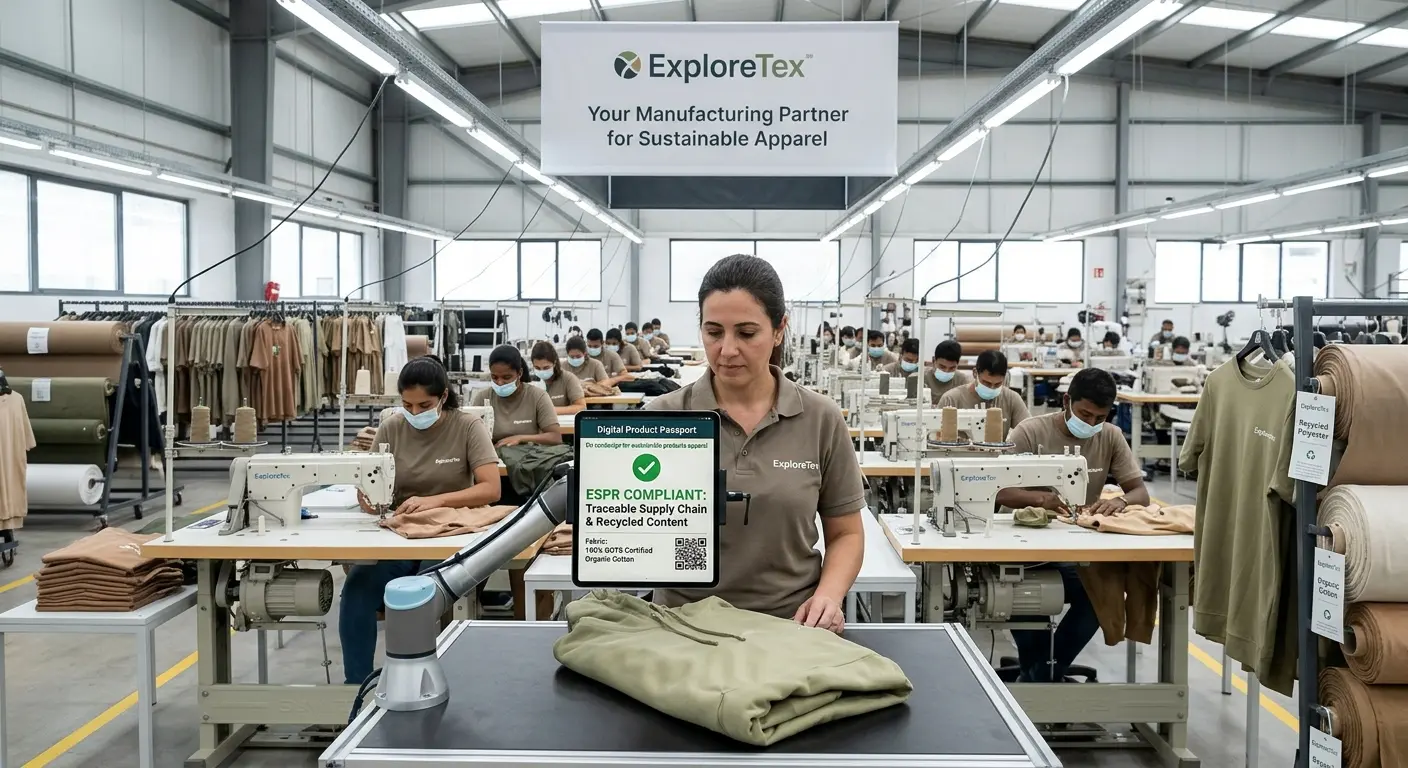
While Canadian clothing factories play a valuable role for micro-batch local prototyping and emergency domestic restocks, relying exclusively on domestic cut-and-sew workshops caps your brand’s gross margins, restricts fabric innovation, and limits bulk scalability. By partnering with ExploreTex, Canadian fashion founders and retail procurement leaders gain the best of both worlds: the legal security, PhD-led textile engineering, and responsive communication of a registered Portuguese brand headquartered in Lisbon, paired with duty-free European craftsmanship in Portugal and high-volume vertical manufacturing economics in Bangladesh.
Ready to compare your current domestic quotes against transparent, line-item full-package pricing? Submit your tech packs, sketches, or collection brief through the ExploreTex Contact & Quote Portal today to schedule a technical consultation with our Lisbon engineering team and receive a custom manufacturing roadmap built for profitable North American growth.