
Clothing Manufacturers Canada: The 2027 Strategic Sourcing & Dual-Hub Production Guide for Canadian Apparel Brands
Searching for reliable clothing manufacturers Canada brands can trust has become a defining strategic challenge for apparel founders, fashion labels, and wholesale buyers operating across North America. While Canadian cities such as Toronto, Montreal, and Vancouver nurture creative design talent, winter-ready innovation, and strong retail demand, domestic cut-and-sew capacity remains limited.
Brands evaluating clothing manufacturers Canada offers quickly notice narrow machinery availability, high operating costs, and heavy dependence on imported fabrics before production even starts. Because of these structural limits, many growing labels compare local clothing manufacturers Canada suppliers against international partners that combine European technical standards with high-efficiency production.
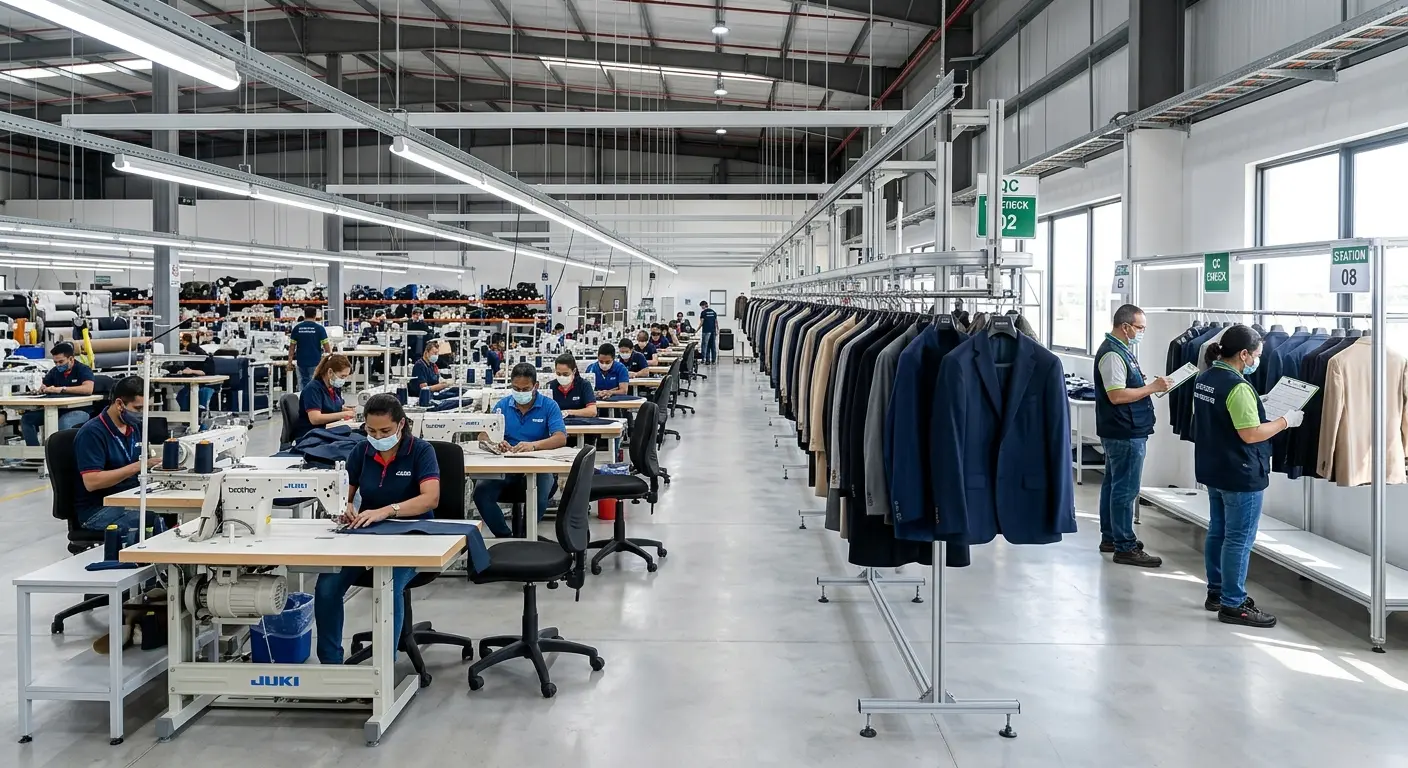
As a Portuguese-registered apparel company with its own brand, ExploreTex helps brands look beyond the capacity ceilings of traditional clothing manufacturers Canada buyers often encounter. From our management base in Portugal, we work with vetted partner factories across the Portuguese textile cluster for sampling, small-batch capsules, and European craftsmanship, while operating a vertical manufacturing facility in Bangladesh for scalable bulk runs. For brands comparing clothing manufacturers Canada options, this dual-hub structure bridges creative design control in Europe with high-volume textile execution and tariff-advantageous supply chains.
Many clothing manufacturers Canada labels evaluate struggle to match full-package vertical integration, consistent fabric sourcing, or cost-effective scaling as order volumes rise. By uniting Portuguese oversight with vertical Bangladesh production, ExploreTex gives brands an alternative to local clothing manufacturers Canada networks without sacrificing quality, compliance, or communication clarity.
Modern apparel sourcing requires more than basic sewing capacity. Today, brands assessing clothing manufacturers Canada demand transparent pricing, certified sustainable fabrics, strict quality control, and smooth cross-border logistics. Relying strictly on local clothing manufacturers Canada workshops can slow down seasonal launches when domestic lines are booked or when specialized knit, fleece, or outerwear capabilities are required.
Conversely, unvetted overseas intermediaries can create miscommunication, uneven sizing, and unexpected delays. ExploreTex addresses both sides of that problem by managing technical development and quality standards through our Portuguese operations while executing high-volume manufacturing in our vertical facility in Bangladesh.
Whether you are launching a new collection, expanding private-label lines, or optimizing unit economics across seasonal drops, understanding how clothing manufacturers Canada compare to a dual-hub Portuguese and Bangladeshi manufacturer is essential. Unlike fragmented clothing manufacturers Canada directories that only list small local shops, a structured manufacturing partner can guide your product from pattern development and fabric selection through bulk production and delivery.
For brands researching clothing manufacturers Canada to support long-term growth, ExploreTex provides a practical path that pairs European manufacturing standards with vertical production scale. Explore how ExploreTex full-package apparel manufacturing supports Canadian-market brands seeking dependable quality, clear timelines, and scalable output across every season.
1. Introduction: The Reality Facing Brands Searching for Clothing Manufacturers Canada
If you are building, scaling, or managing an apparel brand in Toronto, Montreal, Vancouver, Calgary, or anywhere across North America, searching for reliable clothing manufacturers Canada quickly reveals a structural paradox. Canada possesses an extraordinary fashion culture—renowned globally for technical winter outerwear, elevated streetwear, sustainable knitwear, and performance athleisure. Yet, domestic cut-and-sew infrastructure inside Canada has shrunk dramatically over the past three decades.
When procurement managers and founders evaluate local clothing manufacturers Canada offers today, they routinely encounter three systemic bottlenecks:
Severe Domestic Capacity Ceilings: Ontario accounts for roughly 65% of remaining Canadian garment output, with Montreal anchoring precision tailoring and technical outerwear. However, most domestic sewing floors operate with small workforces, long waitlists, and limited specialized machinery for seamless knits, heavy fleece washes, or complex bonded outerwear.
Imported Fabric Dependencies: Domestic clothing manufacturers Canada rarely weave or knit raw textiles at commercial scale. Nearly all performance synthetics, organic cotton jerseys, and specialized trims must still be imported into Canada—adding inbound freight, customs clearance delays, and currency exposure before a single pattern piece is cut.
Prohibitive Unit Economics: High urban industrial real estate costs, utility expenses, and skilled labor shortages push domestic FOB pricing to levels that compress wholesale margins and force retail price points beyond what direct-to-consumer (DTC) customers will bear.
At the same time, simply handing your tech pack to an unverified overseas broker creates the opposite nightmare: communication breakdowns across time zones, inconsistent sizing, opaque subcontracting, and customs delays at the Port of Vancouver or Port of Montreal.
This is precisely why forward-thinking brands looking for clothing manufacturers Canada are adopting a Dual-Hub Strategic Sourcing Model. As a Portuguese-based company with its own registered European brand, ExploreTex bridges the gap between Western design precision and high-efficiency global production. By uniting vetted partner factories in Portugal’s historic northern textile cluster with our wholly owned, vertically integrated manufacturing facility in Bangladesh, ExploreTex gives Canadian apparel companies the exact capabilities domestic clothing manufacturers Canada lack—under one legally binding European contract.
2. Domestic vs. Offshore vs. ExploreTex’s Dual-Hub Model for Canadian Brands
Before committing capital to your next seasonal collection, it is essential to benchmark how traditional clothing manufacturers Canada compare against standard Asian trading agents and ExploreTex’s integrated Portugal-Bangladesh architecture.
| Strategic Sourcing Dimension | Domestic Clothing Manufacturers Canada | Traditional Overseas Brokers / Agents | ExploreTex Dual-Hub Architecture (Portugal + Bangladesh) |
| Contractual & Legal Security | Canadian provincial jurisdiction; high legal safety, high cost. | Fragmented local contracts; difficult cross-border dispute resolution. | Lisbon, Portugal HQ: Full EU-binding commercial contracts and IP protection. |
| Minimum Order Quantities (MOQs) | 50–300 units per style, but at steep per-unit surcharges. | Often 1,500–3,000+ units per style with rigid fabric minimums. | 100–300 units in Portugal; 500–1,000 units scalable to 100K+ in Bangladesh. |
| Canadian Import Tariff Rate | 0% (Domestic), but raw fabrics incur inbound import duties. | 16.5%–18.0% MFN duty (China, Vietnam, India, Turkey). | 0% Duty-Free & Quota-Free from Bangladesh under Canada’s LDCT/GPT (or CETA preferential rules from Portugal). |
| Raw Material & Mill Access | Limited local mills; reliant on imported yardage. | Fragmented fabric sourcing; frequent dye-lot inconsistencies. | Direct access to Portuguese luxury mills + in-house spinning/knitting/dyeing in Dhaka. |
| Technical Oversight & QC | Direct in-person visits possible if located near GTA or Montreal. | Rely on third-party inspectors after defects already occur. | Permanent Portuguese technical managers on the Dhaka factory floor + AQL 2.5 gates. |
| Canadian Compliance Readiness | Familiar with domestic rules, often lack automated DPP/ESG data. | High risk of missing bilingual English/French care label rules. | Full Canadian Textile Labelling Act compliance, CA number integration, and ESG traceability. |
As this comparison demonstrates, the smartest alternative to overstretched clothing manufacturers Canada is not sacrificing quality for cheap offshore labor—it is pairing European engineering and compliance with duty-free vertical manufacturing.
3. Why Canadian Brands Partner with ExploreTex: The Dual-Continent Synergy
Unlike conventional sourcing agencies that merely pass your inquiry to unknown subcontractors, ExploreTex operates a transparent dual-continent infrastructure tailored to how modern North American brands grow.
Hub 1: Design, Prototyping & Luxury Small-Batch Production in Portugal
Northern Portugal—spanning Porto, Braga, Barcelos, and Guimarães—is widely recognized as Europe’s premier textile engineering hub, producing over 60% of Europe’s high-end fashion textiles. Operating from our headquarters in Lisbon, ExploreTex collaborates with specialized, GOTS- and OEKO-TEX®-certified partner factories across Portugal.
For brands evaluating clothing manufacturers Canada for luxury streetwear, heavyweight organic jersey, structured knitwear, or rapid capsule drops, our Portuguese hub delivers:
3D Virtual Prototyping & Master Pattern Grading: Our Lisbon technical team transforms hand sketches or rough mood boards into production-ready digital patterns, running 3D fit simulations before cutting a single yard of fabric.
Prestigious “Made in Portugal” Origin: Eligible collections manufactured within our northern Portuguese partner network qualify for authentic Made in Portugal labeling—a powerful brand equity multiplier in boutiques from Yorkville in Toronto to Gastown in Vancouver.
CETA Trade Advantages: Under the Canada-European Union Comprehensive Economic and Trade Agreement (CETA), qualifying EU-origin textiles and apparel benefit from preferential tariff treatment when entering Canada.
Hub 2: Wholly Owned Vertical Manufacturing in Dhaka, Bangladesh
Once a Canadian brand validates product-market fit or prepares for national wholesale distribution, domestic clothing manufacturers Canada simply cannot match the unit economics required for retail margins. ExploreTex solves this seamlessly through our vertical manufacturing facility in Bangladesh.
Because we own and operate our vertical production infrastructure in Dhaka—managed directly by our Portuguese technical leadership—we control every stage under one roof:
Yarn Spinning & Fabric Knitting/Weaving: Producing custom single jersey, French terry, interlock, rib, fleece, and performance wovens to exact GSM specifications.
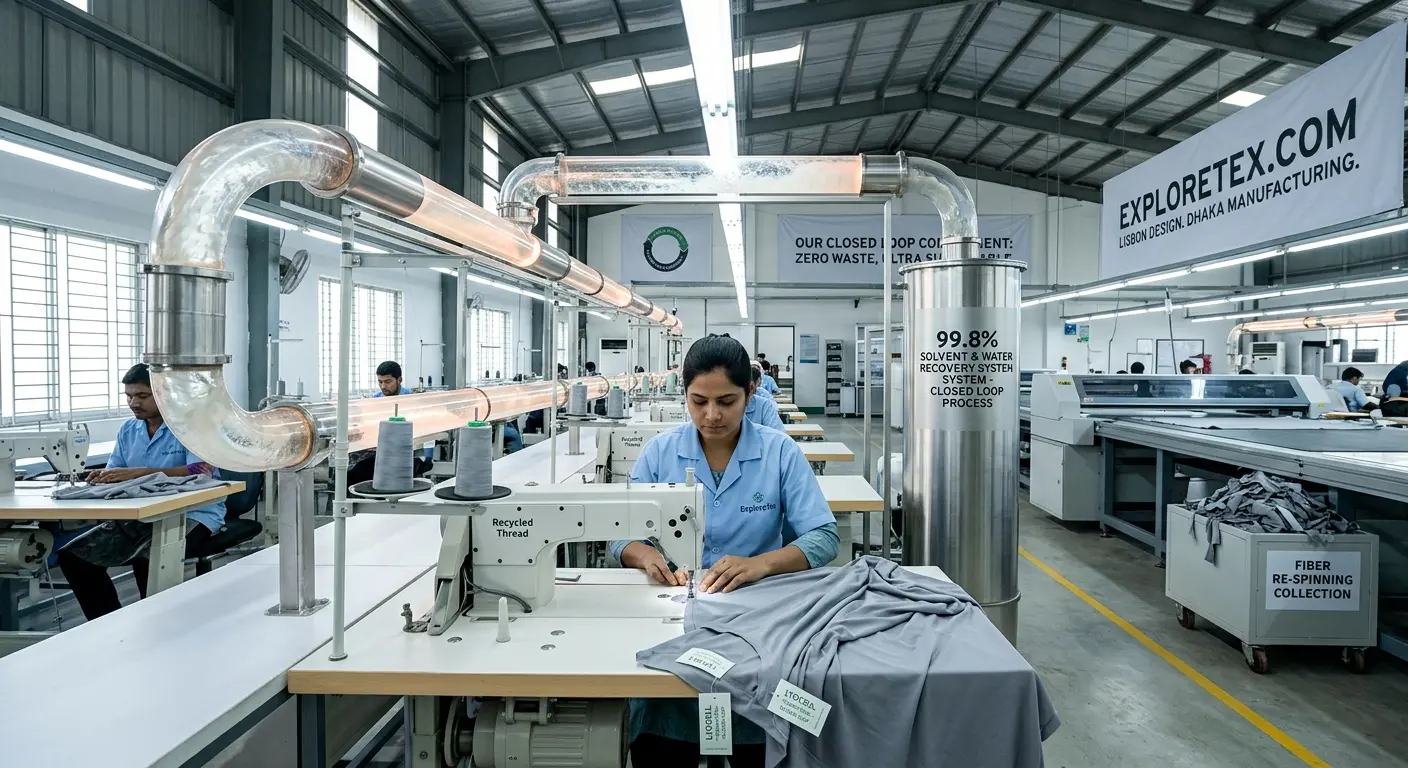
Eco-Conscious Dyeing & Wet Processing: Utilizing closed-loop water recycling, biological Effluent Treatment Plants (ETPs), and Zero Liquid Discharge (ZLD) systems to achieve exact Pantone color matching without toxic runoff.
Automated CAD Cutting & Assembly: High-precision marker making that reduces pre-consumer fabric waste by up to 15%, followed by modular sewing lines monitored by inline quality assurance engineers.
For companies comparing clothing manufacturers Canada, this dual-hub continuity means you never have to re-explain your fit blocks, re-approve color standards, or onboard a new vendor when scaling from 250 units to 50,000 units.
4. Factory-Floor “Expert” Insights: Engineering Apparel for the Canadian Market
Factory-Floor Perspective — Muhammad Ilias Hossen, M.Sc. & B.Sc. Textile Engineering, Founder & CEO of ExploreTex:
“When Canadian apparel founders come to us after working with fragmented domestic workshops or generic overseas traders, the #1 technical failure we see on the cutting table is ignoring fabric relaxation and climate-specific seam engineering. A 420 GSM organic French terry hoodie behaves completely differently in a dry Calgary winter than in humid coastal Vancouver. At ExploreTex, we mandate a 24-to-48-hour tension-free fabric relaxation protocol before automated cutting, pair it with pre-shrunk reactive dyeing, and calibrate Stitches Per Inch (SPI) to prevent seam cracking under thermal stress. You cannot inspect quality into a garment at the end of the line—you engineer it at the yarn and pattern stage.”
To help procurement directors and founders evaluate clothing manufacturers Canada and international alternatives with an insider’s eye, here are four critical factory-floor benchmarks our Lisbon and Dhaka engineering teams apply to every Canadian order:
1. Precision GSM & Yarn Twist Calibration for Four-Season Canadian Climates
Canadian retail calendars demand distinct thermal performance across Spring/Summer and Fall/Winter collections. Standardizing fabric weights prevents returns and elevates perceived brand value:
150–170 GSM Combed Ring-Spun Organic Cotton: Ideal for breathable summer tees and base layers; combed fibers remove short staples to eliminate pilling after repeated machine washes.
210–240 GSM Heavyweight Structured Jersey: The gold standard for contemporary Toronto and Montreal streetwear tees, engineered with higher yarn twist density for a crisp, boxy drape.
380–480 GSM Diagonal French Terry & Brushed Fleece: Built for Canadian autumn and winter hoodies, utilizing low-shrinkage compact yarns and enzyme silicon washes for an ultra-soft handfeel without losing structural recovery.
2. Digital Twin 3D Prototyping vs. Endless Physical Courier Loops
Shipping physical samples back and forth between clothing manufacturers Canada or overseas factories wastes 4 to 6 weeks per collection cycle. ExploreTex integrates 3D virtual prototyping and apparel product development services at the start of every project. Our master pattern makers render true-to-life tension maps, drape simulations, and colorway variations digitally—allowing your Canadian design team to approve silhouette adjustments via live video conference before we cut physical Pre-Production Samples (PPS).
3. The “Golden Sample” & Multi-Gate AQL 2.5 Quality Assurance
A frequent complaint among brands switching away from local clothing manufacturers Canada is “fit drift” between the approved sample and bulk delivery. ExploreTex eliminates fit drift through a strict three-tier inspection protocol:
Sealed Golden Sample Protocol: Once your Canadian team signs off on the Pre-Production Sample, two identical physical units are tagged and sealed—one stays in your Canadian office, and one sits directly on the sewing line supervisor’s desk in Portugal or Bangladesh.
Inline & Mid-Line Audits: Quality engineers audit Stitches Per Inch (SPI), seam elongation, colorfastness (crocking and wash tests), and needle detection at 20% and 60% completion.
Final AQL 2.5 / 4.0 Inspection: Before cartons are sealed for export, independent and Portuguese-supervised QC teams execute statistical Acceptance Quality Limit (AQL) audits covering every measurement point on your graded spec sheet.
4. Automated Marker Efficiency & Pre-Consumer Waste Reduction
Fabric accounts for 55% to 70% of a garment’s FOB cost. On our factory floors, CAD marker engineers nest graded sizes (XS through 3XL) using algorithmic optimization to achieve 86%–91% fabric utilization. Off-cuts from organic cotton and recycled polyester runs are segregated by color and fiber composition for mechanical recycling—directly supporting ESG reporting for Canadian brands.
5. Navigating Canadian Customs, Tariffs & Bilingual Compliance (2026 Regulatory Guide)
Choosing among clothing manufacturers Canada requires mastering Canadian import regulations, tariff classifications, and labeling laws. Overlooking a single regulatory detail at the Canada Border Services Agency (CBSA) can trigger 18% unexpected duties, border holds, or mandatory relabeling fines.
Unlocking 0% Duty-Free Apparel Imports into Canada (LDCT & GPT Rules)
Most standard ready-made garments (HS Chapters 61 and 62) imported into Canada from countries like China, Vietnam, India, or Turkey face Most-Favoured-Nation (MFN) customs duties ranging from 16.5% to 18.0% on the FOB value.
However, under Canada’s Least Developed Country Tariff (LDCT) and extended General Preferential Tariff (GPT) framework—which the Canadian Parliament extended through 2034—apparel manufactured in Bangladesh qualifies for 100% duty-free and quota-free entry into Canada, provided rules of origin and direct shipment requirements are properly documented.
What this means for your bottom line:
On a $50,000 CAD wholesale shipment of custom hoodies and knitwear, sourcing through standard offshore clothing manufacturers Canada competitors in non-preferential countries adds roughly $8,500 to $9,000 CAD in non-recoverable import tariffs before GST/HST.
Producing that exact same collection in ExploreTex’s vertical Bangladesh facility—engineered and quality-controlled by our Portuguese team—reduces your customs duty to $0.00, boosting your gross landed margin by 16% to 18% overnight.
For comprehensive regulatory verification, procurement teams can consult the official Government of Canada Unilateral Tariff Preference Programs.
Mandatory Canadian Textile Labelling Act & Bilingual Requirements
Unlike US-only clothing manufacturers Canada sellers sometimes use, every garment sold commercially in Canada must comply with the federal Textile Labelling Act and Textile Labelling and Advertising Regulations enforced by the Competition Bureau of Canada:
Bilingual Fiber Content (English & French): Generic fiber names must appear in both English and French in descending order of percentage by weight (e.g., 100% Organic Cotton / 100% Coton Biologique).
Dealer Identity / CA Identification Number: Labels must display either the Canadian company’s full legal name and postal address or a registered five-digit CA Number issued by the Competition Bureau.
Country of Origin & Care Symbols: Clear declaration of origin (Made in Bangladesh / Fabriqué au Bangladesh or Made in Portugal / Fabriqué au Portugal) alongside standardized Canadian care symbols or bilingual care instructions.
Quebec Charter of the French Language (Bill 96): For brands distributing in Montreal and across Quebec, all permanent and non-permanent hangtags, packaging, and size stickers must give French text equal or greater prominence.
ExploreTex’s turnkey clothing manufacturing services include pre-production artwork verification for all woven neck labels, heat-transfer care labels, UPC barcode stickers, and FSC-certified retail packaging so your inventory arrives at your Canadian 3PL warehouse retail-ready.
6. Product Categories & Specialized Capabilities for Canadian Apparel Brands
Whether you are launching a niche DTC capsule or replenishing core SKUs across national retail doors, ExploreTex supports the primary categories sought from top clothing manufacturers Canada:
1. Luxury Streetwear, Heavyweight Fleece & Knitwear
From 450 GSM enzyme-washed hoodies and pigment-dyed sweatshirts to precision-knit polo shirts and organic cotton tees, our private label organic cotton clothing programs deliver luxury European handfeels with scalable bulk consistency.
2. Technical Outerwear, Windbreakers & All-Weather Layers
Canadian consumers demand garments engineered for rain, wind, and sub-zero temperatures. Through our Portuguese technical partner factories and specialized woven lines, we manufacture seam-sealed shell jackets, PFC-free durable water-repellent (DWR) windbreakers, insulated parkas, and technical fleece mid-layers.
3. Performance Activewear & Athleisure
Utilizing GRS-certified recycled nylon, LYCRA® elastane blends, moisture-wicking interlocks, and flatlock chafe-free stitching, we produce high-compression leggings, sports bras, running singlets, and studio activewear built to compete with Canada’s premier athletic brands.
4. Sustainable & Circular Fashion Collections
Canadian shoppers rank among North America’s most environmentally conscious consumers. As a dedicated sustainable clothing manufacturer, ExploreTex provides fully audited GOTS organic cotton, TENCEL™ Lyocell, hemp blends, and recycled synthetics backed by batch-level Transaction Certificates (TCs). You can verify global organic certification criteria directly via the Global Organic Textile Standard (GOTS) official portal.
5. Corporate Apparel, Workwear & Institutional Uniforms
For Canadian hospitality groups, healthcare networks, and industrial enterprises looking beyond fragmented local clothing manufacturers Canada, ExploreTex executes high-durability uniform programs featuring reinforced bartack stress points, industrial-laundry colorfastness, and custom embroidery or heat-transfer branding.
7. Step-by-Step Workflow: How Canadian Brands Launch & Scale with ExploreTex
Working with ExploreTex eliminates the guesswork that frustrates brands dealing with traditional clothing manufacturers Canada. Our Full-Package Production (FPP) workflow follows six transparent milestones:
Step 1: Strategic Discovery & Tech Pack Engineering (Days 1–7): Share your sketches, reference garments, target FOB budget, and Canadian delivery window. Our Lisbon product developers finalize your Bill of Materials (BOM), graded measurement charts, and construction callouts.
Step 2: Textile Sourcing & Mill Curation (Days 5–14): We curate verified swatches from our luxury textile suppliers in Portugal or knit custom lab-dips in our Dhaka vertical mill, dispatching physical fabric headers directly to your Canadian office via express courier.
Step 3: 3D Prototyping & Physical Fit Sampling (Days 14–28): Following digital 3D fit sign-off, we construct physical Proto and Fit Samples. Live video fittings with our master pattern makers ensure sleeve pitch, chest ease, and grade rules match your exact block.
Step 4: Pre-Production Sample (PPS) & Bilingual Trim Approval (Days 28–38): We produce your final PPS using bulk-dyed fabric, custom hardware, and Canadian-compliant English/French care labels—sealing your Golden Sample.
Step 5: Bulk Production & Multi-Gate QC (Days 38–75): Depending on your order volume and origin strategy, bulk cutting and sewing run in Portugal (3–5 weeks) or Bangladesh (45–65 days) under continuous Portuguese technical supervision and AQL 2.5 inspections.
Step 6: DDP Door-to-Door Logistics to Canada (Days 75–95): ExploreTex manages ocean freight (to Port of Vancouver, Prince Rupert, Montreal, or Halifax) or air freight (to YYZ, YUL, or YVR), complete with Commercial Invoices, Packing Lists, Certificates of Origin (Form A / REX), and customs clearance directly to your warehouse door.
Whether you are an emerging founder exploring clothing production for small business or an established director managing multi-container seasonal drops, our project portal gives you real-time visibility at every stage.
8. How to Vet Clothing Manufacturers Canada & Global Partners: A 7-Point Buyer’s Checklist
When evaluating clothing manufacturers Canada or international dual-hub partners like ExploreTex, require documented proof across these seven non-negotiable criteria:
Verifiable Factory Ownership & Audit Transparency: Can the partner prove direct ownership or long-term contractual control over its sewing floors, backed by current BSCI, SEDEX/SMETA, WRAP, or ISO 9001 audit reports?
Pattern & IP Ownership Guarantee: Does your contract explicitly state that all digital DXF/AI patterns, graded size nests, and custom fabric developments remain 100% your intellectual property?
Preferential Tariff & Origin Documentation: Can their export compliance team issue valid Certificates of Origin (LDCT/GPT Form A for Bangladesh; CETA origin declarations for Portugal) so your Canadian customs broker clears goods at 0% duty?
Bilingual Canadian Labeling Mastery: Do they verify English/French fiber translations, CA numbers, and Quebec Bill 96 formatting prior to bulk trim printing?
Tiered MOQ Scalability: Can they support 100–300 piece market-test runs without forcing you to abandon your pattern library when scaling to 10,000+ units?
Dedicated Technical Project Management: Will you communicate directly with a textile-educated project manager in a compatible time zone (Lisbon’s WET/WEST timezone overlaps cleanly with Eastern and Central Canadian business hours) rather than chasing overnight replies?
Transparent Landed Cost Breakdowns: Do quotations itemize fabric consumption, CM (Cut & Make) labor, trims, testing, packaging, and DDP freight with zero hidden surcharges?
For broader industry context on North American supply chain shifts and nearshoring-offshoring resilience, review the latest McKinsey State of Fashion industry analysis.
9. Crafted Specialized FAQ Section: Clothing Manufacturers Canada & ExploreTex
1. Why do Canadian fashion brands partner with ExploreTex instead of relying solely on domestic clothing manufacturers Canada?
While domestic clothing manufacturers Canada offer geographic proximity, they face severe capacity constraints, high labor costs, and a lack of local textile mills. ExploreTex solves all three challenges by combining Lisbon-based European design, pattern engineering, and EU-binding legal security with a wholly owned vertical manufacturing facility in Bangladesh and specialized partner factories in Portugal. Canadian brands achieve superior fabric quality, lower unit costs, and scalable capacity under a single point of contact.
2. Are garments manufactured by ExploreTex in Bangladesh eligible for 0% duty-free import into Canada?
Yes. Under Canada’s Least Developed Country Tariff (LDCT) and renewed General Preferential Tariff (GPT) rules—extended through 2034—eligible ready-made apparel produced in ExploreTex’s vertical Bangladesh facility enters Canada 100% duty-free and quota-free. This saves Canadian importers the standard 16.5% to 18.0% MFN apparel tariff applied to goods sourced from China, Vietnam, India, or Turkey.
3. Can ExploreTex produce small-batch “Made in Portugal” collections for Canadian luxury brands?
Absolutely. Through our vetted partner factories in Northern Portugal (Porto, Braga, and Barcelos), ExploreTex produces low-MOQ capsules starting from 100 to 300 units per style. Qualifying garments carry authentic Made in Portugal origin labels and benefit from CETA trade provisions when imported into Canada.
4. What are ExploreTex’s Minimum Order Quantities (MOQs) for Canadian startups and established retailers?
ExploreTex offers tiered MOQs tailored to your growth stage:
Portugal Partner Network: 100 to 300 pieces per style (ideal for luxury capsules, market testing, and rapid 3–5 week turnarounds).
Bangladesh Vertical Facility: 500 pieces per style / 1,000 pieces per order, scaling seamlessly up to 100,000+ units per month for established Canadian retail programs.
5. Does ExploreTex handle bilingual English/French labeling required by Canadian law?
Yes. Every Canadian production run undergoes pre-production compliance verification for the federal Textile Labelling Act and Quebec’s Charter of the French Language (Bill 96). We integrate your registered Canadian CA number, bilingual fiber composition, and standardized care symbols directly into woven labels, heat transfers, and hangtags.
6. Do I need a finished Tech Pack before contacting ExploreTex?
No. While we work directly from completed tech packs, many Canadian founders start with hand sketches, mood boards, or physical reference garments. ExploreTex’s Lisbon technical design team builds complete digital tech packs, graded pattern blocks (XS–3XL+), and 3D virtual prototypes from scratch.
7. How does ExploreTex ensure consistent quality control across Portugal and Bangladesh?
Unlike brokers who rely on sporadic third-party visits, ExploreTex maintains permanent Portuguese technical managers and quality engineers directly on our Dhaka factory floor. Every bulk order is governed by a sealed Golden Sample, inline SPI/measurement checks, and statistical AQL 2.5 / 4.0 pre-shipment audits.
8. What shipping terms (FOB, CIF, DDP) do you offer to Toronto, Montreal, and Vancouver?
ExploreTex offers flexible Incoterms including FOB, CIF, and full DDP (Delivered Duty Paid) door-to-door logistics. Under DDP terms, we manage ocean or air freight, Canadian customs brokerage, tariff exemption filing, and final-mile delivery straight to your Canadian warehouse or 3PL center.
Conclusion Summary
Selecting the right production partner determines whether a Canadian apparel label stalls under domestic bottlenecks or scales profitably across North America. Throughout this guide, we have examined why brands searching for clothing manufacturers Canada increasingly look beyond local cut-and-sew limits toward a transparent, dual-hub global model. While traditional clothing manufacturers Canada workshops offer geographic closeness, limited domestic mill infrastructure, high labor overhead, and tight production queues often restrict growth. At the same time, unverified overseas intermediaries expose buyers to fit drift, communication gaps, and compliance risks.
By uniting Portuguese engineering and European legal accountability with a wholly owned vertical production facility in Bangladesh, ExploreTex solves the core dilemma facing companies comparing clothing manufacturers Canada options. From our headquarters in Portugal, our technical team collaborates with vetted partner factories across Portugal’s northern textile cluster to execute 3D prototyping, low-MOQ capsules, and prestigious Made in Portugal runs. Simultaneously, our vertical Bangladesh facility delivers yarn-to-garment integration, certified eco-dyeing, AQL quality gates, and duty-free Canadian import advantages under Canada’s Least Developed Country Tariff (LDCT) framework.
For procurement teams evaluating clothing manufacturers Canada, this seamless bridge eliminates the friction of switching suppliers as order volumes grow from 100-piece test drops to multi-container seasonal programs.
Modern retail success also demands strict adherence to Canadian regulatory and sustainability expectations. Every collection produced through ExploreTex is engineered for full compliance with the Canadian Textile Labelling Act, bilingual English and French care disclosures, CA identification rules, and internationally audited standards such as GOTS, OEKO-TEX® Standard 100, GRS, and BSCI. Rather than piecing together separate fabric mills, pattern makers, trim printers, and freight forwarders among fragmented clothing manufacturers Canada, your team gains a single European-managed partner overseeing every milestone from tech pack to DDP warehouse delivery in Toronto, Montreal, or Vancouver.
Ultimately, the strongest supply chains turn manufacturing from an operational bottleneck into a lasting competitive advantage. If your brand is ready to move past the capacity constraints and margin compression of conventional clothing manufacturers Canada, ExploreTex provides the technical expertise, ethical transparency, and dual-continent scalability required to win in 2026 and beyond. Visit ExploreTex’s custom clothing manufacturing portal or contact our Lisbon production team today to submit your tech pack, request fabric swatches, and receive a transparent quotation tailored to your next collection.
Start Your Next Collection with ExploreTex
Ready to move beyond the capacity limits of traditional clothing manufacturers Canada and build a resilient, high-margin supply chain? Whether you need a 150-unit Made in Portugal capsule or 50,000 duty-free units engineered in our vertical Bangladesh facility, our Lisbon technical team is ready to review your tech packs and deliver a transparent quotation within 24 hours.
Contact ExploreTex Today for a Free Consultation & Custom Production Quote →