
Circular Denim Manufacturing Standards: The Complete B2B Guide to Closed-Loop Production and Sustainable Supply Chains
1. Introduction: The Paradigm Shift in Global Denim Production
The global apparel industry stands at a critical juncture. For decades, traditional denim production has been synonymous with immense resource consumption, intensive water usage, chemical discharge, and vast post-production waste. As environmental regulations tighten and consumer consciousness reaches unprecedented levels, fashion brands face an existential mandate: transform linear supply chains into circular models. At the heart of this transformation lie circular denim manufacturing standards.
For B2B apparel brands, retail buyers, and fashion entrepreneurs, understanding and implementing circular denim manufacturing standards is no longer a niche marketing exercise; it is a core operational requirement. Sourcing partners who master circular denim manufacturing standards provide immediate competitive advantages, insulating brands against volatile raw material costs, looming regulatory penalties, and shifting consumer preferences.
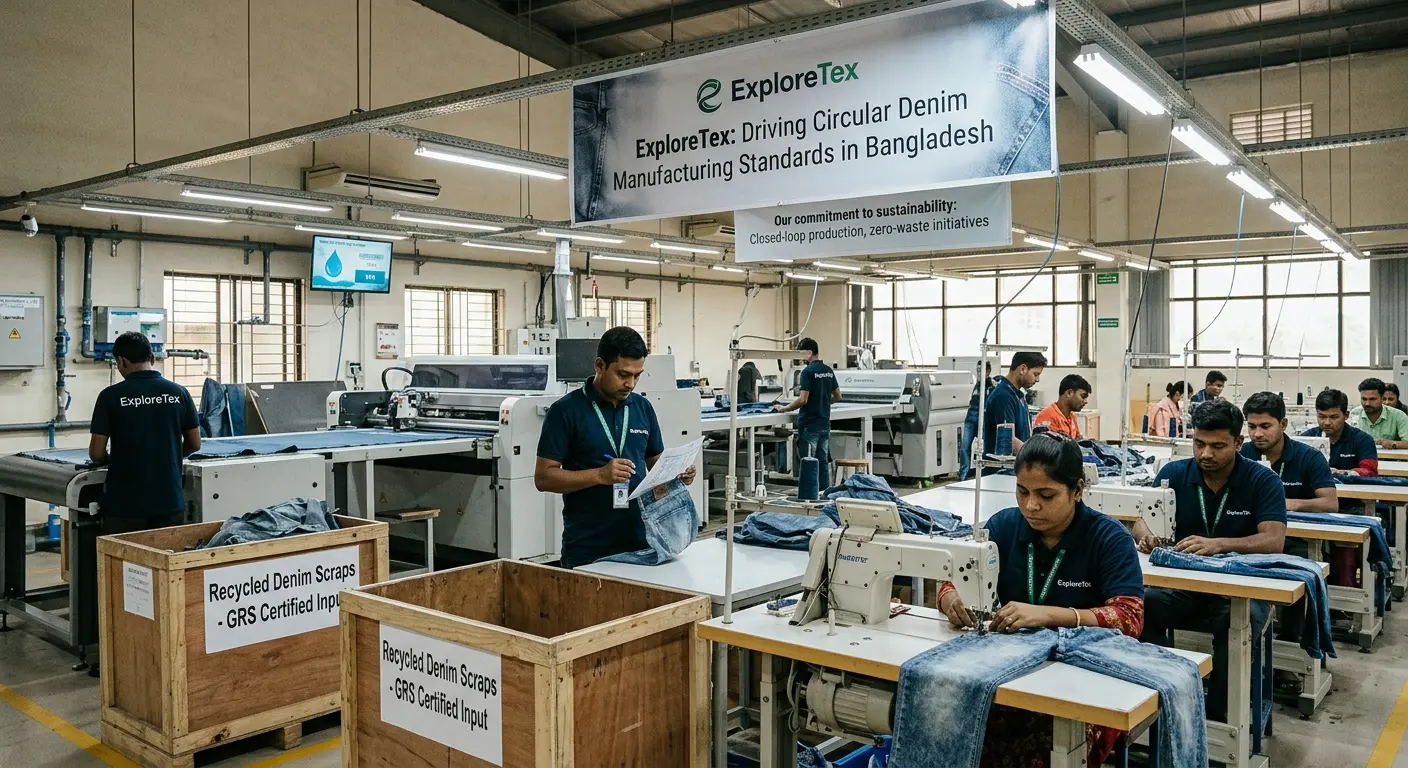
ExploreTex, operating as a premier Portuguese-based apparel company with a vertical manufacturing facility in Bangladesh and strategic partner factories in Portugal, has pioneered the operationalization of circular denim manufacturing standards at scale. By bridging European design precision and technological oversight with high-capacity vertical manufacturing, ExploreTex empowers brands to build sustainable, fully traceable, and commercially viable denim collections. This comprehensive guide explores the technical framework, material science, factory-floor execution, and strategic benefits of adopting rigorous circular denim manufacturing standards across your entire product line.
2. Understanding Circular Denim Manufacturing Standards: Core Principles & Definitions
To successfully engineer garments that align with circular denim manufacturing standards, stakeholders must first deconstruct the core tenets of circularity within the textile ecosystem. Unlike traditional “take-make-dispose” models, circular denim manufacturing standards require every phase of a garment’s life cycle to be intentionally designed for regeneration, durability, and eventual rebirth.
[Post-Consumer Denim] ---> [Mechanical/Chemical Sorting] ---> [Fiber Regeneration] ---> [Spinning & Weaving] ---> [Precision Finishing] ---> [Closed-Loop Recycling]
The Three Pillars of Circular Denim
Design for Longevity and Recyclability: A garment conforming to circular denim manufacturing standards must be durable enough to withstand prolonged wear while being engineered for effortless dismantling at end-of-life. This involves avoiding multi-fiber blends that complicate recycling, utilizing mono-material configurations (such as 100% cotton or pure cotton-organic cotton blends), and employing recyclable sewing threads and detachable hardware.
Resource Efficiency and Closed-Loop Processing: Production facilities must minimize virgin resource extraction. This entails integrating post-industrial and post-consumer recycled cotton, utilizing organic agriculture, implementing closed-loop water recycling systems, and recovering indigo and auxiliary chemicals.
Traceability and End-of-Life Stewardship: Every component of the denim garment—from the warp yarn to the pocket lining and riveted hardware—must be documented, verifiable, and compatible with established textile recovery networks.
Brands seeking to future-proof their operations must evaluate their current sourcing strategies against these rigorous benchmarks. Transitioning to sustainable methodologies begins with reviewing foundational material inputs, as detailed in our guide on sustainable textiles sourcing.
3. Regulatory Frameworks & Compliance: Navigating Global Eco-Standards
The regulatory landscape governing textile manufacturing has evolved rapidly. In the European Union, frameworks such as the EU Strategy for Sustainable and Circular Textiles, Corporate Sustainability Due Diligence Directive (CSDDD), and mandatory Digital Product Passports (DPPs) are reshaping import and distribution requirements. Brands failing to meet strict circular denim manufacturing standards face severe trade barriers, steep financial penalties, and reputational damage.
Key Certifications Underpinning Circular Standards
Compliance requires third-party verification. When evaluating factories against circular denim manufacturing standards, procurement teams look for internationally recognized credentials:
Global Recycled Standard (GRS) & Recycled Claim Standard (RCS): Verify the percentage of recycled material in final products and track material flow from source to final garment, alongside strict social and environmental processing criteria.
Global Organic Textile Standard (GOTS): Ensures organic status of textiles from harvesting of raw materials through environmentally and socially responsible manufacturing up to labeling.
OEKO-TEX Standard 100 & STeP: Guarantees that finished denim products are free from harmful chemical residues and that manufacturing facilities operate under sustainable, socially accountable conditions.
Higg Index (FEM & FSL): Measures environmental and social labor performance across the value chain, offering quantifiable benchmarks for continuous improvement.
ExploreTex maintains rigorous internal auditing and external certifications across its operational hubs. Our vertically integrated operations in Asia adhere strictly to international labor and environmental benchmarks, while our European network ensures seamless alignment with regional directives. Learn more about how our infrastructure supports compliance at our bangladesh vertical manufacturing facility and our specialized portugal apparel partner factories.
4. Material Innovation: Sourcing and Processing Recycled Cotton and Bio-Synthetic Blends
The foundation of any garment built to circular denim manufacturing standards is its fiber composition. Traditional cotton cultivation is notoriously resource-intensive, requiring vast quantities of water and agricultural chemicals. Consequently, circular denim manufacturing standards prioritize recycled fibers, regenerative agriculture, and innovative bio-synthetics.
The Mechanical and Chemical Recycling Continuum
Transforming post-consumer jeans or industrial cutting waste into high-tensile yarn suitable for premium denim requires sophisticated processing:
Mechanical Recycling: Post-consumer denim garments are collected, sorted by color and grade, shredded, and mechanically pulled back into staple fibers. Because mechanical shredding shortens the staple length, mills applying circular denim manufacturing standards expertly blend these recycled fibers with long-staple virgin or organic cotton to maintain tear strength and hand-feel.
Chemical Recycling: For blended fabrics containing elastane (spandex) or polyester, chemical depolymerization breaks down synthetic and natural polymers into base building blocks, allowing pure cellulose regeneration without degradation of tensile strength.
+---------------------------------------------------------------------------------+
|                        FIBER BLENDING MATRIX FOR CIRCULAR DENIM                 |
+--------------------------+-----------------------+------------------------------+
| Fiber Input              | Composition Ratio     | Tensile Strength Retention   |
+--------------------------+-----------------------+------------------------------+
| Organic Cotton (GOTS)    | 40% - 60%             | High (Baseline 100%)         |
| Post-Consumer Recycled   | 20% - 40%             | Moderate (Requires Blending) |
| Tencel™ / Lyocell        | 10% - 20%             | Excellent Softness           |
+--------------------------+-----------------------+------------------------------+
Integrating these advanced fibers requires precision in spinning and weaving. ExploreTex assists brands in sourcing premium inputs through our dedicated gots certified organic cotton supply channels and our specialized grs recycled fabrics collection. Furthermore, establishing accurate technical specifications is critical; our tech pack development guide outlines how designers can specify circular fiber ratios directly in initial tech packs.
5. Factory-Floor “Expert” Insights: Engineering Closed-Loop Systems in Vertical vs. Partner Facilities
Implementing circular denim manufacturing standards at scale requires a delicate balance between massive industrial efficiency and artisanal finishing precision. Many brands struggle because their manufacturing partners operate in isolated silos—handling spinning separately from dyeing, weaving, and finishing, which results in massive carbon footprints from inter-factory logistics.
The ExploreTex Dual-Hub Advantage
ExploreTex overcomes this structural inefficiency through its unique operational architecture:
Vertical Integration in Bangladesh: Our primary vertical manufacturing facility manages large-batch operations, including high-speed rotor and ring spinning, massive automated weaving looms, continuous indigo dyeing ranges, and large-scale Effluent Treatment Plants (ETP). This vertical setup ensures that energy consumption, water recirculation, and yarn-to-fabric conversion adhere strictly to circular denim manufacturing standards under one roof, dramatically reducing transit emissions between production stages.
Artisanal Partner Network in Portugal: For premium capsule collections, intricate vintage washes, and boutique European market demands, ExploreTex leverages its network of partner factories in Portugal. These facilities specialize in advanced laser finishing, ozone washing, hand-detailing, and rapid prototyping, ensuring that the finished denim meets the highest aesthetic standards demanded by luxury and contemporary retailers.
+-----------------------------------------------------------------------------------+
|                         EXPLORETEX DUAL-HUB PRODUCTION MODEL                      |
+-----------------------------------+-----------------------------------------------+
| HUB 1: BANGLADESH VERTICAL FACILITY| HUB 2: PORTUGAL PARTNER FACTORIES           |
+-----------------------------------+-----------------------------------------------+
| • Large-scale yarn spinning       | • Artisanal & luxury wash development         |
| • Automated weaving & dyeing      | • Advanced laser distressing & ozone finishing|
| • Bulk mechanical recycling       | • Rapid sampling & prototyping              |
| • ETP Water Treatment & ZLD       | • Direct EU market compliance & logistics     |
+-----------------------------------+-----------------------------------------------+
Maintaining flawless quality control across both hubs is paramount. Every production run undergoes rigorous inspection adhering to international Acceptable Quality Limit guidelines, detailed further in our overview of aql quality control standards.
6. Advanced Processing Technologies: Laser Distressing, Ozone Bleaching, and Waterless Indigo Dyeing
Historically, the most environmentally damaging phase of denim production was the wet processing and finishing stage. Achieving vintage fades, whiskering, and stone-washed aesthetics traditionally required hundreds of liters of water per garment, toxic potassium permanganate sprays, and pumice stones that degraded machinery and generated sludge. Modern circular denim manufacturing standards have rendered these archaic practices obsolete through breakthrough green technologies.
Technological Innovations in Circular Denim Finishing
Laser Distressing: Computer-controlled laser systems etch surface indigo dye away with pinpoint accuracy, replicating authentic wear-and-tear patterns in seconds without consuming water, chemicals, or manual labor hazards.
Ozone (O3) Bleaching: Utilizing oxygen-derived ozone gas inside tumbling machines strips indigo dye to achieve bright white abrasion contrasts without using chlorine bleach or water immersion.
Waterless & Foam Dyeing: Advanced indigo application ranges utilize foam carriers or nitrogen-based suspension systems to bind indigo to cotton warp yarns, slashing water consumption during dyeing by up to 90% and eliminating sulfur-laden wastewater discharge.
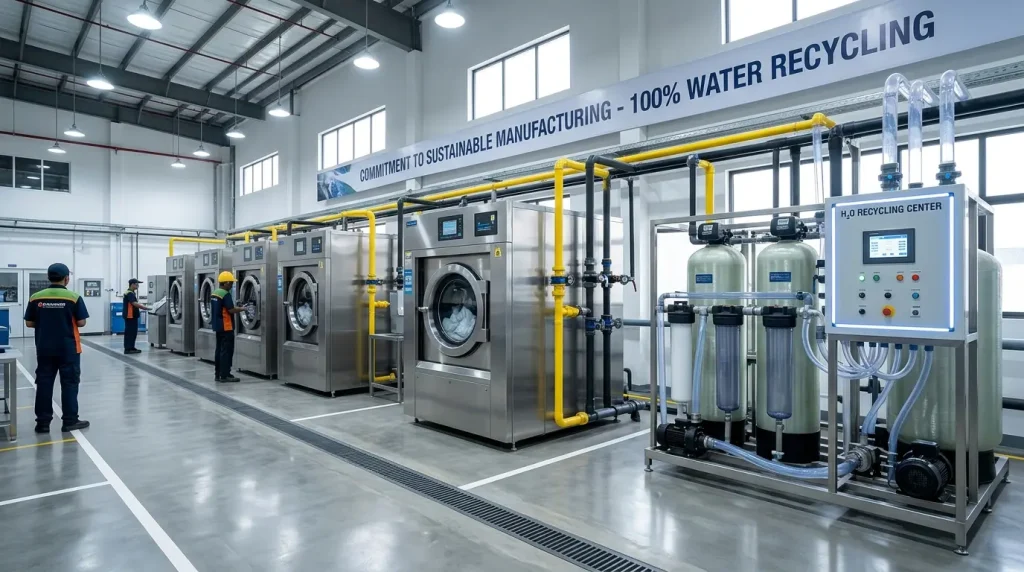
Zero-Liquid Discharge (ZLD) ETP Systems: Water that is utilized in washing and scouring cycles is captured, filtered through ultra-filtration and reverse osmosis membranes, and continuously recirculated back into the production cycle.
By integrating these technologies into everyday manufacturing workflows, ExploreTex ensures that every pair of jeans meets uncompromising aesthetic requirements while adhering to strict circular denim manufacturing standards. Discover how our sustainable infrastructure is measured through frameworks outlined in our higg index sustainability metrics and our bsci compliant manufacturing protocols.
7. Traceability and Transparency: Digital Passports and Supply Chain Auditing
Transparency is the ultimate proof of adherence to circular denim manufacturing standards. Consumers, regulatory bodies, and B2B partners increasingly demand verifiable proof of origin—from the exact farm where the organic cotton was harvested to the specific spinning mill, weaving loom, and finishing washhouse.
The Rise of Digital Product Passports (DPPs)
Under emerging EU mandates, textiles sold in European markets will soon require a Digital Product Passport accessible via a secure QR code or RFID tag on the garment label. This passport must transparently communicate:
Exact material composition and recycled fiber percentages.
Environmental impact metrics (water and carbon footprint).
Manufacturing facility labor certifications and audit reports.
End-of-life recycling instructions and take-back program links.
Adopting circular denim manufacturing standards requires robust digital record-keeping. ExploreTex integrates end-to-end traceability software into its production pipelines, ensuring that every batch leaving our facilities is fully documented and ready for seamless DPP integration. For brands looking to initiate custom production lines featuring verified traceability, explore our specialized offerings at custom denim production services.
8. Economic and Brand Advantages of Adhering to Circular Denim Manufacturing Standards
While environmental stewardship is the primary catalyst for adopting circular denim manufacturing standards, the commercial and economic benefits for B2B fashion brands are equally compelling.
Why Circular Denim Drives Business Growth
Cost Mitigation via Resource Recovery: Virgin cotton prices fluctuate wildly based on weather patterns, geopolitical tensions, and macroeconomic factors. By incorporating high-grade recycled cotton into core collections, brands insulate themselves against raw material price shocks.
Enhanced Brand Equity and Customer Loyalty: Modern consumers—particularly Gen Z and Millennial demographics—actively scrutinize brand supply chains. Marketing verified adherence to circular denim manufacturing standards builds deep brand trust, reduces customer acquisition costs, and drives organic word-of-mouth advocacy.
Streamlined Retail Compliance: Major global department stores and multi-brand e-commerce platforms are implementing strict vendor sustainability scorecards. Brands partnering with certified manufacturers like ExploreTex bypass compliance hurdles and secure prime retail placement.
Future-Proofing Against Legislation: Ahead of looming mandatory extended producer responsibility (EPR) laws and carbon taxes, proactive brands adopting circular standards avoid disruptive, rushed operational pivots.
9. Step-by-Step Implementation Guide for Fashion Brands Partnering with ExploreTex
Transitioning your brand’s denim catalog to align with strict circular denim manufacturing standards requires a structured, collaborative roadmap. ExploreTex partners with emerging designers and global enterprises alike to streamline this journey from concept to commercial delivery.
[Phase 1: Design & Tech Pack] ---> [Phase 2: Material Selection] ---> [Phase 3: Prototyping & Sampling] ---> [Phase 4: Bulk Dual-Hub Production] ---> [Phase 5: Traceability & Delivery]
Phase 1: Design & Tech Pack Optimization
Collaborate with ExploreTex technical designers to evaluate garment construction. Simplify silhouettes, eliminate non-recyclable trims, and ensure mono-material compatibility to satisfy core circular denim manufacturing standards.
Phase 2: Material & Certification Selection
Select appropriate fiber blends from our curated catalog of GRS-certified recycled cotton, organic cotton, and Tencel blends. Establish precise target weights (e.g., lightweight 10oz summer denim vs. heavyweight 14oz rigid selvedge).
Phase 3: Prototyping & Sustainable Washing Trials
Leverage our Portuguese partner facilities for rapid prototype sampling. Test innovative laser distressing, ozone fading, and waterless wash formulas to achieve the desired aesthetic without environmental compromise.
Phase 4: Scaled Dual-Hub Production
Execute bulk production runs optimized across our vertical manufacturing facility in Bangladesh for maximum cost efficiency and our European partner factories for specialized finishing touches.
Phase 5: Verification and Global Logistics
Receive fully audited, certified garments equipped with complete traceability documentation, ready for retail distribution across global markets.
10. Specialized FAQ Section
Q1: What specific criteria define circular denim manufacturing standards?
A: Circular denim manufacturing standards require garments to be designed for recycling and longevity (using mono-materials and recyclable trims), produced using recycled or sustainably farmed fibers (like GRS-certified post-consumer cotton), processed with closed-loop water and chemical management systems (such as ZLD and waterless dyeing), and finished using non-toxic technologies like laser distressing and ozone treatment.
Q2: How does ExploreTex ensure compliance with these standards across its dual-hub model?
A: ExploreTex maintains strict vertical oversight at our high-capacity manufacturing facility in Bangladesh—utilizing automated weaving and advanced ETP water treatment—while partnering with specialized artisanal facilities in Portugal for precision finishing. Both hubs undergo rigorous third-party auditing to maintain certifications such as GRS, GOTS, OEKO-TEX, and BSCI.
Q3: Can post-consumer recycled denim maintain the same durability as virgin cotton denim?
A: Yes. While mechanical recycling shortens staple fibers, mills adhering to circular denim manufacturing standards expertly engineer yarn blends by combining recycled staple fibers with long-staple organic cotton or virgin fibers. This optimization preserves tensile strength, tear resistance, and hand-feel while significantly reducing environmental impact.
Q4: How do circular denim manufacturing standards impact production lead times and costs?
A: Initially, transitioning to circular standards may require upfront planning during the tech pack and material sourcing phases. However, ExploreTex’s vertically integrated infrastructure in Bangladesh optimizes large-batch spinning and weaving to maintain highly competitive pricing, while closed-loop water and chemical recovery yield long-term operational cost efficiencies.
Q5: Are digital product passports required for circular denim collections?
A: Yes, regulatory frameworks in the European Union increasingly mandate Digital Product Passports (DPPs) for textiles to verify material composition, supply chain transparency, and end-of-life recyclability. ExploreTex embeds comprehensive traceability data into production workflows to ensure seamless DPP integration for our brand partners.
 11. Conclusion & Call to Action
 11. Conclusion & Call to Action
The transition toward closed-loop fashion is irreversible. As environmental regulations tighten and consumer demand for radical transparency intensifies, adopting rigorous circular denim manufacturing standards is the definitive path to long-term commercial success in the global apparel industry.
ExploreTex stands ready to serve as your comprehensive manufacturing partner. By combining the unmatched scale and vertical efficiency of our Bangladesh facility with the artisanal mastery of our Portuguese partner network, we provide everything your brand needs to produce world-class, fully certified, sustainable denim collections.
Ready to elevate your denim line with industry-leading circular production? Contact ExploreTex today to consult with our manufacturing experts, request sustainable fabric swatches, and begin developing your next collection under the highest global standards.