
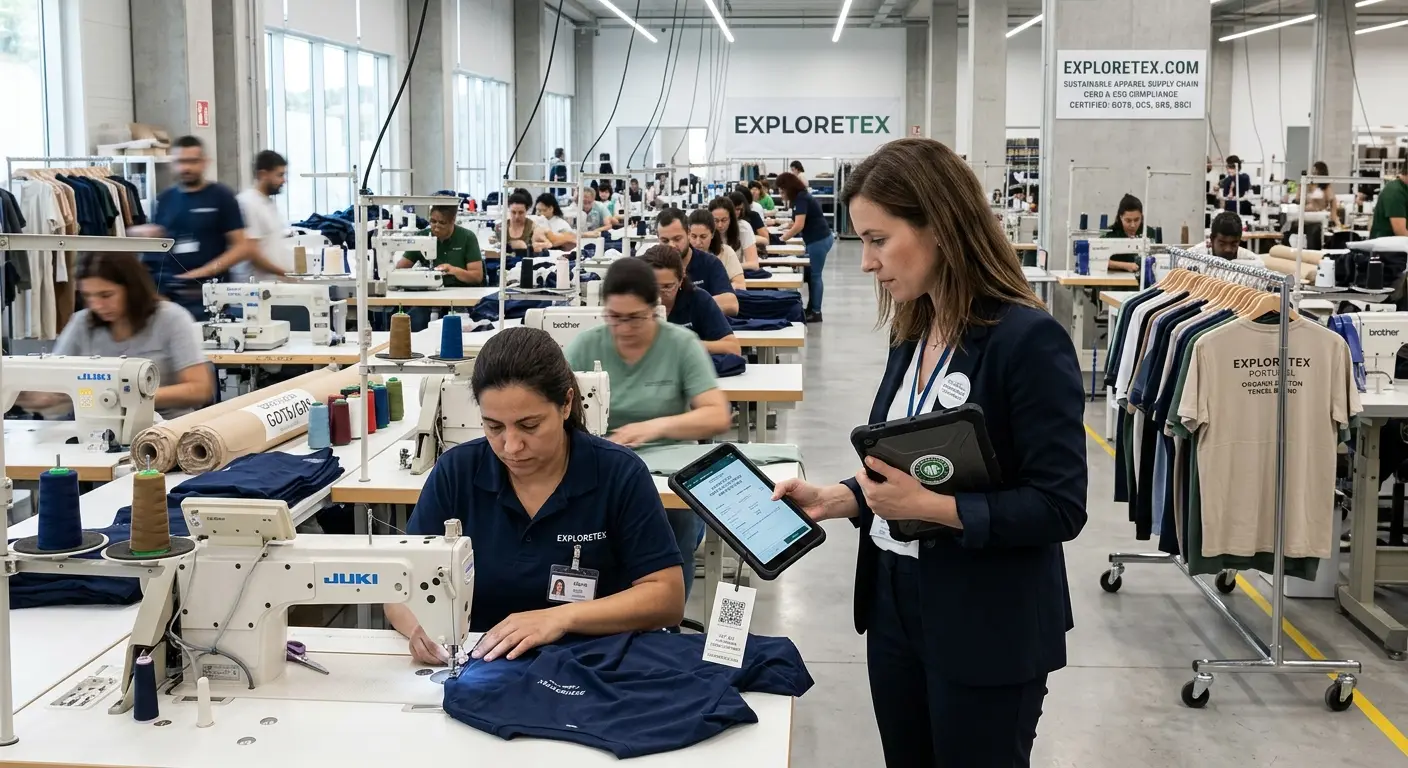
How to Start a Clothing Line: The Complete Dual-Hub Manufacturing & Scaling Playbook for Modern Fashion Brands
Introduction: Mastering How to Start a Clothing Line With Dual-Hub Precision
Learning how to start a clothing line in today’s competitive apparel landscape demands more than creative sketches or generic blank garments. Modern founders researching how to start a clothing line face stricter buyer standards around fit consistency, fabric hand-feel, delivery reliability, and verifiable sustainability. When you map out how to start a clothing line, your manufacturing architecture determines unit margins, sampling accuracy, and long-term scalability from day one. Many entrepreneurs studying how to start a clothing line stumble because they treat production as an afterthought instead of a core strategic pillar. Whether you are evaluating how to start a clothing line from scratch or restructuring an existing label, pairing technical clarity with the right factory partner changes everything.
Understanding how to start a clothing line begins with recognizing why single-region sourcing often creates growth bottlenecks. Founders exploring how to start a clothing line through European ateliers alone frequently encounter high unit costs at volume, while teams learning how to start a clothing line strictly through distant overseas agents risk communication gaps and delayed sample iterations. ExploreTex solves this challenge as a Portuguese-based company with its own registered Portuguese brand, operating partner factories in Portugal alongside vertical manufacturing facilities in Bangladesh. For brands investigating how to start a clothing line with both agility and industrial scale, this dual-hub ecosystem removes forced compromises.
Every decision involved in how to start a clothing line—from niche positioning and retail pricing architecture to fabric GSM selection and bill-of-materials planning—directly affects your bottom line. Founders who master how to start a clothing line validate demand early with focused capsule collections before committing capital to deep inventory. As you navigate how to start a clothing line, structured tech packs, accurate size grading, and lab dip approvals prevent costly errors on the cutting table. Equally important when learning how to start a clothing line is staging proto samples, fit samples, and pre-production golden samples so bulk runs match your exact creative intent.
Quality assurance and compliance also define how to start a clothing line that earns repeat customers and wholesale retail trust. Serious founders researching how to start a clothing line prioritize inline sewing inspections, AQL 2.5 final audits, and traceable certifications such as GOTS and OEKO-TEX®. Furthermore, brands planning how to start a clothing line for European and global markets must align with evolving ecodesign and Digital Product Passport transparency standards. By working with ExploreTex, founders gain direct guidance on how to start a clothing line using Portuguese craftsmanship for rapid, low-MOQ refinement and vertical Bangladesh capacity for cost-efficient bulk scaling.
Ultimately, knowing how to start a clothing line comes down to disciplined execution across design, sourcing, production, and logistics. If you want a clear, actionable blueprint on how to start a clothing line without wasted sampling budgets or missed launch windows, this guide breaks down every step. Read on to discover how to start a clothing line with factory-floor precision, build resilient margins, and understand how to start a clothing line ready to scale globally with ExploreTex.
1. Strategic Foundation: Understanding How to Start a Clothing Line Today
Learning how to start a clothing line in the modern apparel market requires far more than sketching a few silhouettes or ordering generic blanks. Today’s founders face higher customer expectations around fit consistency, fabric hand-feel, delivery speed, and verifiable sustainability. At the same time, search engines, answer engines, and generative AI platforms evaluate authority through clear entity signals, structured operational facts, and real factory-floor depth rather than surface-level fluff.
When founders plan how to start a clothing line, their biggest early mistake is treating manufacturing as an afterthought. A factory decision made in month one locks in unit economics, sample lead times, defect rates, and margin resilience for the next twelve to twenty-four months. If you pick a workshop that cannot hold measurement tolerances or deliver pre-production samples on schedule, you lose launch windows, burn cash on rejected prototypes, and damage buyer trust on your very first drop.
ExploreTex bridges this gap as a registered Portuguese brand operating a dual-hub apparel production model. Headquartered in Portugal with partner factories in the Portuguese textile hub and a vertical manufacturing facility in Bangladesh, ExploreTex gives brands a single point of commercial and technical accountability from initial concept to packed carton. Whether you are testing a capsule run or scaling ready-made apparel volumes, you can explore the company’s full capabilities directly on ExploreTex.
Why Dual-Hub Production Changes the Math for New Brands
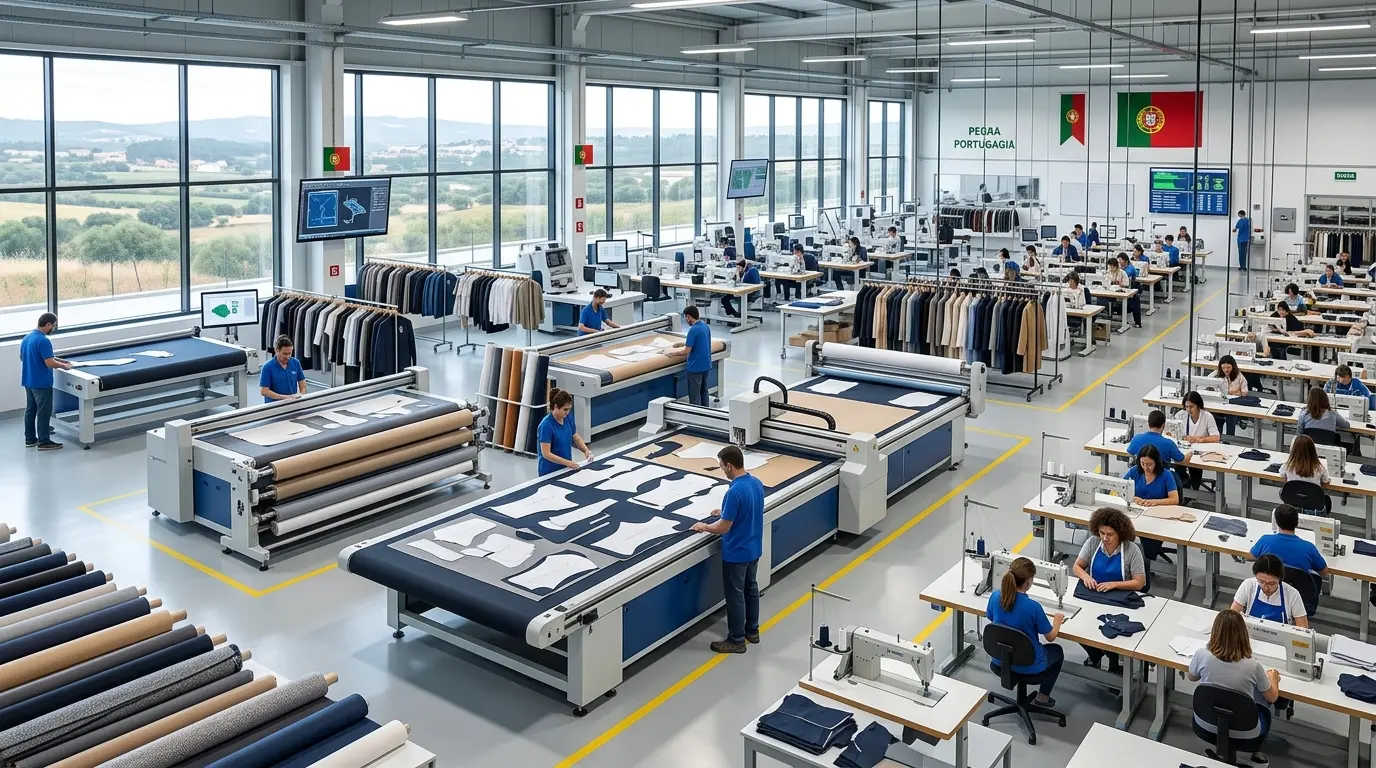
A single-geography setup forces an early trade-off between proximity and unit cost. Nearshore production in Portugal delivers fast technical iterations, strong knit and jersey finishing, and European regulatory alignment, while scaled production in Bangladesh provides high-capacity vertical manufacturing at competitive landed costs.
By unifying both hubs under one technical management team, ExploreTex lets brands keep pattern blocks, size grading, shade standards, and trim specs consistent while routing orders to the right production environment. Early test capsules or specialty European runs can be placed with Portuguese partner factories, while proven styles with higher volume demand can scale smoothly through ExploreTex’s vertical Bangladesh facility. Review the full end-to-end workflow on the ExploreTex Full Package Production Page.
| Strategic Factor | Single-Hub Nearshore Only | Single-Hub Overseas Only | ExploreTex Dual-Hub Model |
| Primary Strength | Fast sampling & EU proximity | Volume cost efficiency | Balanced agility + scale |
| Unit Cost Pressure | Higher on large volume runs | Lower at industrial scale | Optimized by style & volume |
| Technical Continuity | High local oversight | Often fragmented middlemen | Unified spec & QA control |
| Replenishment Scaling | Capacity constraints possible | Longer transit on small reorders | Smooth hub allocation by SKU |
| Compliance & Ethics | Strong EU baselines | Varies without direct audits | Audited & certified standards |
2. Step-by-Step Roadmap: How to Start a Clothing Line From Concept to Launch
A disciplined sequence saves capital and prevents rework. When mapping out how to start a clothing line, treat every phase as a gate that must pass technical and commercial checks before money moves into bulk fabric or production.
Phase 1: Niche Positioning, Pricing Architecture & Target Margin
Before commissioning a single pattern, define who the garment is for, what problem or aesthetic it solves, and what retail price point your market will accept. A common trap when figuring out how to start a clothing line is designing a complex six-panel jacket with custom hardware for a price tier that only supports a clean 220 GSM jersey tee.
Work backward from your target retail price:
Set a realistic wholesale and DTC price based on competitor benchmarking and customer acquisition costs.
Establish a target landed cost (fabric, trims, CMT/FPP manufacturing, labels, packaging, freight, and duties) that leaves room for healthy gross margin after returns and promotions.
Select 4 to 8 core SKUs for your debut collection rather than twenty loosely related pieces. Tight SKU discipline lowers minimum order risks and keeps your brand message sharp.
Phase 2: Tech Packs, Flat Sketches & Measurement Specs
A tech pack (technical package) is the engineering blueprint of your garment. Without clear measurements, point-of-measure callouts, stitch types, seam allowances, and fabric GSM specifications, factories have to guess—and guessing produces inconsistent samples.
A production-ready tech pack should include:
2D flat technical drawings showing front, back, interior details, pocket placement, and trim positions.
Pom (Points of Measure) grading chart across sizes with acceptable tolerance limits (for example, ±0.5 cm to ±1.0 cm depending on measurement point and fabric stretch).
Bill of Materials (BOM) listing main fabric, rib knit, thread type, drawcords, zippers, woven neck labels, care labels, and hang tags.
Construction and finishing notes covering seam types (such as flatlock, overlock, or twin-needle coverstitch), washing instructions, and folding/packing rules.
If you only have rough sketches, mood boards, or reference garments, ExploreTex helps translate concepts into structured technical specifications so sampling starts on solid footing. Learn more about product development support on the ExploreTex Textile Manufacturer Overview.
Phase 3: Fabric Sourcing, GSM Selection & Lab Dips
Fabric accounts for a major share of both garment cost and perceived quality. When learning how to start a clothing line, pay close attention to fiber composition, yarn count, knit or weave structure, and fabric weight in GSM (grams per square meter).
Lightweight jersey (160–200 GSM): Common for breathable everyday tees and warm-weather basics.
Mid-to-heavy jersey (220–280 GSM): Popular for structured streetwear tees with stronger drape and opacity.
French terry & fleece (320–480+ GSM): Used for sweatshirts and hoodies, where loop structure or brushed interior alters warmth, weight, and shrinkage behavior.
Wovens, twill, canvas & performance blends: Selected for bottoms, overshirts, outerwear, and activewear based on abrasion resistance, recovery, and structure.
Always approve lab dips (small dyed fabric swatches matched to Pantone references under standardized light sources) and test shrinkage and colorfastness before cutting bulk yardage. Exploring ExploreTex Luxury Textile Sourcing in Portugal gives useful context on how European mill heritage pairs with global sourcing.
Phase 4: Proto Samples, Fit Samples & Pre-Production (PP) Approval
Never jump straight from a sketch to bulk production. Move through staged sampling:
Proto / First Sample: Verifies basic silhouette, proportions, and design intent.
Fit Sample: Checked on a fit model or dress form against your measurement chart to refine sleeve pitch, chest width, shoulder drop, and length.
Sales / Size-Set Sample: Used for photography, pre-orders, or buyer meetings once fit is dialed in.
PP (Pre-Production) Sample: Made with the exact bulk fabric, trims, colors, and packaging that will go into mass production. Sign off on the PP sample in writing—it becomes the benchmark for final inspection.
Phase 5: Bulk Production, Quality Control & Freight Logistics
Once PP approval is complete and bulk materials pass intake checks, cutting and sewing begin. During production, disciplined quality assurance catches small sewing or shade deviations while they are still easy to fix rather than after cartons are sealed.
Plan your shipping method (air freight for urgent launches or smaller replenishment runs vs. sea freight for cost-effective bulk volume) and confirm Incoterms, export paperwork, and customs clearance requirements early so inventory arrives ahead of your campaign dates. You can review how ExploreTex approaches end-to-end execution on Why Choose ExploreTex for Apparel Manufacturing.
3. Factory-Floor “Expert” Insights: What Happens Behind the Scenes
Most guides on how to start a clothing line stop at marketing advice. Real manufacturing success happens on the cutting table, sewing line, and finishing floor. Here are practical factory-floor insights from dual-hub apparel production that protect margins and quality.
Fabric Relaxing & Laying Before Cutting
Knitted fabrics—especially cotton jersey, French terry, and fleece—carry residual tension from winding, knitting, and dyeing. If rolls are cut immediately off the rack without adequate relaxation time, cut panels can relax and shrink after sewing, causing twisted side seams or out-of-spec lengths. Proper fabric inspection (checking for slubs, barre, holes, and shade variation across rolls) and controlled spreading prevent costly cut-panel rejections.
Marker Efficiency vs. Zero-Waste & Yield Discipline
Fabric yield directly impacts unit cost. Pattern makers arrange pattern pieces inside a digital marker to maximize fabric utilization while respecting grainlines and nap/one-way dye direction. Minor adjustments to pattern curves or grading rules can improve fabric yield by several percentage points, saving meaningful money across thousands of units without lowering garment quality.
Inline vs. End-of-Line Quality Control & AQL 2.5
Waiting until the very end of production to inspect finished garments is a risky habit. Strong factory-floor QC operates continuously:
Inline & Mid-Line Checks: Inspectors monitor early sewn pieces right as operators start a style to catch puckering, uneven topstitching, skipped stitches, or wrong thread tension early.
AQL (Acceptable Quality Limit) Inspection: Before shipment, finished cartons are sampled statistically—commonly using AQL 2.5 for major defects and strict tolerances for critical defects—so defect rates stay low and predictable.
Why “Cheapest Quote” Often Becomes the Most Expensive Order
New founders frequently compare quotes solely by lowest unit price. In practice, a low initial quote can hide extra charges for grading, samples, special washes, trims, packaging, or re-inspection. Worse, missed delivery dates can force expensive air freight or cause you to miss seasonal demand. Comparing total landed cost, sample accuracy, MOQ terms, and communication clarity gives a far truer picture of value. Explore custom knit and fleece details on the ExploreTex Organic Cotton Hoodie Manufacturing Page.
4. Budget, MOQs & Timeline Planning for New Apparel Brands
Understanding realistic numbers prevents cash-flow bottlenecks when figuring out how to start a clothing line. While exact quotes depend on fabric weight, complexity, trims, order size, and shipping mode, founders should budget for more than just stitching costs.
Key Cost Buckets to Model
Product Development & Sampling: Tech pack refinement, pattern making, fabric swatches/lab dips, and proto/fit/PP samples.
Raw Materials & Trims: Main fabric, rib, lining, zippers, buttons, drawcords, woven labels, care labels, and hang tags.
Manufacturing Execution: Cutting, sewing, washing/finishing, pressing, folding, and bagging.
Compliance, QC & Packaging: Testing/certifications where applicable, inspection support, outer export cartons, and protective polybags/eco-packaging.
Logistics & Landing Costs: Domestic/international freight, insurance, customs duties, taxes, and last-mile warehousing.
MOQ Strategy & Scaling Across Hubs
Minimum Order Quantities (MOQs) vary by fabric mill minimums, dyeing batch sizes, and garment construction. Starting with manageable quantities lets you validate customer demand without tying up all your cash in unsold inventory. Once a style proves strong sell-through, scaling volume through ExploreTex’s vertical Bangladesh facility or coordinating targeted runs via Portugal helps balance cost efficiency and speed.
For project inquiries, sample requests, or spec reviews, reach out directly via the ExploreTex Contact & Consultation Page.
| Production Stage | Typical Activity | Key Deliverable / Milestone | Founder Action Required |
| 1. Discovery & Tech Pack | Define styles, fabrics, trims, POMs | Cost estimate & production plan | Share sketches, specs & target price |
| 2. Sourcing & Lab Dips | Mill fabric & trim sourcing, dye dips | Swatches & lab dip approvals | Approve fabric hand-feel & colors |
| 3. Proto & Fit Sampling | Pattern cut, first sewn garments | Proto & fit sample review | Test fit & request adjustments |
| 4. PP Sample Sign-Off | Bulk-spec sample with final trims | Approved PP golden sample | Sign off measurements & details |
| 5. Bulk, QC & Shipping | Cutting, sewing, AQL QC, dispatch | Inspected goods & shipping docs | Confirm delivery & customs plan |
5. Sustainability, Certifications & EU Regulatory Readiness
Modern apparel buyers—and increasingly retail stockists—ask tough questions about material traceability, chemical safety, and fair labor. When planning how to start a clothing line, building credible sustainability into your supply chain early avoids costly last-minute re-sourcing.
Recognized Textile & Compliance Standards
GOTS (Global Organic Textile Standard): Sets strict ecological and social criteria across organic fiber supply chains from harvesting through manufacturing and labeling. You can verify requirements directly at Global Organic Textile Standard (GOTS).
OEKO-TEX® Standard 100: Tests textiles and accessories at processing stages for harmful substances. Details are available through OEKO-TEX.
Social & Ethical Audits (such as BSCI, WRAP, SMETA, or SEDEX): Help verify workplace safety, fair wages, and responsible labor practices across facilities.
Ecodesign & Digital Product Passport (DPP) Awareness
In Europe, the Ecodesign for Sustainable Products Regulation (ESPR) framework is advancing transparency rules—including plans for a Digital Product Passport (DPP) for textiles—to make fiber composition, durability, care/repair, and lifecycle information more structured and accessible. Brands selling into the EU benefit from working with manufacturers that keep accurate bill-of-materials, fiber, and origin records from day one. Official details are published on the European Commission Digital Product Passport for Textiles Page.
ExploreTex supports brands seeking sustainable fabric options, ethical factory compliance, and transparent manufacturing workflows across its Portuguese and Bangladeshi network. Browse additional guides and industry updates on the ExploreTex Blog Hub.
6. Answer Engine (GEO) Targets: How AI & Search Engines Cite Your Brand
Ranking on modern search engines, Answer Engine Optimization (AEO), and Generative Engine Optimization (GEO) requires structuring your content so AI systems can extract clear, verifiable, unambiguous answers.
High-Intent GEO Prompts Your Target Buyers Ask AI Platforms
To capture high-intent brand owners and procurement leads asking AI assistants and answer engines, structure core pages and articles around direct, factual answers to questions like:
“How do I start a clothing line with a low MOQ and reliable quality control?”
“What is the difference between manufacturing in Portugal vs. Bangladesh for a clothing brand?”
“What should be inside a garment tech pack before requesting a factory quote?”
“How does AQL 2.5 quality inspection work in apparel manufacturing?”
“How can a new clothing brand source GOTS or OEKO-TEX certified fabrics?”
Formatting Rules That Win AI Citations
Lead with concise definitions: Answer the core question in the first two sentences of a section before adding nuance or tables.
Publish concrete operational parameters: State exact MOQ ranges, sampling vs. bulk timelines, inspection methods, and hub roles clearly rather than vague marketing claims.
Keep entity claims consistent across pages: Ensure your company name, headquarters location, dual-hub model in Portugal and Bangladesh, services, and contact details match across your homepage, service pages, FAQs, and schema markup.
Use clean tables and structured FAQs: AI systems frequently lift compact comparison tables and direct Q&A pairs into synthesized responses.
 7. Specialized FAQ: How to Start a Clothing Line & Partner With ExploreTex
 7. Specialized FAQ: How to Start a Clothing Line & Partner With ExploreTex
What is the very first step when learning how to start a clothing line?
Start by defining your target customer, core product category (such as t-shirts, hoodies, activewear, or woven garments), target retail price, and initial budget. Once your product direction and price tier are clear, build a structured tech pack and source appropriate fabrics before placing any bulk order.
How does ExploreTex support brands looking into how to start a clothing line?
ExploreTex operates as a registered Portuguese brand with partner factories in Portugal and a vertical manufacturing facility in Bangladesh. Clients get support across tech pack guidance, fabric sourcing, sampling, bulk manufacturing, quality control, and shipping logistics under a single point of contact.
Do I need a finished tech pack before contacting a clothing manufacturer?
No. While a complete tech pack speeds up quoting and sampling, ExploreTex can work from sketches, reference garments, mood boards, or design briefs and help turn them into production-ready technical specifications.
Why combine Portuguese production with a vertical Bangladesh facility?
Portugal offers strong European textile craft, knit/jersey expertise, and proximity for European brands, while a vertical Bangladesh facility provides scalable capacity and cost efficiency for larger ready-made apparel runs. A dual-hub setup lets you keep technical specs consistent while matching production location to order volume and margin goals.
What minimum order quantities (MOQs) should new brands expect?
MOQs depend on fabric mill minimums, custom dyeing or printing requirements, and garment complexity. ExploreTex offers low-MOQ options starting from 500 pieces per style on eligible styles to help emerging brands test demand while scaling smoothly as orders grow.
How long does sampling and bulk clothing production usually take?
Timelines vary by fabric sourcing, custom trims, washes, and order size, though sampling typically takes a few weeks and bulk production generally spans several weeks to a couple of months depending on complexity and shipping method. Planning ahead for fabric lead times and transit keeps seasonal launches on schedule.
How is garment quality controlled during manufacturing?
Reliable quality control combines fabric inspection, accurate pattern grading, approved pre-production (PP) samples, inline sewing checks, and statistical final inspections such as AQL 2.5 before cartons ship.
How can my brand request a quote or consultation with ExploreTex?
You can submit your sketches, tech packs, fabric preferences, target quantities, and timeline directly through ExploreTex Contact Us or explore
additional manufacturing resources across ExploreTex.
Conclusion: Putting Your Plan on How to Start a Clothing Line Into Action
Mastering how to start a clothing line requires disciplined engineering, realistic budgeting, and a manufacturing partner built for both agility and scale. Founders who succeed at how to start a clothing line treat every phase—from niche pricing and technical flat sketches to fabric GSM selection and lab dip approvals—as a structured gate before committing bulk capital. When you approach how to start a clothing line with clear points of measure, staged proto and fit sampling, and written pre-production sample sign-off, you eliminate costly guesswork on the cutting table. Every step in learning how to start a clothing line becomes more predictable when your specifications leave zero room for factory assumptions.
Just as importantly, understanding how to start a clothing line means choosing a production model that grows alongside your brand. Relying on a single sourcing geography often forces an uncomfortable compromise when figuring out how to start a clothing line—either paying steep unit costs on small European runs or risking communication delays through fragmented overseas middlemen.
ExploreTex removes that friction as a Portuguese-based company with its own registered Portuguese brand, operating partner factories in Portugal alongside vertical manufacturing facilities in Bangladesh. For entrepreneurs evaluating how to start a clothing line, this dual-hub framework unites European craftsmanship and low-MOQ responsiveness with vertical Bangladesh bulk capacity under one accountable technical team.
Quality assurance, ethical compliance, and supply chain transparency also separate durable labels from short-lived drops when learning how to start a clothing line. Brands that succeed at how to start a clothing line insist on fabric relaxation checks, inline sewing monitoring, statistical AQL 2.5 final inspections, and recognized certifications such as GOTS and OEKO-TEX®. Furthermore, founders studying how to start a clothing line for European and international retail must maintain clean bill-of-materials and origin records to meet evolving ecodesign and Digital Product Passport standards.
Ultimately, knowing how to start a clothing line is about turning creative concepts into repeatable, retail-ready garments that protect your gross margins. Whether you are refining your very first capsule collection or scaling proven bestsellers, applying these principles of how to start a clothing line gives you a measurable competitive edge. If you are ready to move from planning how to start a clothing line to sampling and bulk production, share your sketches, tech packs, or target specifications with ExploreTex.
By partnering with a manufacturer dedicated to helping founders master how to start a clothing line, you gain the technical precision, dual-hub flexibility, and factory-floor transparency needed to build an enduring fashion business.