
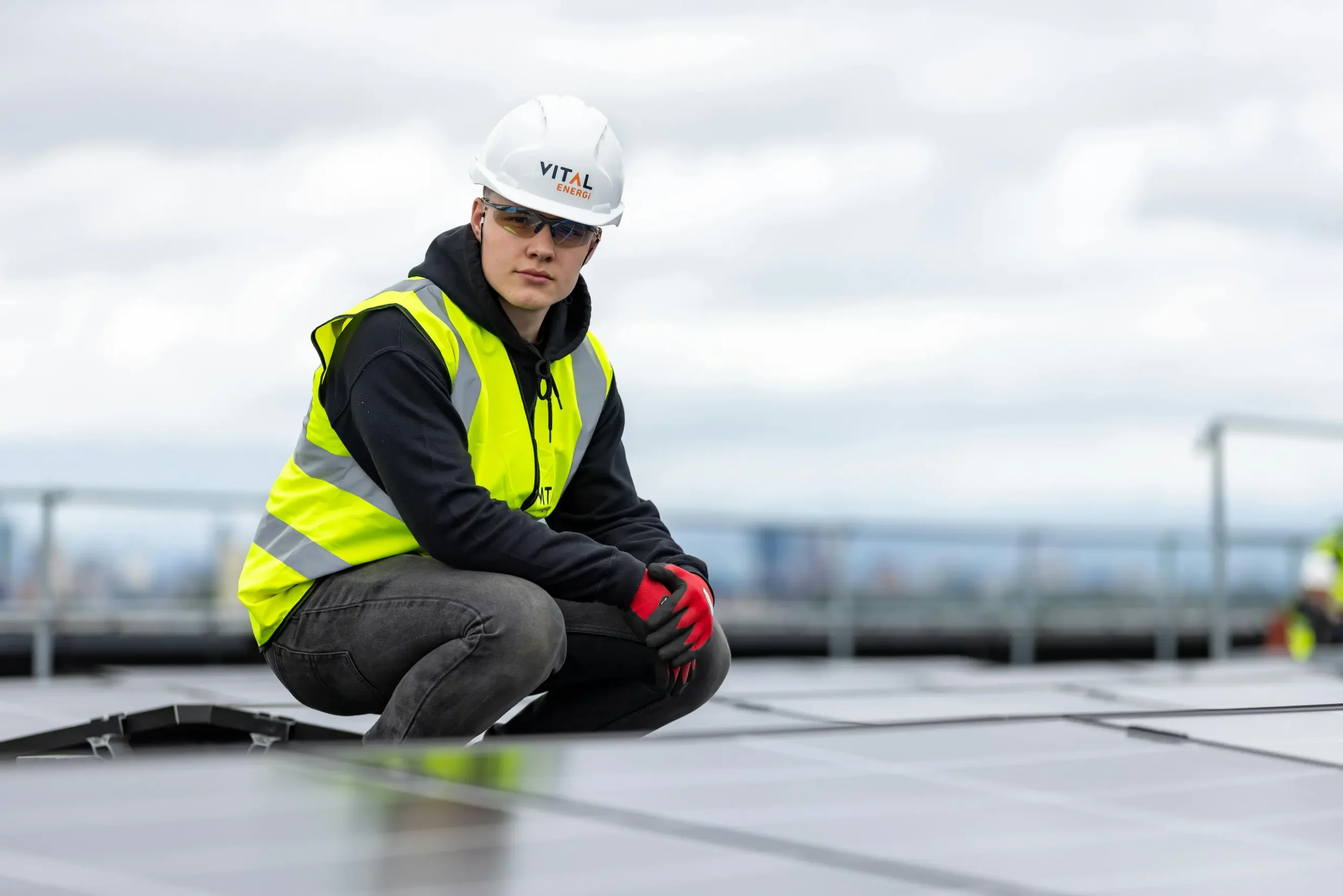
Workwear Clothing Manufacturer for EU Companies
A Complete Guide for European Brands, Distributors, and Corporate Buyers
If you are searching for a reliable Workwear Clothing Manufacturer for EU Companies, you are not simply looking for a factory. You are looking for a long-term production partner who understands European regulations, compliance requirements, commercial expectations, and brand positioning.
ExploreTex is a Portuguese-based apparel manufacturing company with its own registered brand, a manufacturing facility in Bangladesh, and partner production units in Portugal. We operate as a self-managed manufacturer, meaning we control sourcing, sampling, production, quality control, compliance, and delivery. This structure allows EU companies to work with one accountable partner instead of managing multiple disconnected suppliers.
This pillar guide explains everything EU buyers need to know before selecting a Workwear Clothing Manufacturer for EU Companies — including compliance, certifications, fabrics, MOQ planning, pricing logic, testing standards, sustainability strategy, and logistics execution.
1. Understanding Workwear Manufacturing in the European Market
The European market is structured, regulated, and quality-driven. Companies purchasing workwear must consider:
EU safety regulations
Chemical compliance
Environmental standards
Corporate procurement policies
Long-term supply stability
Price competitiveness
Brand consistency
A professional Workwear Clothing Manufacturer for EU Companies must understand all of these elements.
Workwear in Europe typically falls into three categories:
Corporate uniforms (non-protective)
Technical workwear (durable functional clothing)
PPE-certified protective garments
Each category has different regulatory and testing requirements.
2. Workwear vs PPE: Why the Difference Matters
Many buyers confuse standard workwear with PPE (Personal Protective Equipment).
If garments are designed purely for branding or uniform purposes, they fall under general textile regulations.
However, if the garment provides protection (high visibility, flame resistance, rain protection, anti-static properties), it may fall under Regulation (EU) 2016/425 on PPE, issued by the European Commission.
For example:
EN ISO 20471 – High visibility clothing
EN 343 – Protection against rain
EN ISO 11612 – Protection against heat and flame
When PPE classification applies, CE marking and conformity assessment become mandatory.
A qualified Workwear Clothing Manufacturer for EU Companies must clarify this from the beginning of the project to avoid compliance risks.
3. Why EU Companies Choose a Dual Manufacturing Model
ExploreTex operates from Portugal while manufacturing through:
Our owned facility in Bangladesh
Partner factories in Portugal
This hybrid model gives EU clients:
Competitive production costs
European-level compliance
Faster sampling coordination
Reduced communication risk
Clear accountability under EU commercial standards
For many European brands, this structure offers the ideal balance between cost efficiency and regulatory security.
4. Certifications That EU Buyers Expect
A serious Workwear Clothing Manufacturer for EU Companies must provide documentation, not promises.
Key certifications include:
1. OEKO-TEX Standard 100
Issued by OEKO‑TEX
Confirms fabrics are tested for harmful substances.
2. GOTS (Global Organic Textile Standard)
Managed by Global Organic Textile Standard
Ensures organic fiber traceability and processing standards.
3. REACH Compliance
Overseen by European Chemicals Agency
Ensures restricted chemicals are controlled within EU textile imports.
4. ISO Quality Management
Standards developed by International Organization for Standardization
ISO 9001 supports structured quality control systems.
When selecting a Workwear Clothing Manufacturer for EU Companies, request actual certificates and recent lab reports.
5. The Complete Production Process
Professional workwear manufacturing follows structured stages:
Stage 1 – Technical Review
Tech pack evaluation
Fabric recommendation
Compliance mapping
Price target discussion
Stage 2 – Sampling
Proto sample
Fit sample
Pre-production sample
Lab test submission (if required)
Sampling timeline: 2–6 weeks depending on complexity.
Stage 3 – Raw Material Procurement
Fabric sourcing
Trim selection
Certification validation
Color approval
Stage 4 – Bulk Production
Inline quality inspection
Size measurement control
Fabric performance testing
Embroidery or printing execution
Stage 5 – Final Inspection
AQL-based random inspection
Packaging approval
Documentation preparation
Stage 6 – Shipping & Delivery
FOB, CIF, or DDP terms
Commercial invoice
Packing list
Certificate of origin
Test reports
This structured flow is what separates a professional Workwear Clothing Manufacturer for EU Companies from a basic trading company.
6. Fabric Selection for European Workwear
Fabric selection impacts durability, comfort, and cost.
Common fabrics include:
Cotton Twill (240–320 GSM)
Breathable, comfortable, ideal for corporate uniforms.
Poly-Cotton Blend (65/35 or 50/50)
Improved durability and wrinkle resistance.
Softshell with Membrane
Water-resistant, windproof, ideal for technical teams.
Flame-Resistant Blends
Used in industrial environments requiring EN ISO 11612 compliance.
High-Visibility Fabric
Used in safety garments requiring EN ISO 20471 classification.
A reliable Workwear Clothing Manufacturer for EU Companies will explain the advantages and limitations of each fabric option based on your use case.
7. Sustainability in European Workwear
Sustainability is no longer optional in Europe.
EU companies increasingly request:
Organic cotton (GOTS certified)
Recycled polyester
Low-impact dyeing
OEKO-TEX certified fabrics
Reduced plastic packaging
A modern Workwear Clothing Manufacturer for EU Companies must integrate sustainability without inflating costs beyond commercial viability.
8. MOQ and Pricing Structure
MOQ depends on:
Fabric type
Certification requirements
Custom trims
Color variations
Typical ranges:
Basic uniforms: 200–500 pcs per style
Jackets or outerwear: 200–300 pcs
Certified PPE garments: 300–1000+ pcs
Pricing is influenced by:
Fabric GSM
Trim quality
Embroidery stitch count
Lab testing costs
Freight method
Transparency in cost breakdown builds trust between EU buyers and their Workwear Clothing Manufacturer for EU Companies.
9. Quality Control System
Quality assurance includes:
Fabric inspection before cutting
Inline sewing inspection
Measurement verification
Strength testing (seams and stress points)
Final AQL inspection
Without structured quality systems, European buyers face returns, reputational risk, and financial loss.
A serious Workwear Clothing Manufacturer for EU Companies documents every stage.
10. Logistics Strategy for EU Clients
Delivery models include:
Direct shipment to EU warehouse
Split shipment by country
DDP delivery
FOB model with buyer freight control
ExploreTex supports complete documentation handling to simplify customs clearance within the European Union.
11. Private Label Manufacturing for EU Brands
Many European companies prefer white-label or private label workwear.
Services include:
Custom woven labels
Printed neck labels
Embroidery logo placement
Barcode tagging
Retail-ready packaging
A structured private-label program ensures brand consistency across all SKUs.
12. Why Portugal-Based Management Matters
Working with a Portugal-based company gives EU buyers:
European legal accountability
Professional invoicing standards
Clear communication in EU time zones
Simplified contract structuring
Stronger data protection compliance
This reduces risk compared to dealing directly with overseas factories without EU representation.
13. Common Mistakes EU Buyers Should Avoid
Choosing suppliers based only on price
Ignoring certification verification
Skipping pre-production samples
Not clarifying PPE classification
Underestimating lead times
Ordering too many SKUs in first run
A knowledgeable Workwear Clothing Manufacturer for EU Companies guides clients through these risks.
14. Typical Timeline for a 1000-Piece Workwear Order
Week 1–2: Tech review and quotation
Week 3–5: Sampling and approval
Week 6–8: Fabric sourcing
Week 9–14: Bulk production
Week 15: Inspection and shipment
PPE-certified garments may require additional lab testing time.
15. Frequently Asked Questions
What is your minimum order quantity?
Depends on style complexity and certification requirements.
Can you handle PPE-certified garments?
Yes, if testing and compliance requirements are defined in advance.
Do you provide OEKO-TEX fabrics?
Yes, certified materials can be sourced upon request.
Do you manage shipping?
Yes, we offer structured shipping solutions tailored to EU clients.
Can small brands work with you?
Yes, pilot production is possible with structured planning.
16. SEO Keyword Strategy for This Page
Primary Keyword:
Workwear Clothing Manufacturer for EU Companies
Secondary Keywords:
Custom workwear manufacturer EU
Private label workwear Portugal
Sustainable workwear manufacturer Europe
PPE clothing manufacturer EU
Corporate uniform supplier Europe
EN ISO 20471 manufacturer
OEKO-TEX workwear supplier
Use the primary keyword naturally throughout headings and paragraphs without exceeding healthy density levels.
 17. Conclusion
 17. Conclusion
Choosing the right Workwear Clothing Manufacturer for EU Companies is not simply about cost.
It is about:
Compliance
Quality control
Certification integrity
Sustainability alignment
Transparent pricing
Reliable delivery
Long-term partnership
ExploreTex combines Portuguese business structure with strong manufacturing capability in Bangladesh and partner factories in Portugal. This model allows European companies to scale safely, competitively, and confidently.
If your company is looking for a structured, accountable, and experienced Workwear Clothing Manufacturer for EU Companies, ExploreTex is ready to discuss your next project.