
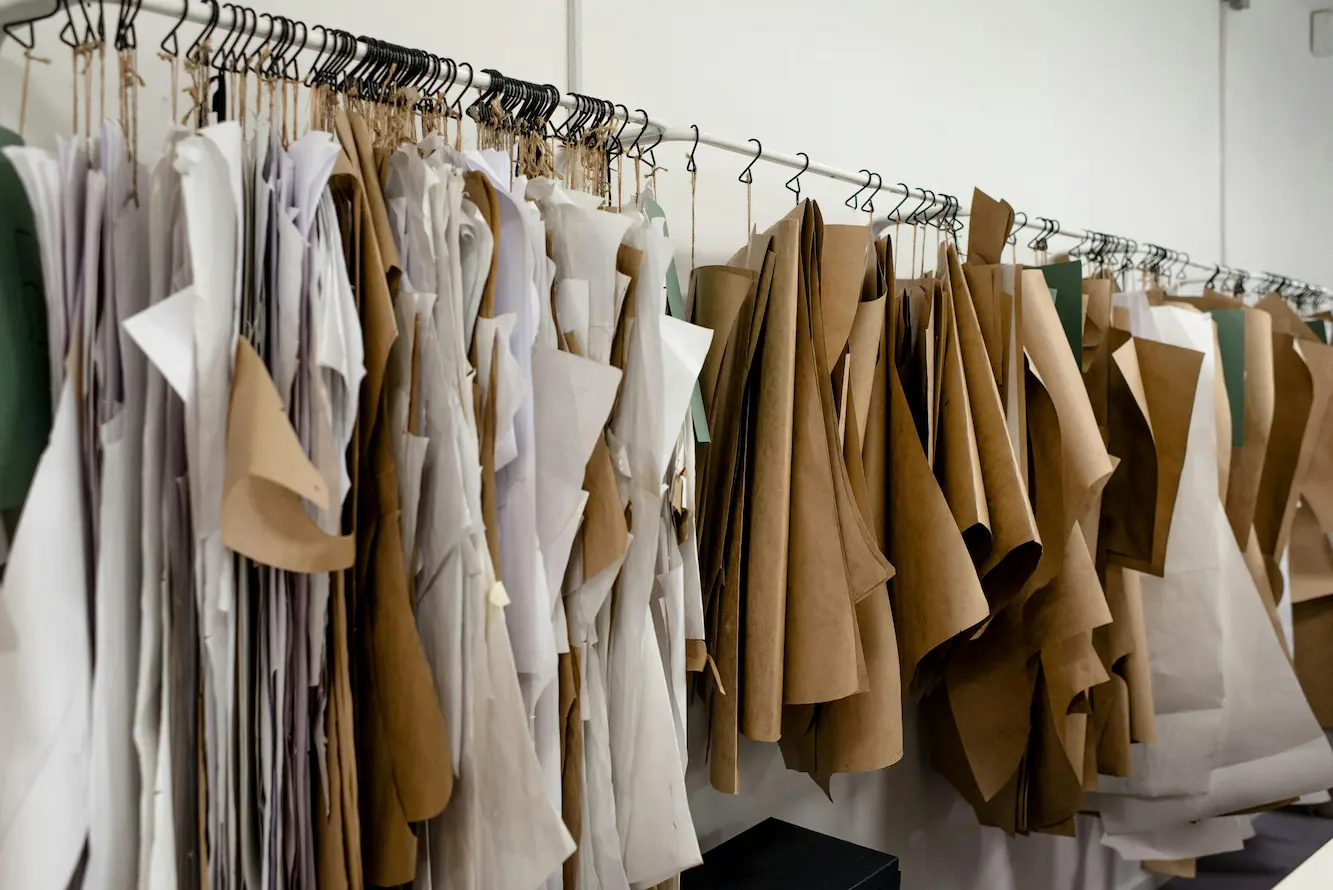
The Zero-Waste Manifesto: Engineering Patterns with AI for Circularity
The fashion industry is standing at a precipice. For decades, the standard operating procedure for garment manufacturing has accepted a staggering level of waste as “the cost of doing business.” It is estimated that 15% to 20% of fabric is discarded on the cutting room floor before a garment is even sewn. In an era where resources are finite and consumer scrutiny is infinite, this model is no longer sustainable.
Welcome to The Zero-Waste Manifesto: Engineering Patterns with AI for Circularity. This is not just a trend; it is a fundamental re-engineering of how we conceive, cut, and construct clothing. At Exploretex, a premier Portuguese based company and manufacturing partner, we are leading this charge. By fusing Portugal’s heritage of textile craftsmanship with advanced Artificial Intelligence, we are proving that waste is not an inevitability—it is a design flaw.
This article serves as a comprehensive guide for brands, designers, and sourcing managers who are ready to embrace the future of Zero-Waste Pattern Engineering. We will explore how AI algorithms are optimizing yield, how virtual prototyping is killing the physical sample, and why partnering with a tech-forward manufacturer like Exploretex is your smartest move for 2026.
1. The Anatomy of Waste: Why Traditional Methods Fail
To understand the solution, we must first diagnose the problem. In traditional manufacturing, a “marker” (the layout of pattern pieces on fabric) is created by a human operator. Even the most skilled veteran can only calculate a finite number of combinations to fit irregular shapes (sleeves, pant legs, collars) onto a rectangular bolt of fabric.
The “Cookie Cutter” Fallacy
Imagine trying to cut circles out of a square sheet of dough. No matter how close you place them, there will be gaps. In fashion, these “gaps” represent millions of tons of high-quality cotton, linen, and denim sent to landfills annually.
The Cost of Inefficiency
Financial Loss: Every inch of wasted fabric is money paid for material that generates no revenue.
Environmental Toll: That waste represents water, energy, and labor used to grow and weave fiber that serves no purpose.
Carbon Footprint: Incinerating fabric scraps releases unnecessary CO2 into the atmosphere.
Zero-Waste Pattern Engineering challenges this status quo. It asks: What if the pattern pieces were designed like a jigsaw puzzle, where every edge meets another, leaving zero gaps?
2. Enter the Architect: How AI Revolutionizes Pattern Making
Artificial Intelligence has moved beyond buzzwords and into the factory floor. At Exploretex, we utilize AI to transform Zero-Waste Pattern Engineering from a theoretical concept into a scalable reality.
2.1 AI-Driven Marker Making and Nesting
Human brains are brilliant, but AI is faster at math. Modern algorithms can run millions of permutations in seconds to find the mathematically perfect layout for a marker.
Dynamic Nesting: AI software rotates and interlocks pattern pieces in ways a human might miss. It can utilize “tilt” and “flip” functions to nest pieces within the fabric’s grainline tolerance, increasing fabric utilization rates from the industry standard of 80% to upwards of 95% or even 99%.
Fabric Flaw Detection: In our Portuguese facilities, computer vision systems scan raw fabric for defects. The AI then automatically adjusts the pattern layout to avoid these flaws while maintaining maximum density, ensuring that Zero-Waste Pattern Engineering doesn’t compromise quality.
2.2 Generative Design
This is the next frontier. Instead of a designer drawing a shape and asking the factory to cut it, Generative AI can suggest design alterations to minimize waste.
Example: If a pocket shape creates an awkward gap in the marker, the AI can suggest a 2mm adjustment to the curve that saves 5% of fabric per garment. This is collaborative Zero-Waste Pattern Engineering at its finest.
3. Virtual Prototyping: The End of the Physical Sample
One of the largest sources of pre-consumer waste isn’t on the cutting floor—it’s in the sampling room. Brands often ship 5, 10, or 20 physical samples back and forth between the design studio and the factory before approval.
3.1 3D CLO and Digital Twins
At Exploretex, we advocate for 3D Virtual Sampling. Using tools like CLO 3D, we create a “Digital Twin” of your garment.
Physics Simulation: We simulate the drape, weight, and tension of the fabric. You can see how a 12oz denim behaves versus a 10oz linen.
Instant Iteration: Want to lower the hemline? Change the button color? It’s done in a click, not a week.
3.2 The Sustainability Impact
By adopting digital Zero-Waste Pattern Engineering workflows, brands can reduce their physical sampling by up to 80%. This saves:
Air Freight Emissions: No flying samples across the globe.
Material Usage: No cutting fabric for rejected prototypes.
Time: Reducing lead times from months to weeks.
4. Exploretex: Your Portuguese Partner in Precision
Why is Portugal the ideal geography for this revolution? And why is Exploretex the partner you need?
4.1 The Portugal Advantage
Portugal is globally recognized as a hub for “Green Manufacturing.” Unlike other regions that compete solely on price, the Portuguese textile sector competes on Innovation, Quality, and Ethics.
EU Standards: Operating under strict European Union environmental laws means that Zero-Waste Pattern Engineering is often a regulatory baseline, not just a bonus.
Skilled Workforce: The Porto and Braga regions boast a workforce that is highly literate in digital textile technologies.
4.2 The Exploretex Hybrid Model
We understand that cost is still a factor. Exploretex offers a unique “Hybrid Model” that leverages the best of both worlds:
High-End Development in Portugal: We handle the complex Zero-Waste Pattern Engineering, 3D sampling, and premium small-batch production in Portugal.
Scalable Production in Bangladesh: For high-volume basics, we transfer the engineered, zero-waste markers to our managed facilities in Bangladesh. You get European engineering precision with competitive global pricing.
5. Designing for Circularity: The Next Step
Zero-Waste Pattern Engineering is not just about using less fabric; it’s about designing for the future life of the garment. This is the essence of Circularity.
5.1 Mono-Material Construction
Recycling garments is difficult when fibers are mixed (e.g., Polyester + Cotton). AI can help designers select mono-material fabrics that meet performance needs without blending. Exploretex sources premium mono-materials (100% Organic Cotton, 100% Lyocell) that are fully recyclable.
5.2 Design for Disassembly
We are experimenting with patterns that allow for easy disassembly.
Smart Seaming: Using AI to place seams where they can be easily cut or dissolved (using special threads) to separate components at the end of the garment’s life.
Component Recovery: Designing hardware (buttons, zippers) that can be easily removed for reuse.
5.3 Upcycling Off-Cuts
Despite our best efforts in Zero-Waste Pattern Engineering, small scraps may remain. Exploretex partners with local Portuguese recyclers to mechanically shred these off-cuts into “shoddy,” which is then spun back into new yarns. This closes the loop completely.
6. The Digital Product Passport (DPP) and 2026 Compliance
The European Union’s Digital Product Passport is set to reshape the industry. By 2026/2027, brands selling in the EU will likely need to provide transparent data on the sustainability of their products.
6.1 Traceability as a Standard
Zero-Waste Pattern Engineering provides the data foundation for the DPP. Because the process is digital, we can track:
Exactly how much fabric was used.
The precise percentage of waste generated (and recycled).
The origin of the fiber.
Partnering with Exploretex means you are future-proofing your brand. We provide the data metrics you need to populate your Digital Product Passports, ensuring you remain compliant and competitive in the European market.
7. Implementing Zero-Waste in Your Supply Chain
Transitioning to a Zero-Waste Pattern Engineering model requires a shift in mindset. Here is how you can start this journey with Exploretex.
Step 1: Audit Your Current Efficiency
Look at your current markers. innovative brands should aim for 85%+ efficiency. If you are below that, there is room for AI optimization.
Step 2: Embrace Digital Development
Stop requesting physical samples for every minor change. Trust the physics of 3D rendering. It is faster, cheaper, and greener.
Step 3: Collaborate Early
In the traditional model, designers design, and factories execute. In the Zero-Waste Pattern Engineering model, the factory (Exploretex) should be involved in the design phase. Let our technicians suggest small pattern tweaks that yield massive fabric savings.
8. Case Study: The “Puzzle” Collection
Let’s look at a hypothetical example of what is possible. A streetwear brand approached Exploretex with a design for a heavy canvas jacket.
Traditional Method: The initial marker yielded 78% efficiency due to the complex shape of the sleeves.
The AI Intervention: Our engineers ran the pattern through our AI nesting software. The AI suggested splitting the under-sleeve into two panels (a design detail that actually added aesthetic value).
The Result: Efficiency jumped to 94%.
The Impact: On a production run of 2,000 jackets, this saved over 800 meters of fabric. That is Zero-Waste Pattern Engineering in action—saving money and the planet simultaneously.
9. The Economic Case for Zero-Waste
Sustainability is often viewed as a cost center. Zero-Waste Pattern Engineering flips this narrative—it is a profit center.
Fabric is Money
Fabric typically accounts for 60-70% of the total cost of a garment. A 10% improvement in fabric utilization directly improves your gross margin. When you scale this across thousands of units, the investment in AI engineering pays for itself tenfold.
The “Green Premium”
Consumers are increasingly willing to pay more for products with a proven sustainability story. Marketing your collection as “Zero-Waste Engineered” differentiates you in a crowded market.
 10. Conclusion: The Future is Optimized
 10. Conclusion: The Future is Optimized
The days of “make, take, waste” are numbered. The Zero-Waste Manifesto: Engineering Patterns with AI for Circularity is more than a manufacturing technique; it is a philosophy of respect. Respect for the raw materials, respect for the environment, and respect for the efficiency of the process.
Exploretex stands ready to be your guide in this new era. As a Portuguese based company with a global reach, we combine the heritage of European tailoring with the precision of Silicon Valley tech. We don’t just sew clothes; we engineer solutions.
The revolution in fashion won’t happen on the runway. It will happen in the pattern room, on the server farm, and on the cutting table. Join us, and let’s build a fashion industry that is beautiful, profitable, and waste-free.
Frequently Asked Questions (FAQ)
1. What is Zero-Waste Pattern Engineering? It is a design and manufacturing process that uses AI algorithms and creative pattern manipulation to arrange garment pieces on fabric so that 95% to 100% of the material is used, eliminating scraps.
2. How does Exploretex use AI in manufacturing? We use AI for automated nesting (marker making), defect detection, and predictive demand planning. This ensures we only cut what is needed and maximize every inch of fabric.
3. Can Zero-Waste Pattern Engineering save money? Yes. By maximizing fabric utilization, you buy less fabric for the same number of garments. Since fabric is the biggest cost driver in production, this significantly lowers your Unit Economics.
4. Is this relevant for small brands? Absolutely. In fact, small brands benefit immensely because they often have tighter budgets. Reducing fabric consumption helps small brands maximize their limited resources.
5. How does Portugal support this process? Portugal has a rich ecosystem of textile innovation and strict environmental standards. Partnering with a Portuguese manufacturer like Exploretex ensures access to the latest green technologies and skilled engineers.
Ready to Engineer Your Zero-Waste Collection?
Don’t let your profits end up on the cutting room floor. Would you like me to analyze your current tech pack to estimate potential fabric savings using our AI-driven nesting strategies? Contact Exploretex today and let’s build the future of fashion together.