
How to Source Fabrics Internationally for Your Clothing Line: The Ultimate 2026 Guide
Launching a fashion brand is an exercise in creative vision, but scaling one is an exercise in global logistics. At the heart of this challenge lies the need to source fabrics internationally. Whether you are an emerging designer or an established label looking to diversify, your choice of textile origin dictates your quality, your price point, and—increasingly—your legal compliance.
In 2026, the landscape of global textile procurement has shifted. No longer is it enough to find the cheapest yardage; today, you must navigate Digital Product Passports (DPP), ethical labor mandates, and a volatile global shipping market.
At EXPLORETEX, we’ve seen brands struggle with the “where” and “how” of sourcing. Based in Portugal—Europe’s premier hub for high-end, sustainable textiles—we help brands bridge the gap between a design sketch and a globally-sourced, ethically-produced reality. This guide is your roadmap to source fabrics internationally with precision, profit, and peace of mind.
1. Why You Must Source Fabrics Internationally in 2026
The decision to source fabrics internationally isn’t just about cost-cutting; it’s about access to innovation. While domestic sourcing has its charms, the global market offers specialized expertise that varies by region.
Regional Specialization: Italy remains the king of high-end wool and luxury silks. Turkey is a powerhouse for denim. Portugal is the global leader in sustainable jersey, organic cotton, and technical performance fabrics.
Cost Efficiency: While labor and raw material costs fluctuate, international sourcing allows you to leverage economies of scale that domestic mills often cannot provide.
Innovation: Many international mills are now integrating AI-driven weaving and bio-based dyes that are simply not yet available at a local level in many countries.
However, to source fabrics internationally successfully, you need more than a Google search. You need a strategy.
2. Setting the Stage: Preparation and Timelines
One of the biggest mistakes we see at EXPLORETEX is brands starting their sourcing journey too late. For a successful Spring/Summer 2027 collection, you should be looking to source fabrics internationally at least 10–12 months in advance.
The 2026 Sourcing Calendar
Month 11-10: Fabric research and supplier shortlisting.
Month 9-8: Ordering swatches and lab dips (color approvals).
Month 7: Performance testing (shrinkage, pilling, colorfastness).
Month 6: Bulk fabric confirmation and export documentation.
Month 5-3: Production and shipping buffers.
To source fabrics internationally effectively, you must also have a rock-solid Tech Pack. This document should detail your desired GSM (grams per square meter), fiber content, and specific finishings (e.g., anti-pilling, moisture-wicking).
3. Navigating Global Textile Hubs: Where to Go?
When you decide to source fabrics internationally, your first question is likely: Where? The world is a patchwork of textile expertise.
Portugal: The Premium Sustainable Choice
Portugal has become the go-to for brands that value ethics as much as quality. The “Made in Portugal” label is synonymous with craftsmanship. Brands like Nudie Jeans and Patagonia have long utilized European hubs to maintain their high standards.
Key Advantage: Low MOQs (often starting at 100–300 units), EU labor protections, and massive investment in renewable energy.
Italy and France: Luxury and Heritage
For high-fashion couture and premium wools, you look to the Biella region of Italy. These mills have centuries of history, though their price points and MOQs reflect that prestige.
Turkey: The Denim and Jersey Powerhouse
Turkey offers a fantastic balance of speed and quality, particularly for circular knits and high-grade denim. Their proximity to both Asia and Europe makes them a logistical sweet spot.
China and Vietnam: Volume and Variety
If you are looking for massive volume (10,000+ units), Asia remains the dominant player. However, as of 2026, brands sourcing here face increased scrutiny regarding the “China content” in their supply chains due to new US and EU transparency laws.
4. How to Vet International Suppliers
If you want to source fabrics internationally without losing sleep, you must vet your suppliers with the rigor of a private investigator.
Verify Certifications
A supplier claiming to be “eco-friendly” is meaningless in 2026 without third-party verification. Look for:
GOTS (Global Organic Textile Standard): For organic fibers.
GRS (Global Recycled Standard): For recycled polyesters and nylons.
OEKO-TEX® Standard 100: Ensures no harmful chemicals are present.
Bluesign®: Focuses on the environmental health and safety of the manufacturing process.
Communication and Responsiveness
When you source fabrics internationally, time zones are your enemy. A supplier that takes four days to answer an email during the sampling phase will likely take four weeks during a production crisis. At EXPLORETEX, we prioritize transparent, real-time communication to avoid these bottlenecks.
5. The Sampling Phase: The Non-Negotiable Step
You cannot source fabrics internationally based on a photo on a website. You must touch, pull, and wash the material.
1. Swatches and Headers
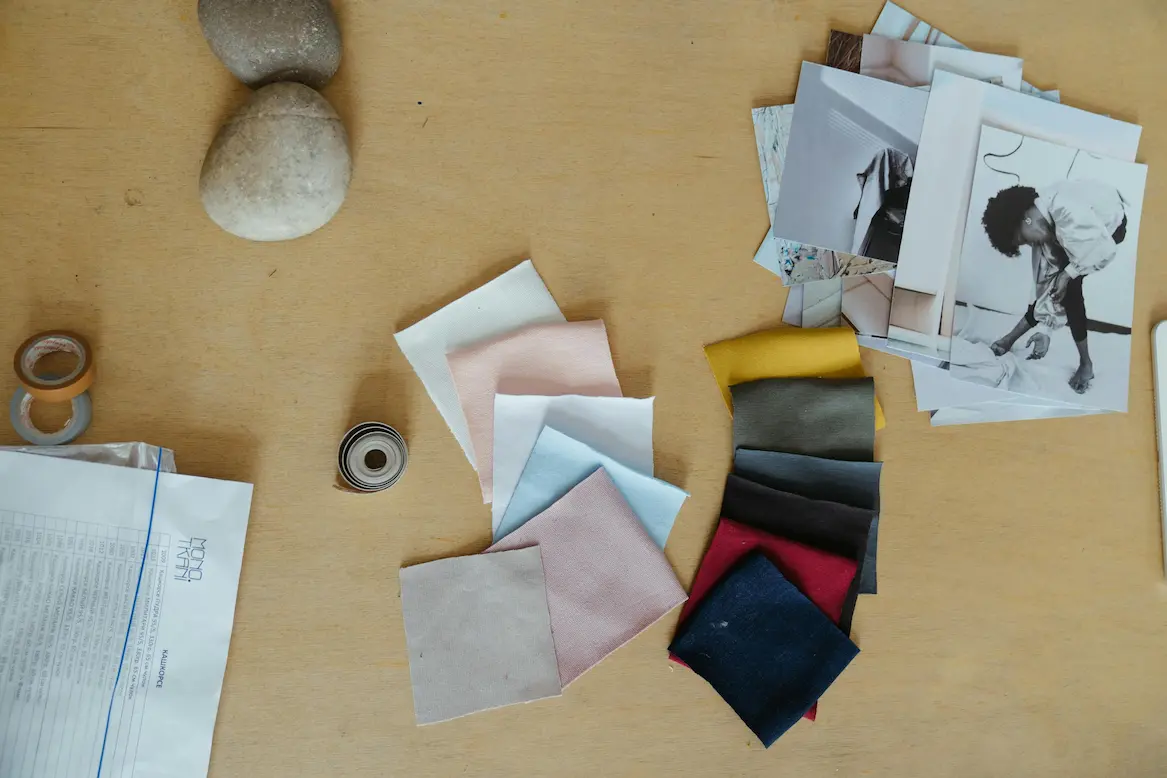
Ask for “headers”—larger pieces of fabric that show the full drape and hand-feel.
2. Lab Dips
If you have a custom color, the mill will provide “lab dips.” These are small fabric squares dyed to your Pantone color. Review these in different lighting (natural, LED, fluorescent) to ensure color consistency.
3. Yardage for Prototyping
Once you like a swatch, order 5–10 yards to sew a sample. Some fabrics look great on the roll but “grow” or “shrink” unexpectedly when cut and sewn.
6. Logistics, Customs, and Incoterms
This is where the dream to source fabrics internationally often hits the wall of reality. Understanding Incoterms is vital for your bottom line.
EXW (Ex Works): You are responsible for everything from the factory door to your warehouse.
FOB (Free on Board): The supplier handles the cost to get the goods onto a ship/plane; you take over from there.
DDP (Delivered Duty Paid): The “Gold Standard” for ease. The supplier handles all shipping and customs duties.
In 2026, be aware of the EU Deforestation-Free Regulation (EUDR). If you source viscose or leather, you must prove the materials didn’t come from deforested land. A partner like EXPLORETEX handles this complex paperwork so you don’t have to.
7. The Role of Technology in Modern Sourcing
In 2026, AI has revolutionized how we source fabrics internationally. Digital platforms now allow for:
Virtual Showrooms: High-definition 3D renderings of fabric texture and drape.
Blockchain Traceability: Tracking a bale of cotton from a farm in Brazil to a mill in Portugal.
AI Forecasting: Predicting fabric price spikes based on global crop yields and shipping data.
At EXPLORETEX, we integrate these technologies to provide our clients with a “Digital Product Passport” (DPP) ready supply chain. This is no longer optional; it is a legal requirement for selling in the EU as of this year.
8. Why Portugal is the Best Hub to Source Fabrics Internationally
As you look to source fabrics internationally, consider the “Portugal Advantage.” Why do so many premium brands like Everlane and Arona produce here?
Craftsmanship Heritage: Generations of families have worked in the mills of Porto and Guimarães.
Renewable Energy: Most Portuguese factories now run on over 60% renewable energy, lowering your brand’s carbon footprint.
Ethical Labor: You don’t have to worry about audits; Portuguese labor laws are among the strictest in the world.
Proximity: For European and US East Coast brands, shipping from Portugal is faster and lower-impact than shipping from Asia.
9. Common Pitfalls When Sourcing Fabrics Abroad
Even seasoned professionals can stumble when they source fabrics internationally. Watch out for:
The “Hidden” Costs: Always factor in duties, taxes, and port handling fees. That “$5 per yard” fabric might actually cost $8 by the time it reaches your door.
Inconsistent Quality: Always request a “Top of Production” (TOP) sample before the bulk order is shipped.
MOQ Traps: Don’t buy 5,000 yards just to get a lower price if you only need 500. Deadstock is the biggest killer of fashion profits.
10. Partnering with EXPLORETEX: Your Sourcing Ally
The most effective way to source fabrics internationally is to have “boots on the ground.” EXPLORETEX acts as your local partner in Portugal. We handle the vetting, the negotiation, the quality control, and the shipping.
We don’t just find fabric; we find the right fabric for your brand’s DNA. Whether you are looking for deadstock silk for a limited run or GOTS-certified jersey for a staple collection, our network is your network.
 Conclusion: Take the Leap into Global Sourcing
 Conclusion: Take the Leap into Global Sourcing
The ability to source fabrics internationally is what separates hobbyist designers from global fashion brands. While the process is complex, it is also incredibly rewarding. It allows you to offer your customers materials that are beautiful, durable, and ethically produced.
Remember, you don’t have to do it alone. Start by defining your needs, researching your hubs, and finding a partner that shares your values. The world’s finest textiles are out there—go find them.
Ready to start your journey? [Contact EXPLORETEX today to discover how our Portuguese manufacturing expertise can help you source fabrics internationally with ease.]
How to source fabrics internationally for startups
Fabric sourcing agent Portugal
International textile trade shows 2026
Sourcing organic cotton internationally
Fabric quality control for international orders
Wholesale fabric suppliers for clothing brands
FAQ Section (Rank Math Schema Ready)
Q: Is it cheaper to source fabrics internationally or domestically? A: It depends on the volume. For small runs, domestic may be cheaper due to lower shipping costs. However, for bulk orders or specialized materials (like Italian wool or Portuguese tech fabrics), it is often more cost-effective to source fabrics internationally.
Q: What are the best fabric trade shows in 2026? A: Première Vision in Paris and Future Fabrics Expo in London (June 2026) are essential for those looking to source fabrics internationally with a focus on sustainability.
Q: How do I handle customs when I source fabrics internationally? A: You can either hire a customs broker or work with a manufacturing partner like EXPLORETEX who provides DDP (Delivered Duty Paid) services, handling all the bureaucracy for you.
Q: What is a Digital Product Passport (DPP)? A: It is a 2026 EU mandate requiring every garment to have a scannable code that details its material origins, environmental impact, and circularity data. This makes it vital to source fabrics internationally from transparent, certified suppliers.