
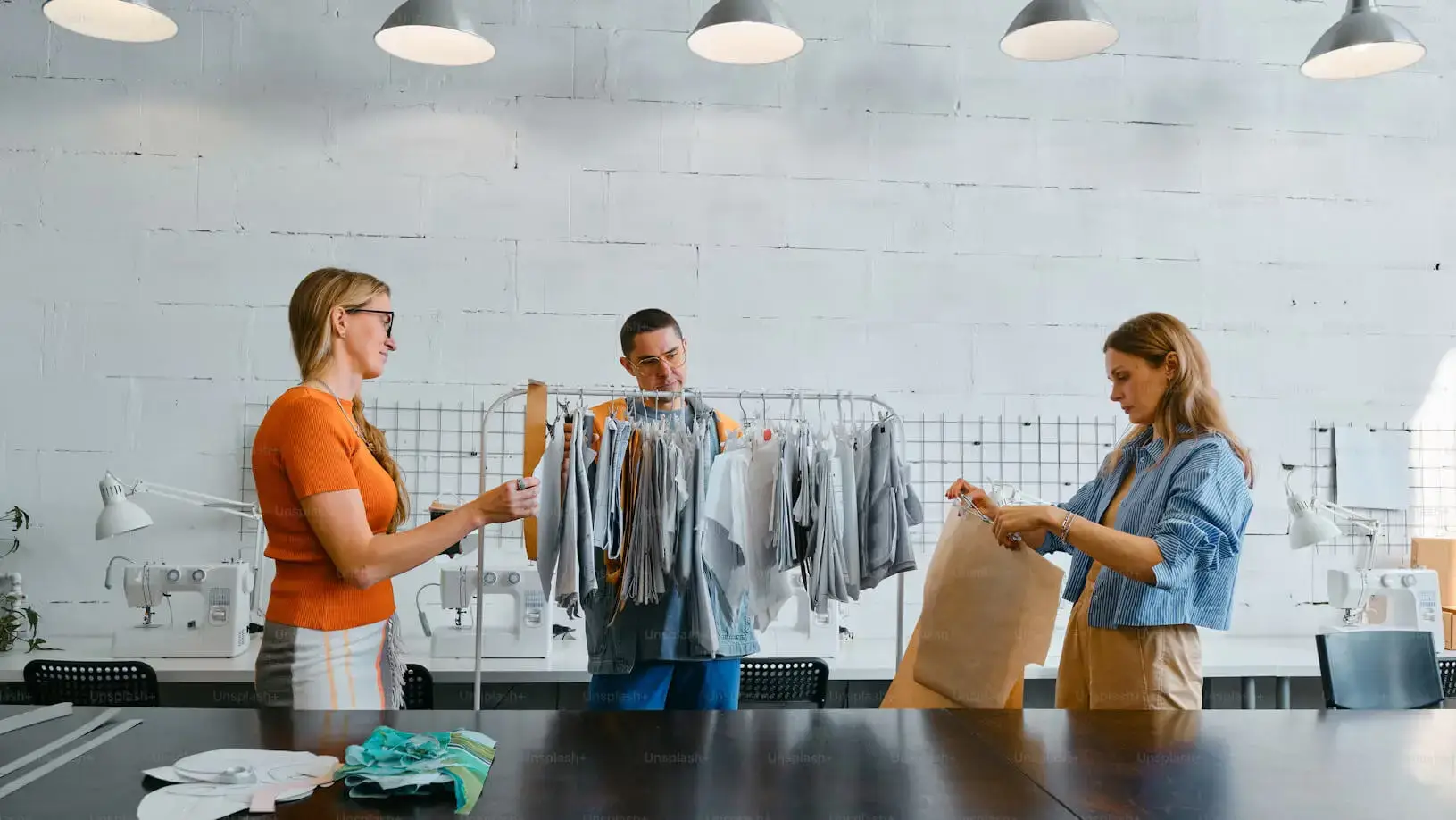
Partnering with Overseas Manufacturers: Tips for Success: The 2026 Comprehensive Guide
The fashion industry in 2026 is no longer a race to the bottom on price. It is a race to the top on transparency, speed, and ethical resilience. For any brand looking to scale, partnering with overseas manufacturers: tips for success are the most valuable assets in your strategic arsenal. The global supply chain has shifted away from high-risk, distant hubs toward “right-shoring”—finding partners who offer a perfect balance of craftsmanship, geographic proximity, and regulatory alignment.
At EXPLORETEX, based in the world-class textile cluster of Northern Portugal, we have seen the landscape evolve. We understand that “overseas” is a relative term, but “quality” is universal. This 4,500+ word guide is designed to walk you through every nuance of partnering with overseas manufacturers: tips for success, ensuring your brand thrives in the modern economy.
1. The 2026 Landscape: Why “Overseas” is Changing
In previous decades, partnering with overseas manufacturers: tips for success usually focused on cost reduction in Asia. Today, the focus has shifted to the “Total Cost of Ownership” (TCO).
The Rise of Nearshoring and Friend-Shoring
Geopolitical instability and the high carbon cost of transoceanic shipping have made Portugal a premier destination for “overseas” manufacturing for North American and European brands. When partnering with overseas manufacturers: tips for success, geography is your first major decision. Portugal offers the stability of the Eurozone and the heritage of generations of garment workers.
The Regulatory Wall
The EU’s 2026 “Green Deal” and the Digital Product Passport (DPP) have created a high bar for entry. Partnering with overseas manufacturers: tips for success now involves ensuring your factory can provide the data required by law. At EXPLORETEX, we don’t just provide clothes; we provide the data-driven compliance your brand needs to cross borders legally.
2. Choosing the Right Partner: Beyond the Quote
The most critical stage of partnering with overseas manufacturers: tips for success is the vetting process. A low quote is often a trap that leads to delays, poor quality, and ethical scandals.
The “Capability Audit”
When partnering with overseas manufacturers: tips for success, you must ask:
Vertical Integration: Does the factory handle knitting, dyeing, and sewing, or do they outsource everything?
Technical Literacy: Do they use 3D rendering (Clo3D) and digital patterns?
Certifications: Are they OEKO-TEX®, GOTS, or Bluesign® certified?
The Cultural Fit
Effective partnering with overseas manufacturers: tips for success requires cultural alignment. Portugal is famous for its “soft” business culture—highly professional but deeply rooted in relationships. At EXPLORETEX, we treat our clients as partners, not just purchase orders.
3. Communication: The Pulse of Success
If you ignore everything else about partnering with overseas manufacturers: tips for success, do not ignore communication. Language barriers and time-zone lags are the primary causes of production failure.
The “Over-Communication” Rule
When partnering with overseas manufacturers: tips for success, assume nothing.
Use visual aids (CADs and photos).
Schedule weekly video calls.
Confirm every detail in writing after a conversation.
Using Technology to Bridge the Gap
In 2026, we use PLM (Product Lifecycle Management) systems that allow you to see the real-time status of your order. This level of transparency is a non-negotiable part of partnering with overseas manufacturers: tips for success.
4. The Blueprint: Tech Packs and Precision
You cannot have a successful outcome when partnering with overseas manufacturers: tips for success without technical excellence. Your “Tech Pack” is your contract.
What Your Tech Pack Must Include
POM (Points of Measurement): Exact dimensions for every size.
BOM (Bill of Materials): Every thread, button, and zipper.
Construction Details: Stitches per inch and seam types.
Avoiding the “Interpretation Gap”
A major tip when partnering with overseas manufacturers: tips for success is to avoid vague terms like “soft” or “oversized.” Instead, use “180 GSM” or “+10cm on the chest width.” Precision is the language of quality.
5. Financial Management and Pricing Models
Understanding the math of partnering with overseas manufacturers: tips for success is essential for your brand’s survival.
The Formula for TCO (Total Cost of Ownership)
When calculating the cost of partnering with overseas manufacturers: tips for success, use this LaTeX formula:
Where:
$P$ = Unit Price
$S$ = Shipping and Logistics
$D$ = Duties and Taxes
$C$ = Compliance/Audit Costs
$R$ = Risk (Cost of delays or returns)
Often, a Portuguese factory like EXPLORETEX might have a higher $P$, but significantly lower $S, D,$ and $R$ compared to a factory in a low-cost, high-risk region.
Payment Terms and Escrow
One of the best partnering with overseas manufacturers: tips for success is to negotiate staggered payments: 30% deposit to start, 70% upon final inspection before shipping. This protects your cash flow and ensures quality.
6. Sourcing Sustainable Materials
In 2026, sustainability is the “North Star” of partnering with overseas manufacturers: tips for success. Consumers are looking for brands that can prove their garments are “Earth-first.”
Portuguese Innovations
Portugal is at the forefront of sustainable textiles. When partnering with overseas manufacturers: tips for success, ask about:
Recycled Cotton: Giving new life to post-consumer waste.
SeaCell: Fabric made from seaweed and wood pulp.
Cork-based Trims: A unique Portuguese specialty for luxury labels.
Transparency in the Dye House
As we discussed in our guide on Sustainable Dyeing, the environmental impact of your colors is a key factor in partnering with overseas manufacturers: tips for success. Ensure your partner uses closed-loop systems.
7. Quality Control (QC) Protocols
“Hope” is not a quality control strategy. Partnering with overseas manufacturers: tips for success requires a rigorous, multi-stage inspection process.
The AQL Standard
Most professional factories use the Acceptable Quality Level (AQL) system. A major tip for partnering with overseas manufacturers: tips for success is to define your AQL early (usually 2.5 for major defects).
Third-Party Inspections
If you cannot visit the factory yourself, hire a third-party inspector. This is a standard practice in partnering with overseas manufacturers: tips for success. However, at EXPLORETEX, our internal QC is so rigorous that many of our clients find third-party audits redundant.
[Image Placeholder: A QC inspector measuring a garment against a tech pack. Alt-text: Quality control practices for partnering with overseas manufacturers.]
8. Navigating Logistics and Tariffs
The “Shipment” phase is often where partnering with overseas manufacturers: tips for success are most needed. In 2026, logistics are complex.
Understanding Incoterms
Are you buying FOB (Free on Board) or DDP (Delivered Duty Paid)? Knowing your Incoterms is vital for partnering with overseas manufacturers: tips for success. DDP is often the best choice for startups, as the manufacturer handles all customs and duties.
The Carbon Border Adjustment Mechanism (CBAM)
New EU laws are starting to tax the carbon footprint of imports. Partnering with overseas manufacturers: tips for success involves choosing a partner in Portugal to minimize these taxes for European brands.
9. Small Batch Agility vs. Bulk Efficiency
A key strategy when partnering with overseas manufacturers: tips for success is finding the right Minimum Order Quantity (MOQ).
Small Batches: Lower risk, better for testing trends.
Bulk Runs: Lower unit cost, better for core “Hero Products.”
At EXPLORETEX, we offer flexible MOQs because we understand that partnering with overseas manufacturers: tips for success means supporting a brand’s growth from the first 100 units to the first 100,000.
10. Social Compliance and Ethical Labor
In the age of social media, one “sweatshop” scandal can destroy a brand overnight. Partnering with overseas manufacturers: tips for success requires absolute certainty about labor conditions.
The Portugal Advantage
Portugal has some of the strongest labor laws in the world. When partnering with overseas manufacturers: tips for success in Portugal, you are guaranteed:
Fair living wages.
Safe working conditions.
Zero child or forced labor.
This “Ethical Peace of Mind” is a cornerstone of partnering with overseas manufacturers: tips for success.
11. Intellectual Property (IP) Protection
Your designs are your most valuable assets. Partnering with overseas manufacturers: tips for success includes protecting your IP.
NDAs (Non-Disclosure Agreements): Sign these before sharing designs.
Ownership Clauses: Ensure your contract states that you own the patterns and molds.
Portugal’s legal system is robust and aligned with EU IP laws, making it a safe harbor for partnering with overseas manufacturers: tips for success.
12. The “Sample Trap”: Navigating Prototyping
Many brands fail during the sampling phase. Partnering with overseas manufacturers: tips for success means getting your samples right the first time.
Virtual Prototyping
As discussed in our guide on 3D Rendering, virtual samples are the future of partnering with overseas manufacturers: tips for success. They save time, money, and fabric.
The “Golden Sample”
Once you approve a physical sample, it becomes the “Golden Sample.” This is the benchmark for all future production. Keeping a copy in your office and one at the factory is a top tip for partnering with overseas manufacturers: tips for success.
13. Scaling the Relationship
Scaling is about more than just increasing orders. Partnering with overseas manufacturers: tips for success involves building a long-term alliance.
Annual Reviews
Meet with your manufacturing partner annually to discuss how to improve efficiency. This collaborative spirit is essential for partnering with overseas manufacturers: tips for success.
Preferential Capacity
As you grow, a loyal manufacturer like EXPLORETEX will give you “preferential capacity” during peak seasons (like the lead-up to Black Friday). This is the ultimate reward for successful partnering with overseas manufacturers: tips for success.
14. Case Studies: Brands Winning in 2026
When we look at brands like Asket or GANNI, we see the results of perfect partnering with overseas manufacturers: tips for success. These brands have built their reputation on the transparency and quality provided by their European manufacturing partners.
By following the partnering with overseas manufacturers: tips for success outlined in this guide, they have achieved:
Customer Trust: Through radical transparency.
Profitability: Through low return rates and high-quality construction.
Sustainability: Through ethical sourcing.
15. The Future: AI-Integrated Supply Chains
By 2027, the role of AI in partnering with overseas manufacturers: tips for success will be even greater. AI will manage inventory levels, predict fabric shortages, and even suggest design tweaks for better durability.
At EXPLORETEX, we are already integrating these tools. Partnering with overseas manufacturers: tips for success in the future means partnering with a “Smart Factory.”
16. Summary Checklist for Success
To ensure you are correctly partnering with overseas manufacturers: tips for success, use this checklist:
[ ] Verify Certifications: Ensure they meet 2026 EU standards.
[ ] Review Tech Packs: Are they data-driven and precise?
[ ] Set Communication Protocols: Weekly calls and written logs.
[ ] Define AQL: What is your acceptable defect rate?
[ ] Confirm Incoterms: Who pays for shipping and duties?
[ ] Sign NDAs: Protect your intellectual property.
[ ] Test for Sustainability: Is the dye house compliant?
 17. Conclusion: Your Partner in Portugal
 17. Conclusion: Your Partner in Portugal
Partnering with overseas manufacturers: tips for success is a journey of a thousand stitches. It requires patience, technical knowledge, and a partner you can trust.
At EXPLORETEX, we pride ourselves on being that partner. We provide the Portuguese craftsmanship, the EU regulatory expertise, and the digital innovation required for partnering with overseas manufacturers: tips for success in 2026. Whether you are a startup looking for your first 200 units or a global brand scaling to 200,000, we are here to ensure your journey is a success.
The world of fashion is changing. Don’t just find a factory—find a partner.
Ready to start your success story?
[Contact EXPLORETEX today to discuss your next collection and see why partnering with a Portuguese manufacturer is the smartest move for your brand in 2026.]
Overseas garment production guide
How to choose a clothing manufacturer 2026
Ethical manufacturing in Portugal
Reducing apparel supply chain risk
European garment factory for startups
Direct-to-consumer fashion manufacturing
Frequently Asked Questions (FAQ)
Q: Is it more expensive to manufacture in Portugal than in Asia?
A: While the unit price may be higher, the Total Cost of Ownership is often lower when partnering with overseas manufacturers: tips for success in Portugal. You save on shipping, duties, and the cost of quality-related returns.
Q: How do I handle language barriers when partnering with overseas manufacturers?
A: Most professional Portuguese factories, including EXPLORETEX, have English-speaking account managers. One of our top partnering with overseas manufacturers: tips for success is to use visual tech packs to minimize verbal confusion.
Q: What is the typical lead time when partnering with overseas manufacturers in Portugal?
A: Typically, 4-8 weeks for sampling and 8-12 weeks for bulk production, depending on fabric availability. This “Nearshoring” advantage is a key reason for partnering with overseas manufacturers: tips for success in Europe.
Q: How does the Digital Product Passport (DPP) affect my partnership?
A: It is a legal requirement in 2026. Partnering with overseas manufacturers: tips for success means choosing a partner like EXPLORETEX who can provide the chemical and origin data required for the passport.