
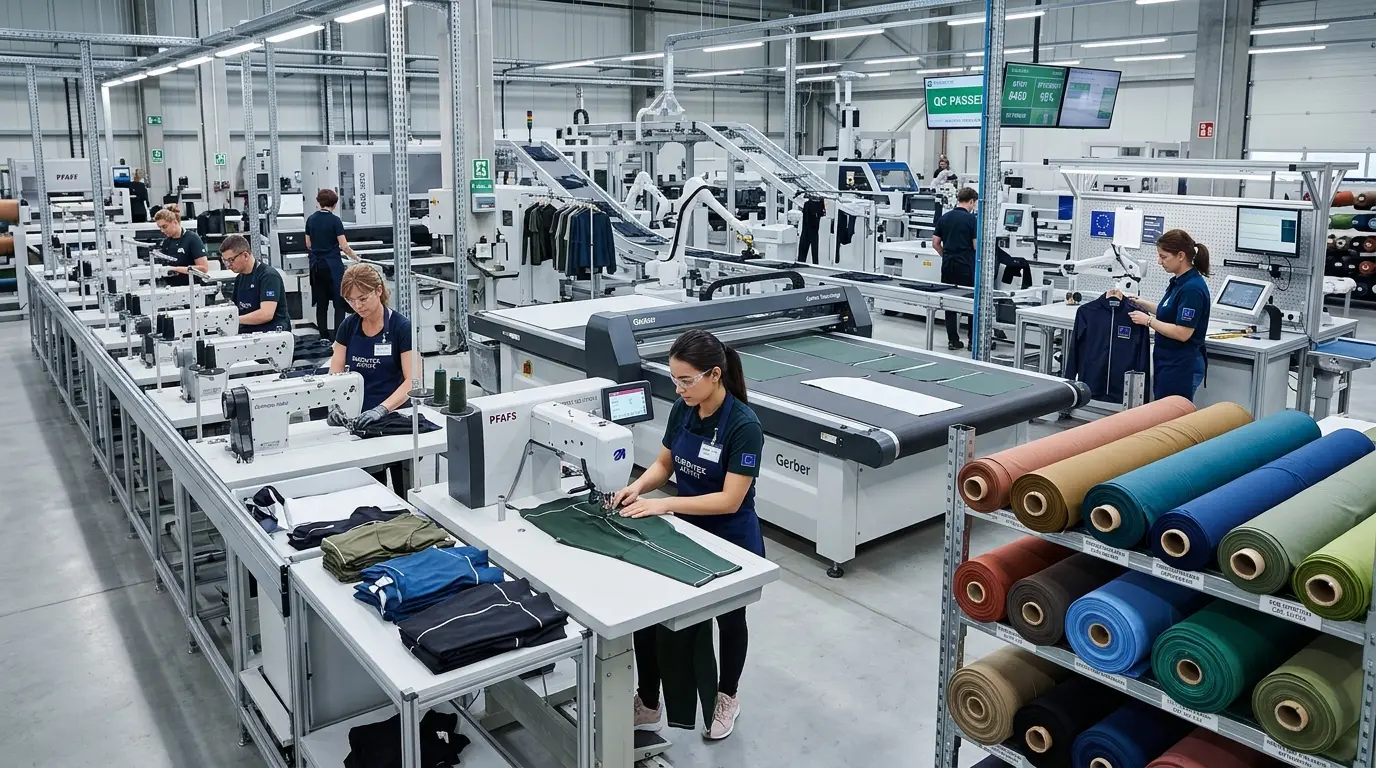
Clothing Manufacturers USA: The Definitive Guide to Scaling Your Apparel Brand Through Hybrid Global Production
For decades, the default search for emerging and established American fashion founders has started with a single phrase: clothing manufacturers USA. Building a brand close to home offers undeniable appeal—shared time zones, familiar legal frameworks, domestic freight simplicity, and the cultural prestige of a “Made in America” label. Yet, as apparel entrepreneurs quickly discover once they move past initial sampling into commercial production, relying exclusively on domestic clothing manufacturers USA presents severe structural bottlenecks. Skyrocketing domestic labor rates, limited vertical fabric milling capacity, and high minimum order quantities (MOQs) often squeeze gross margins before a single garment reaches a retail rack or e-commerce fulfillment center.
Modern apparel supply chain strategy has evolved beyond a binary choice between expensive domestic workshops and opaque, high-risk overseas brokers. Today, leading brands evaluate clothing manufacturers USA alongside integrated, transparent international partners capable of delivering American quality standards at globally competitive unit economics.
As a registered Portuguese apparel company operating vertical manufacturing facilities and vetted partner factories across both Portugal and Bangladesh, ExploreTex ([https://www.exploretex.com](https://www.exploretex.com)) bridges this exact gap. By combining European technical craftsmanship, rapid R&D, and strict compliance with high-capacity Asian vertical production, ExploreTex empowers US brands to scale without the traditional friction of offshore sourcing. Whether you are launching an initial capsule collection or scaling a multi-million-unit retail program, understanding how clothing manufacturers USA compare to a dual-shore European and Asian manufacturing architecture is the single most important financial decision your brand will make.
Many fashion entrepreneurs begin their search for clothing manufacturers USA hoping to build reliable supply chains close to home. While domestic clothing manufacturers USA offer convenient local communication and quick domestic shipping, relying exclusively on clothing manufacturers USA can limit profit margins, restrict fabric innovation, and create bottlenecks during scaling. Smart apparel founders evaluate clothing manufacturers USA alongside international production partners that combine European craft with vertical efficiency. At ExploreTex, we help brands compare clothing manufacturers USA with integrated manufacturing in Portugal and Bangladesh so every collection achieves optimal quality and cost control.
When brands evaluate clothing manufacturers USA for small-batch drops, high domestic labor costs and limited vertical textile mills often squeeze gross margins. That is why many labels compare clothing manufacturers USA against a registered Portuguese apparel manufacturer like ExploreTex. By pairing Portuguese precision and rapid development with vertical production facilities in Bangladesh and vetted partner factories, we help American brands move smoothly from sampling to bulk orders without sacrificing garment structure. Whether you are testing new silhouettes with clothing manufacturers USA or expanding overseas, structured sourcing protects your brand equity and cash flow.
Navigating clothing manufacturers USA also requires clear expectations around minimum order quantities, lead times, and fabric sourcing. Some domestic clothing manufacturers USA specialize in fast prototypes or low minimums, yet struggle when a brand needs high-volume runs or specialized knits and wovens. Through ExploreTex, clients gain access to vertical manufacturing workflows, transparent quality standards, and flexible production planning designed for modern apparel growth. Comparing clothing manufacturers USA against a dual-hub model gives founders a practical roadmap for balancing speed, compliance, and unit economics.
Understanding how clothing manufacturers USA fit into a broader global strategy is essential for long-term competitiveness. Many growing labels start by testing ideas with clothing manufacturers USA before shifting bulk runs to specialized facilities where vertical integration lowers unit costs. When you work with ExploreTex, our team supports your collection from tech pack refinement and sampling through full-scale production and delivery. Instead of treating clothing manufacturers USA as your only option, you can build a resilient supply chain tailored to each product category and seasonal forecast.
In today’s competitive apparel market, brands that outperform rely on data-backed sourcing decisions rather than guesswork. Assessing clothing manufacturers USA alongside European and Asian vertical capabilities helps founders avoid common pitfalls in sizing consistency, fabric lead times, and margin compression. Explore how ExploreTex partners with ambitious brands to turn concepts into retail-ready garments, whether you are benchmarking clothing manufacturers USA or ready to scale your production line globally. Choosing the right manufacturing model turns supply chain complexity into a clear commercial advantage.
1. The Current Landscape of Clothing Manufacturers USA
To understand why so many brands eventually expand their sourcing beyond domestic borders, it helps to examine the structural realities of clothing manufacturers USA today. While the United States remains a global powerhouse in apparel design, branding, and retail consumption, domestic garment assembly represents less than 3% of all clothing sold in the American market.
The Core Strengths of Domestic Production
Working with clothing manufacturers USA provides distinct advantages during specific phases of a brand’s lifecycle:
Zero International Freight & Customs Friction: Domestic shipments move via standard ground freight (UPS, FedEx, or LTL trucking) without ocean transit delays, port congestion, or complex U.S. Customs and Border Protection (CBP) clearance.
Rapid Physical Prototyping: When your design studio is located in Los Angeles, New York, or Miami, working with local clothing manufacturers USA allows in-person pattern fittings and same-week sample revisions.
Marketing & Tariff Positioning: Certain niche consumer segments actively pay a premium for domestically sewn garments, and products wholly manufactured in the US avoid Section 301 or import tariff schedules.
The Structural Bottlenecks of US Garment Factories
Despite these benefits, scaling a profitable apparel business exclusively through clothing manufacturers USA exposes brands to four major operational constraints:
Prohibitive Cut-and-Sew Labor Costs: Federal and state minimum wage laws—particularly in major apparel hubs like California (where piece-rate pay was abolished under SB 62)—push domestic sewing labor costs 4x to 8x higher than in premier international textile hubs. For complex garments such as structured outerwear, tailored suiting, or multi-panel activewear, domestic labor alone can exceed a brand’s target retail price.
Lack of Vertical Textile Integration: Very few clothing manufacturers USA operate vertical facilities that spin yarn, knit or weave fabric, dye textiles, and assemble garments under one roof. Most domestic factories are strictly “Cut, Make, Trim” (CMT) operations. This forces brands to source fabrics separately, manage multiple vendors, absorb fabric waste losses, and pay middleman markups on imported textiles anyway.
Aging Machinery & Technical Skill Gaps: Because domestic apparel manufacturing contracted sharply over the past thirty years, specialized machinery—such as seamless bonding equipment, ultra-fine gauge circular knitting machines, and automated laser-cutting lines—is scarce among clothing manufacturers USA.
Rigid Capacity Ceilings: Many domestic workshops are small, family-run operations with 15 to 50 sewing machines. While suitable for boutique runs of 100 to 300 units, they frequently lack the industrial capacity to fulfill a sudden 25,000-unit wholesale purchase order from a major department store without missing delivery windows.
2. Comparing Clothing Manufacturers USA vs. Portugal & Bangladesh Vertical Production
When evaluating clothing manufacturers USA against international alternatives, smart founders look at Landed Unit Cost, Minimum Order Quantities (MOQs), Lead Times, and Fabric Innovation. Rather than forcing brands into a one-size-fits-all factory model, ExploreTex operates a dual-hub architecture that gives American brands access to both European luxury craftsmanship (Portugal) and high-volume vertical efficiency (Bangladesh) through a single Portuguese corporate entity.
| Manufacturing Metric | Traditional Clothing Manufacturers USA | ExploreTex Portugal Hub (EU Speed & Luxury) | ExploreTex Bangladesh Hub (Vertical Scale) |
| Average Unit Cost (CMT + Fabric) | Very High ($18 – $55+ per unit) | Moderate ($12 – $32 per unit) | Highly Competitive ($4.50 – $14 per unit) |
| Typical Minimum Order Quantity (MOQ) | 100 – 500 units per style | 150 – 500 units per style | 1,000 – 3,000+ units per style |
| Vertical Textile Milling | Rare (Mostly CMT only) | Extensive (Organic cotton, technical knits, luxury jersey) | Full Vertical (Spinning, knitting, dyeing, printing, sewing) |
| Sampling & Prototyping Speed | 2 – 4 weeks | 2 – 3 weeks (Rapid EU R&D) | 3 – 4 weeks |
| Bulk Production Lead Time | 4 – 8 weeks | 4 – 6 weeks | 8 – 12 weeks |
| Transit Time to US Ports (NYC/LA) | 2 – 7 days (Ground) | 3 – 5 days (Air) / 14 – 18 days (Sea) | 5 – 7 days (Air) / 28 – 35 days (Sea) |
| Compliance & Sustainability | OSHA / US Labor Law | strict EU REACH, OEKO-TEX, GOTS, GRS | BSCI, WRAP, SEDEX, ACCORD/RSC Safety Audited |
| Best Product Categories | Small-batch basics, local merch | Luxury streetwear, premium jersey, technical outerwear | High-volume basics, denim, knitwear, activewear, uniforms |
Strategic Takeaway for US Brands: Relying solely on clothing manufacturers USA often caps a brand’s gross margin at 45%–55%, leaving insufficient capital for customer acquisition (CAC) and paid media scaling. Transitioning bulk production to a structured hybrid partner like ExploreTex routinely expands gross margins to 68%–78% while elevating fabric hand-feel and garment durability.
3. Why ExploreTex is the Premier Partner Beyond Clothing Manufacturers USA
When American brands search for clothing manufacturers USA, their underlying goal isn’t just geography—it is accountability, clear communication, intellectual property protection, and predictable quality. Historically, brands avoided overseas sourcing because dealing directly with unvetted factories risked miscommunication, missed deadlines, and inconsistent sizing.
ExploreTex eliminates every single one of those offshore friction points while outperforming traditional clothing manufacturers USA on technical capability and cost efficiency.
A Registered Portuguese Brand & Corporate Structure
Unlike anonymous trading agents or unverified online directories, ExploreTex is a legally registered Portuguese apparel company operating under strict European Union commercial, financial, and environmental laws. When you partner with ExploreTex via https://www.exploretex.com/, your contracts, non-disclosure agreements (NDAs), tech packs, and custom graded patterns are protected under EU intellectual property frameworks. You communicate directly with fluent, dedicated merchandisers and textile engineers who understand Western retail calendars, American sizing blocks, and ASTM testing standards.
Dual-Hub Agility: The Best of Two Worlds
Most clothing manufacturers USA lock you into one rigid cost structure. ExploreTex gives your brand a dynamic growth runway:
Stage 1: Launch & Capsule Testing in Portugal. Start with lower MOQs in our Portuguese facilities. Develop custom-milled heavy French terry, garment-dyed organic cotton tees, or technical outerwear with rapid 4-week turnarounds and effortless air-freight delivery to the United States.
Stage 2: High-Margin Scaling in Bangladesh. Once a silhouette proves its sell-through rate in the US market, ExploreTex seamlessly transfers your exact approved tech pack, fabric GSM specifications, and Pantone lab dips into our vertical manufacturing facilities in Bangladesh. You maintain identical quality and fit while slashing your landed unit cost by up to 50%.
You can explore our full range of multi-category capabilities on our Apparel Manufacturing Services page.
End-to-End Vertical Integration
When working with domestic clothing manufacturers USA, you often act as your own project manager—buying yarn from one mill, shipping fabric to a dye house, trucking rolls to a cutting room, and hiring a separate embroidery vendor. ExploreTex manages the entire vertical value chain in-house:
Custom Yarn Spinning & Fabric Milling: Single jersey, interlock, French terry, fleece, pique, rib knits, woven poplin, twill, denim, and recycled polyester blends.
Eco-Friendly Dyeing & Finishing: Enzyme washes, silicone softeners, pigment garment dyeing, ozone washing, and water-repellent DWR treatments.
Precision Embellishment: High-density screen printing, puff print, DTG, sublimation, 3D embroidery, chenille patches, and custom-engraved metal hardware.
Retail-Ready Packaging: Custom woven neck labels, heat-transfer care tags, FSC-certified hangtags, biodegradable polybags, and barcode stickering ready for Amazon FBA or 3PL distribution centers.
4. Factory-Floor “Expert” Insights: Engineering Garments That Outperform US Retail Standards
To rank among the world’s top apparel producers, a manufacturer must master the microscopic technical details that separate luxury garments from fast-fashion disposables. Whether you are auditing clothing manufacturers USA or onboarding with ExploreTex, your production partner must enforce rigorous engineering controls at every stage of the assembly line.
1. Fabric Shrinkage & Torque Control (The #1 Failure Point)
Many startups working with inexperienced clothing manufacturers USA suffer catastrophic return rates because garments twist at the side seams or shrink two sizes after the first wash.
The ExploreTex Factory Standard: Before cutting a single panel, all knit and woven rolls undergo mandatory 24-to-48-hour relaxation unrolled on tension-free tables. Our lab tests fabric batches according to AATCC Test Method 135 (dimensional changes in home laundering). We pre-shrink and compact fabrics so residual shrinkage stays strictly within ±3% length and width, with fabric spirality (torque) kept below 2%.
2. Stitch Density (SPI) & Seam Engineering
A garment’s lifespan is determined by its seam construction. Cheap clothing manufacturers USA often widen stitch lengths to speed up sewing output, resulting in popped seams under stress.
The ExploreTex Factory Standard: Our production lines calibrate machine tension and Stitches Per Inch (SPI) to exact fabric weights:
Lightweight Jersey (140–180 GSM): 14–16 SPI using high-tenacity core-spun polyester thread to preserve natural stretch recovery.
Heavyweight Fleece & French Terry (380–500 GSM): 10–12 SPI with reinforced 4-thread overlock safety stitching and twin-needle coverstitching on collars, cuffs, and hems.
Activewear & Compression: Flatlock (ISO 607) seam construction using bulked nylon thread to eliminate skin chafing.
3. Multi-Stage AQL 2.5 Quality Assurance Protocols
Most small clothing manufacturers USA only inspect garments at the very end of the packing table—when defects are already sewn into the entire batch.
The ExploreTex Factory Standard: We enforce a four-gate quality control architecture modeled on international AQL (Acceptable Quality Limit) 2.5 standards:
4-Point Fabric Inspection: Every incoming fabric roll is inspected on illuminated frames for yarn slubs, barre marks, or shading variations before cutting.
In-Line Cut Panel Audit: Cut bundles are checked against master acrylic patterns for grainline accuracy and notch alignment.
Roving Mid-Line QC: Quality auditors check every 10th garment directly at the sewing operator’s station to catch tension or skipped-stitch errors immediately.
Final Metal Detection & Measurement Audit: Every finished garment passes through needle-detection tunnels, undergoes full tolerance verification (±0.5 cm on critical points of measure), and receives a photographic inspection report before container sealing.
5. Step-by-Step Guide: How to Transition from Clothing Manufacturers USA to ExploreTex
Switching from domestic clothing manufacturers USA—or launching a new brand directly with an international vertical manufacturer—is straightforward when broken into six structured milestones.
Step 1: Tech Pack & Bill of Materials (BOM) Preparation
Every successful production run begins with a comprehensive technical packet. Your tech pack should include flat vector sketches (front, back, and interior views), a Graded Spec Sheet (XS–XXL measurements), Pantone TCX color references, fabric composition/GSM targets, and artwork placement files. Don’t have an in-house technical designer? ExploreTex’s pattern engineers can convert rough sketches or physical reference garments into production-ready digital CAD patterns.
Step 2: Strategic Hub Allocation (Portugal vs. Bangladesh)
Once you submit your inquiry via our Contact & Quote Portal, our senior merchandising team evaluates your target retail price, order volume, and delivery timeline:
If you require 150 to 500 units per style, luxury European fabrics, or a 4-week turnaround, we allocate your program to our Portugal manufacturing hub.
If you require 1,000+ units per style, custom vertical yarn dyeing, or aggressive wholesale margin expansion, we allocate your program to our Bangladesh vertical facilities.
Step 3: Fabric Lab Dips & Proto Sampling
Before bulk fabric is milled or dyed, ExploreTex produces physical Lab Dips (color swatches) and Strike-Offs (print/embroidery swatches) for your approval. Simultaneously, our sample room constructs a Proto Sample (Fit Sample) to verify silhouette, drape, and construction details.
Step 4: Pre-Production Sample (PPS) & Size Set Approval
After incorporating your fit comments, we produce a Pre-Production Sample (PPS) using the exact bulk fabric, dyed trims, custom labels, and packaging intended for your final order. Bulk cutting begins only after you sign off on the PPS—ensuring zero surprises on delivery day.
Step 5: Transparent Bulk Production & Weekly Milestones
Throughout bulk manufacturing, your dedicated ExploreTex account manager provides weekly photo and video updates from the factory floor covering fabric knitting, dyeing, cutting, sewing, finishing, and final AQL inspection.
Step 6: Door-to-Door DDP Logistics to the United States
One of the biggest misconceptions about looking beyond clothing manufacturers USA is that international shipping and customs clearance are complicated. ExploreTex eliminates this burden by offering DDP (Delivered Duty Paid) shipping terms. We handle export documentation, ocean or air freight booking, U.S. Customs brokerage, tariff classification (HTS codes), and final drayage directly to your warehouse in Los Angeles, New York, Dallas, or Chicago.
6. Sustainable & Ethical Apparel Manufacturing: Meeting Modern US Compliance Standards
American consumers, retail buyers, and state regulators increasingly demand verifiable supply chain transparency. Regulations such as New York’s Fashion Sustainability and Social Accountability Act and federal CBP Uyghur Forced Labor Prevention Act (UFLPA) enforcement require brands to prove the exact origin of their cotton and synthetic fibers.
While some uncertified clothing manufacturers USA lack formal environmental audits, ExploreTex’s facilities in Portugal and Bangladesh operate under internationally recognized sustainability and social compliance certifications:
OEKO-TEX® Standard 100: Certifies that every thread, button, zipper, and dye used in your garment has been tested and cleared of harmful substances.
GOTS (Global Organic Textile Standard): Guarantees true farm-to-factory traceability for organic cotton garments, verifying both environmental stewardship and fair worker wages.
GRS (Global Recycled Standard): Validates recycled polyester, nylon, and cotton content in activewear and outerwear collections.
Social Compliance Audits (BSCI, SEDEX SMETA, WRAP): Ensures safe working conditions, zero child or forced labor, fair living wages, and freedom of association across every facility in our network.
Learn more about our environmental commitments and certified textile sourcing on the ExploreTex Sustainability Hub.
7. Core Product Categories Engineered by ExploreTex
Brands searching for clothing manufacturers USA often discover they must split their collection across three or four separate domestic factories because one shop only sews t-shirts while another only handles woven pants. ExploreTex consolidates your entire seasonal line under one unified management team.
1. Luxury Streetwear & Heavyweight Knitwear
From 450 GSM loopback French terry hoodies with custom vintage acid washes to boxy 260 GSM combed organic cotton tees with high-ribbed collars, our Knitwear & Streetwear Division delivers unmatched garment structure and hand-feel.
2. Technical Activewear & Athleisure
Engineered with 4-way stretch nylon-spandex blends, moisture-wicking finishes, antimicrobial treatments, laser-perforated ventilation zones, and chafe-free flatlock seams—built to rival premier athletic brands at half the domestic production cost.
3. Woven Apparel, Denim & Tailored Outerwear
Our Woven & Denim Manufacturing lines produce selvedge and stretch denim, organic cotton poplin shirting, ripstop cargo trousers, quilted puffers, and seam-sealed technical shells.
4. Sustainable Basics & Private Label Programs
For brands scaling high-volume replenishment programs, ExploreTex offers turnkey private label blanks and custom-dyed essentials backed by automated cutting and high-speed production lines. Explore our About ExploreTex overview to see how we tailor production lines to each client’s growth stage.
8. Specialized FAQ: Everything Brands Ask About Clothing Manufacturers USA & Global Hybrid Sourcing
1. Are clothing manufacturers USA better than overseas manufacturers for a new fashion brand?
Not necessarily. While clothing manufacturers USA offer convenient local communication and small initial runs, their high labor costs ($18–$55+ per garment) often leave new brands with profit margins too thin to survive paid marketing and wholesale markups. A hybrid partner like ExploreTex gives startups the communication standards and low MOQs (starting at 150 units in Portugal) of domestic factories, combined with a clear pathway to scale unit costs down by 40%–60% in Bangladesh as order volumes grow.
2. What is the typical Minimum Order Quantity (MOQ) compared to clothing manufacturers USA?
Most clothing manufacturers USA require between 100 and 500 units per style, though some charge steep “small-batch surcharges” below 300 units. At ExploreTex, our Portugal hub accommodates capsule runs starting at 150–300 units per style, while our vertical Bangladesh facilities optimize high-volume programs starting at 1,000–3,000 units per style across multiple colorways.
3. How does ExploreTex protect my brand’s designs and tech packs compared to domestic factories?
Because ExploreTex is a registered Portuguese corporation operating under strict European Union intellectual property and contract law, your NDAs, custom patterns, and proprietary washes carry full legal enforceability. Unlike open-market sourcing directories, your designs are never displayed in public showrooms or shared with third-party brokers.
4. How much cheaper is manufacturing with ExploreTex compared to clothing manufacturers USA?
On average, American brands reduce their fully landed unit cost by 30% to 45% when producing in ExploreTex’s Portugal facilities, and by 50% to 65% when scaling in ExploreTex’s Bangladesh vertical factories—even after factoring in international freight and US import duties.
5. Do I have to handle US Customs clearance and import tariffs myself?
No. While many overseas factories quote FOB (Free on Board) prices that leave you responsible for freight forwarding and customs brokerage, ExploreTex offers seamless DDP (Delivered Duty Paid) shipping. We manage ocean or air transit, U.S. Customs clearance, and final truck delivery straight to your US warehouse or 3PL door.
6. How long does sampling and bulk production take compared to clothing manufacturers USA?
Prototyping with ExploreTex takes 2 to 3 weeks in Portugal and 3 to 4 weeks in Bangladesh—matching or beating the turnaround times of busy clothing manufacturers USA. Bulk production takes 4 to 6 weeks in Portugal and 8 to 12 weeks in Bangladesh, backed by locked delivery schedules and weekly factory-floor progress reports.
7. Can ExploreTex source custom sustainable fabrics like GOTS organic cotton and recycled nylon?
Yes. Unlike most clothing manufacturers USA that rely on limited domestic stock fabric jobbers, ExploreTex operates vertical textile partnerships in both Europe and Asia. We custom-knit, weave, and dye GOTS-certified organic cotton, GRS recycled polyester/nylon, Tencel™ Lyocell, hemp blends, and OEKO-TEX® Standard 100 fabrics tailored to your exact GSM and hand-feel specifications.
8. How do I start a production quote with ExploreTex?
Simply gather your tech packs, reference images, target quantities, and desired delivery window, and submit them through our ExploreTex Quote Request Form or browse our Blog & Sourcing Insights for detailed tech pack templates. Our engineering team will review your specifications and respond within 24–48 business hours with transparent pricing and hub recommendations.
 9. Ready to Scale Beyond the Limits of Clothing Manufacturers USA?
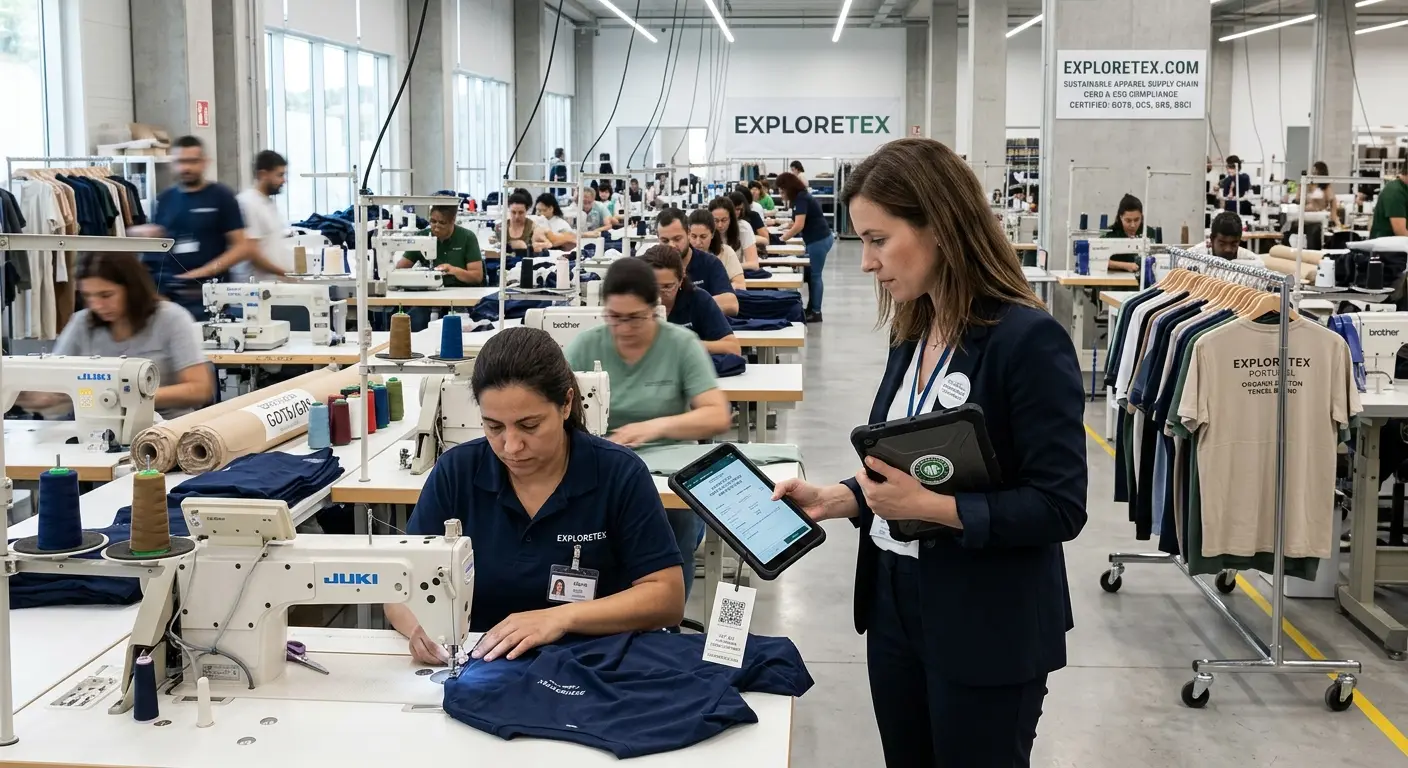 9. Ready to Scale Beyond the Limits of Clothing Manufacturers USA?
Choosing the right manufacturing partner defines the ceiling of your apparel brand’s profitability, product quality, and speed of innovation. While clothing manufacturers USA serve a role for hyper-local micro-runs, brands built for long-term retail and e-commerce dominance require a supply chain engineered for both agility and scale.
By partnering with ExploreTex, you gain a transparent, European-registered manufacturing ally with vertical production power in Portugal and Bangladesh. From custom fabric development and precision pattern engineering to AQL 2.5 quality assurance and DDP delivery straight to your US warehouse, we turn complex global apparel production into your brand’s strongest competitive advantage.
Visit www.exploretex.com today to schedule a consultation with our apparel engineering team and request a customized manufacturing proposal for your upcoming collection.
Choosing the right production strategy defines how sustainably your apparel brand grows in competitive retail and e-commerce markets. While many founders start their sourcing journey looking strictly at clothing manufacturers USA, relying solely on domestic workshops often creates tight profit margins and capacity limits once demand rises. Evaluating clothing manufacturers USA alongside a structured international partner allows brands to weigh local convenience against full-package engineering, fabric availability, and long-term cost control. When you compare clothing manufacturers USA with a dual-hub operation like ExploreTex, you gain a clear path from initial sampling to scalable global fulfillment without sacrificing garment quality or brand identity.
For labels testing new silhouettes or building core seasonal lines, benchmarking clothing manufacturers USA helps clarify where domestic production fits and where broader supply chain capabilities add value. Domestic clothing manufacturers USA can work well for quick local sample checks or small initial runs, yet high labor costs and limited vertical mills frequently challenge brands scaling beyond micro-batches. Through ExploreTex, a registered Portuguese apparel company operating vertical manufacturing in Bangladesh alongside partner factories and production networks in Portugal, brands can align each collection with the right production hub. Exploring our Apparel Manufacturing capabilities shows how European oversight and vertical efficiency support consistent execution across every season.
As your brand matures, deciding between clothing manufacturers USA and integrated international manufacturing becomes a strategic financial choice rather than a simple location preference. Many labels discover that clothing manufacturers USA excel at small-batch responsiveness, whereas vertical production lines deliver stronger unit economics, broader textile options, and dependable bulk capacity. With ExploreTex, clients work with a European-registered team that bridges Portugal and Bangladesh to keep specifications clear from tech pack review to final delivery. Reviewing our Garment Manufacturer workflow highlights how structured quality checks and dual-hub planning protect timelines and margins.
A resilient apparel supply chain also accounts for compliance, repeatability, and long-term brand equity. Founders who compare clothing manufacturers USA against experienced global manufacturers often look for transparent costing, reliable fabric sourcing, and ethical standards that hold up under scrutiny. Partnering with ExploreTex gives ambitious brands a dependable manufacturing ally with roots in Portugal and vertical production strength in Bangladesh. You can learn more about our Private Label Clothing Manufacturing approach or review our Best Clothing Manufacturers guide to plan your next production run with confidence.
Ultimately, successful brands treat clothing manufacturers USA as one piece of a wider sourcing toolkit rather than a ceiling on their growth. By pairing smart market testing with a capable manufacturing partner, you can protect gross margins, elevate garment construction, and deliver retail-ready collections on schedule. Visit ExploreTex to connect with our team and build a scalable manufacturing strategy tailored to your brand.
Authoritative Industry & Compliance References Used in This Guide
Office of Textiles and Apparel (OTEXA) – U.S. Department of Commerce — Official US apparel import data, tariff schedules, and trade compliance frameworks.
OEKO-TEX® Association – Textile Safety & Sustainability Standards — Global certification standards for chemical safety and sustainable textile manufacturing.
American Apparel & Footwear Association (AAFA) — Industry benchmarks for supply chain compliance, restricted substances lists (RSL), and US market regulations.