

The Complete Educational Guide to Sustainable Apparel Production: From Fibre to Global Fashion
Introduction: The Evolution of the Global Textile Supply Chain
The global fashion industry is undergoing a structural paradigm shift. Gone are the days when brands had to choose exclusively between the high costs of European boutique production and the rigid, high-volume demands of offshore mass production. Today, the most resilient fashion brands require a nuanced supply chain architecture. At the center of this transformation is the rising demand for a small batch clothing manufacturer sustainable partner capable of executing complex technical designs with minimal environmental impact, while simultaneously offering the infrastructure to scale seamlessly into high-volume bulk orders.
For brands operating in an era of intense consumer scrutiny regarding environmental, social, and governance (ESG) factors, sourcing is no longer just a procurement function; it is a brand’s primary risk management and value-creation engine. Finding a small batch clothing manufacturer sustainable facility means identifying an ecosystem that prioritizes low minimum order quantities (MOQs) to prevent deadstock, utilizes certified eco-friendly materials, and maintains rigorous social compliance.
This comprehensive educational guide deconstructs the mechanics of modern apparel manufacturing. We will explore the technical realities of the factory floor, the economic advantages of vertical integration, the science of sustainable materials, and the unparalleled efficiency of the “Dual-Hub” production model engineered by industry leaders.
What is a Sustainable Small Batch Clothing Manufacturer?
A small batch clothing manufacturer sustainable facility is an apparel production unit that specializes in producing garments in limited quantities (typically 100 to 500 units per style) using environmentally responsible processes and ethically sourced materials. Unlike traditional mass-production factories that require massive minimum order quantities (MOQs), a small batch clothing manufacturer sustainable partner focuses on reducing textile waste, preventing inventory deadstock, and implementing circular economy principles. These manufacturers typically hold global certifications such as GOTS (Global Organic Textile Standard) and OEKO-TEX, utilize water-efficient dyeing technologies, and enforce fair labor standards.
Advanced hybrid models, such as those headquartered in Portugal with vertical operations in Bangladesh, allow a small batch clothing manufacturer sustainable entity to offer high-quality capsule collections while retaining the infrastructure to scale ethically when a brand grows.
The Economic and Environmental Case for Small Batch Production
Overproduction is the legacy fashion industry’s most critical flaw. Historically, the supply chain incentivized massive upfront orders to drive down the cost per unit. However, this model ignores the hidden costs of warehousing, discounting, and eventually incinerating or landfilling unsold inventory.
Transitioning to a small batch clothing manufacturer sustainable model aligns production directly with actual consumer demand.
1. Deadstock Elimination
By producing garments in precise, limited runs, brands drastically reduce the volume of unsold goods. A small batch clothing manufacturer sustainable approach operates on a “pull” rather than “push” inventory model. This agile methodology allows brands to test the market with premium capsules, analyze consumer reception, and only reorder what is proven to sell.
2. Resource Conservation
The textile industry is one of the most water- and energy-intensive sectors globally. A small batch clothing manufacturer sustainable facility mitigates this impact by utilizing closed-loop water systems and sourcing low-impact raw materials, such as Global Organic Textile Standard (GOTS) certified cotton or recycled polyester (rPET). You can learn more about the stringent requirements for organic fibers at the Global Organic Textile Standard (GOTS) official site.
3. Traceability and Transparency
Modern consumers demand full visibility into the lifecycle of their garments. A true small batch clothing manufacturer sustainable operation maintains a hyper-transparent supply chain. Because the batches are smaller, the origin of the fiber, the chemistry of the dye, and the labor conditions of the sewing floor can be accurately mapped and audited.
The Dual-Hub Production Model: Portugal Meets Bangladesh
One of the most sophisticated supply chain architectures available in 2026 is the Dual-Hub model. While many brands struggle to find a single factory that can handle both premium low-MOQ sampling and high-volume scalability, companies operating on the Portugal-Bangladesh axis have solved this dilemma.
Exploretex, an industry-leading Portuguese-based company with a registered European brand, perfectly illustrates this methodology. They operate ExploreTex: Clothing Manufacturer Portugal as a strategic headquarters. This Lisbon-based command center manages design, R&D, legal compliance, and luxury small-batch production utilizing elite Portuguese textile mills.
Simultaneously, Exploretex maintains direct operational control over a highly advanced vertical manufacturing facility in Bangladesh. This creates a hybrid small batch clothing manufacturer sustainable ecosystem where brands receive the meticulous oversight of European management combined with the unmatched industrial capacity of South Asia.
The Portugal Hub: Research, Development, and Luxury
Portugal is globally renowned for its textile heritage, particularly in premium jersey, luxury linens, and complex knitwear. The Northern textile clusters (Porto and Braga) are home to some of the most advanced, eco-conscious mills in Europe. Brands seeking a small batch clothing manufacturer sustainable partner for rapid prototyping, complex streetwear, or high-end tailoring utilize this European hub.
Nearshoring Agility: For European labels, this means rapid turnaround times and lower shipping emissions.
Material Excellence: Direct access to the top luxury textile suppliers in Portugal ensures that garments are constructed from the finest organic and recycled fibers available.
Legal Security: Operating through a European entity ensures that all intellectual property (IP), financial transactions, and contracts are protected under stringent EU laws.
The Bangladesh Hub: Ethical Vertical Scaling
Once a brand successfully tests a market using the European small batch clothing manufacturer sustainable hub and is ready to scale, production shifts to the directly managed, fully vertical facility in Bangladesh. This transition is frictionless because the same Portuguese technical team oversees the tech packs and quality control.
Bangladesh has transformed into the most sophisticated apparel manufacturing epicenter in the world, largely driven by massive investments in green factory infrastructure and vertical integration. You can explore how this scale operates by viewing Exploretex’s capabilities as a premium clothing manufacturer in Bangladesh.
A vertical facility means that spinning, knitting, dyeing, cutting, and sewing all happen under one roof. This eliminates the massive carbon footprint associated with trucking semi-finished goods between fragmented sub-factories, a key requirement for any authentic small batch clothing manufacturer sustainable operation scaling into bulk.
Factory-Floor “Expert” Insights: The Anatomy of Quality
To truly understand what separates a premium small batch clothing manufacturer sustainable partner from a standard cut-and-sew workshop, one must look at the highly technical micro-processes executed on the factory floor. These technical insights represent the engineering backbone of modern fashion.
Insight 1: The Science of Fabric Relaxation
In low-tier mass production, time is money. Fabric rolls are often pulled off the truck, immediately unrolled onto the cutting tables under high tension, and cut. Once the garment is sewn and the consumer washes it for the first time, the stretched fabric fibers snap back to their natural state, causing massive shrinkage and twisting (torquing) of the side seams.
A premium small batch clothing manufacturer sustainable facility mandates strict fabric relaxation protocols. Knitted fabrics, particularly single jerseys and French terries, must rest for a minimum of 24 to 48 hours on specialized tension-free racks. This allows the elastane and cotton fibers to acclimatize to the ambient humidity and temperature, guaranteeing structural stability and dimensional accuracy over the garment’s lifecycle.
Insight 2: Needle Calibration and Stitch Per Inch (SPI)
A high-quality small batch clothing manufacturer sustainable partner does not use a “one size fits all” approach to machinery. When sewing premium Portuguese jersey or organic cotton, the factory floor technicians must calibrate the sewing machines meticulously.
Needle Type: Ballpoint needles are mandatory for knits to part the fibers rather than pierce and break them, which causes micro-tears and future holes.
Temperature Control: On high-speed lockstitch machines, friction can heat the needle enough to melt synthetic blends (like rPET). Advanced facilities use automated needle cooling systems.
SPI (Stitch Per Inch): Luxury garments require a higher SPI for durability and a refined aesthetic. A dedicated small batch clothing manufacturer sustainable floor will rigorously audit SPI during in-line inspections to ensure the seam strength matches the tech pack perfectly.
Insight 3: Spectrometer Dyeing and Zero-Discharge Chemistry
Color matching is notorious for causing production delays. A world-class small batch clothing manufacturer sustainable facility uses digital spectrophotometers to analyze lab dips. This removes human optical illusion from the equation, providing mathematical formulas to achieve exact Pantone matches.
Furthermore, dyeing is traditionally the most polluting phase of textile creation. Leading vertical facilities employ Effluent Treatment Plants (ETPs) and Zero Liquid Discharge (ZLD) technologies. This ensures that the water leaving the dye house is filtered, biologically treated, and often clean enough to be recycled back into the facility’s closed-loop system.
Structured Data Plan: Authority Visuals for Supply Chain Transparency
To effectively map the operational flow of a small batch clothing manufacturer sustainable network, we can visualize the integration of the Dual-Hub architecture. Below is a structured representation of how materials, data, and finished goods move through an optimized ethical supply chain.
| Supply Chain Stage | European Hub (Portugal) | Vertical Scaling Hub (Bangladesh) | Sustainability Metric / Action |
| 1. Ideation & R&D | Tech Pack creation, 3D digital prototyping, pattern grading. | N/A (Data digitally transferred). | 100% reduction in physical sampling waste via 3D Digital Twins. |
| 2. Material Sourcing | Sourcing from sustainable textile suppliers in Portugal. | Sourcing organic cotton from BCI-certified regional farms. | GOTS & OEKO-TEX Standard 100 certifications verified. |
| 3. Sampling / Small Batch | Cutting & sewing 100-500 unit premium capsules. | Producing exact PPS (Pre-Production Samples) for bulk validation. | Elimination of overproduction; localized EU shipping reduces CO2. |
| 4. High-Volume Bulk | Portuguese management oversees quality control data. | Knitting, Dyeing, Cutting, and Sewing 10,000+ units. | Closed-loop water systems; minimal intra-factory transit. |
| 5. Global Logistics | Direct dispatch to European boutiques. | DDP (Delivered Duty Paid) global shipping via green freight routes. | Consolidated container packing to maximize fuel efficiency. |
The Step-by-Step Educational Guide to the Production Pipeline
Partnering with a small batch clothing manufacturer sustainable entity is a systematized process. Brands must approach manufacturing with engineering precision. When utilizing comprehensive garments manufacturing services, the workflow is divided into strict, non-negotiable phases.
Step 1: Collection Planning and the Tech Pack
The foundation of any successful garment is the Tech Pack (Technical Package). A Tech Pack is not a sketch; it is a legally binding architectural blueprint for your clothing. A premier small batch clothing manufacturer sustainable partner relies on the Tech Pack to eliminate ambiguity. It must include:
Vector Flat Sketches: Front, back, and detail views showing all seam constructions.
Bill of Materials (BOM): An exhaustive list of every physical component, from the main fabric’s GSM (Grams per Square Meter) to the exact pantone of the core-spun sewing thread and the alloy of the zipper teeth.
Grading Rules: The mathematical formula that scales your base size (e.g., Medium) into a full size run (XS to XXL) without distorting the silhouette.
Step 2: Sustainable Sourcing and Certification Verification
Once the blueprint is set, materials are sourced. A true small batch clothing manufacturer sustainable partner prioritizes traceable materials. For instance, if a brand specifies organic cotton, the facility will provide Transaction Certificates (TCs) linking the fiber back to the farm. For brands specifically looking for elite European fabrics, collaborating with sustainable clothing manufacturers in Portugal provides access to innovative bio-based fibers like Tencel, Lyocell, and Piñatex.
It is also crucial to ensure the materials are free from harmful substances. The OEKO-TEX Association provides independent certifications verifying that textiles have been tested for a multitude of harmful chemicals, ensuring safety from yarn to finished garment.
Step 3: 3D Virtual Prototyping
A massive leap forward in the small batch clothing manufacturer sustainable movement is the adoption of Digital Twin technology. Before a single piece of physical cloth is cut, 3D software simulates the garment’s drape, tension, and fit on a digital avatar. This allows designers to correct proportions and silhouette issues instantly, eliminating the need for three or four physical prototype rounds, thereby drastically reducing textile waste and courier emissions.
Step 4: Physical Sampling (PPS)
Once the digital twin is approved, the small batch clothing manufacturer sustainable facility produces the Pre-Production Sample (PPS). This physical garment is made using the exact bulk fabric, trims, and machinery that will be used for the final run. Bulk production never commences until the PPS is signed and sealed by the brand.
Step 5: Bulk Manufacturing and AQL Quality Gates
During bulk execution, a top-tier small batch clothing manufacturer sustainable partner implements rigorous Acceptable Quality Limit (AQL) protocols, generally adhering to AQL 2.5 standards or higher.
In-Line Inspections: Quality assurance auditors walk the sewing floor, checking garments directly on the machines to catch needle tension issues or raw edge faults immediately.
End-of-Line Audits: Checking finished garments against the Tech Pack for dimensional stability and visual defects.
Final Random Inspection (FRI): A statistically significant sampling of the packed cartons before they are loaded onto the shipping vessel.
Brands looking for deep insights into the exact protocols of sourcing high-quality goods should read comprehensive guides on acquiring garments from Bangladesh safely and effectively.
Understanding Certifications and Ethical Compliance
The term “sustainability” is often diluted by greenwashing. A genuine small batch clothing manufacturer sustainable operation proves its claims through rigorous third-party auditing. When auditing your supply chain, specifically when reviewing apparel manufacturers in Bangladesh, look for the following institutional benchmarks:
GOTS (Global Organic Textile Standard): The worldwide leading textile processing standard for organic fibers, encompassing both ecological and social criteria.
BSCI (Business Social Compliance Initiative) & SEDEX: These frameworks ensure that the small batch clothing manufacturer sustainable facility adheres to the highest ethical labor practices, including fair living wages, reasonable working hours, absolute prohibition of child or forced labor, and the right to collective bargaining.
BCI (Better Cotton Initiative): The largest cotton sustainability program in the world, training farmers to use water efficiently, care for the health of the soil, and respect the rights of workers. You can read their foundational guidelines at the Better Cotton Initiative (BCI) official site.
A sophisticated small batch clothing manufacturer sustainable company operates with zero opacity. By anchoring their legal frameworks in the EU, companies ensure that their global operations are held to strict European compliance metrics, making fashion sourcing entirely risk-free for the end client.
Specialized FAQ Section: Mastering Sustainable Manufacturing
To further assist brands in navigating the complexities of production, we have compiled answers to the most critical technical and strategic questions regarding a small batch clothing manufacturer sustainable supply chain.
Q1: How does a small batch clothing manufacturer sustainable facility manage costs if they don’t rely on massive volume?
A: A premier small batch clothing manufacturer sustainable facility optimizes costs through extreme operational efficiency rather than worker exploitation. By utilizing AI-driven CAD markers to achieve 85%+ fabric utilization, adopting 3D prototyping to eliminate physical sample waste, and leveraging vertical integration to bypass textile wholesalers, these manufacturers keep per-unit costs highly competitive even at lower MOQs.
Q2: What is the difference between a traditional sourcing agency and a Dual-Hub small batch clothing manufacturer sustainable partner like Exploretex?
A: Traditional sourcing agencies are middlemen; they take your order and auction it to third-party factories, creating immense risk regarding quality drift and unauthorized subcontracting. A Dual-Hub small batch clothing manufacturer sustainable partner like Exploretex physically operates its own networks in Portugal and a vertical clothing factory in Bangladesh. They hold direct equity and operational control, guaranteeing strict AQL quality standards and full transparency.
Q3: Can a small batch clothing manufacturer sustainable facility guarantee that the dyes used are non-toxic?
A: Yes, provided they operate under strict chemical management systems. A verified small batch clothing manufacturer sustainable dye house will only use AZO-free, low-impact reactive dyes and will hold certifications like OEKO-TEX Standard 100, which legally verifies the absence of harmful substances in the finished textiles.
Q4: How does finding a small batch clothing manufacturer sustainable partner help my brand’s SEO and marketing?
A: Consumers actively search for transparent, eco-friendly brands. By partnering with a true small batch clothing manufacturer sustainable network, you gain verifiable data (e.g., GOTS transaction certificates, carbon offset metrics, organic fiber origin) that you can utilize in your Digital Product Passports, product descriptions, and marketing campaigns to build deep consumer trust and rank higher for conscious-consumer search queries.
Q5: If I start with a small batch clothing manufacturer sustainable hub in Portugal, how difficult is it to scale later?
A: If you partner with an isolated boutique factory, scaling is incredibly difficult as you will have to rebuild your tech packs and source new fabrics for a larger factory. However, by utilizing a hybrid model, your European small batch clothing manufacturer sustainable team simply transfers the perfected data to their own high-capacity vertical facility, allowing you to scale from 300 units to 50,000 units seamlessly.
Engineering the Future of Fashion
The trajectory of the fashion industry is clear: the future belongs to brands that can balance premium aesthetics with uncompromising ethical and environmental integrity. Sourcing is no longer a race to the bottom for the cheapest unit price; it is a strategic acquisition of value.
Choosing a small batch clothing manufacturer sustainable partner requires intense due diligence. It requires looking past the showroom and into the reality of the factory floor—understanding how fabrics are relaxed, how needles are calibrated, and how effluent water is treated.
By leveraging advanced, hybridized supply chain architectures—such as the Dual-Hub model managed by Portuguese-based leaders—brands can completely derisk their production. Whether you are seeking elite, low-MOQ capsule collections from eco-friendly apparel manufacturers in Portugal or require the massive, vertically integrated firepower of ethical production in Bangladesh, a unified, transparent small batch clothing manufacturer sustainable strategy is the ultimate blueprint for global fashion success in 2026 and beyond.
 Conclusion: The Path Forward for Fashion Brands
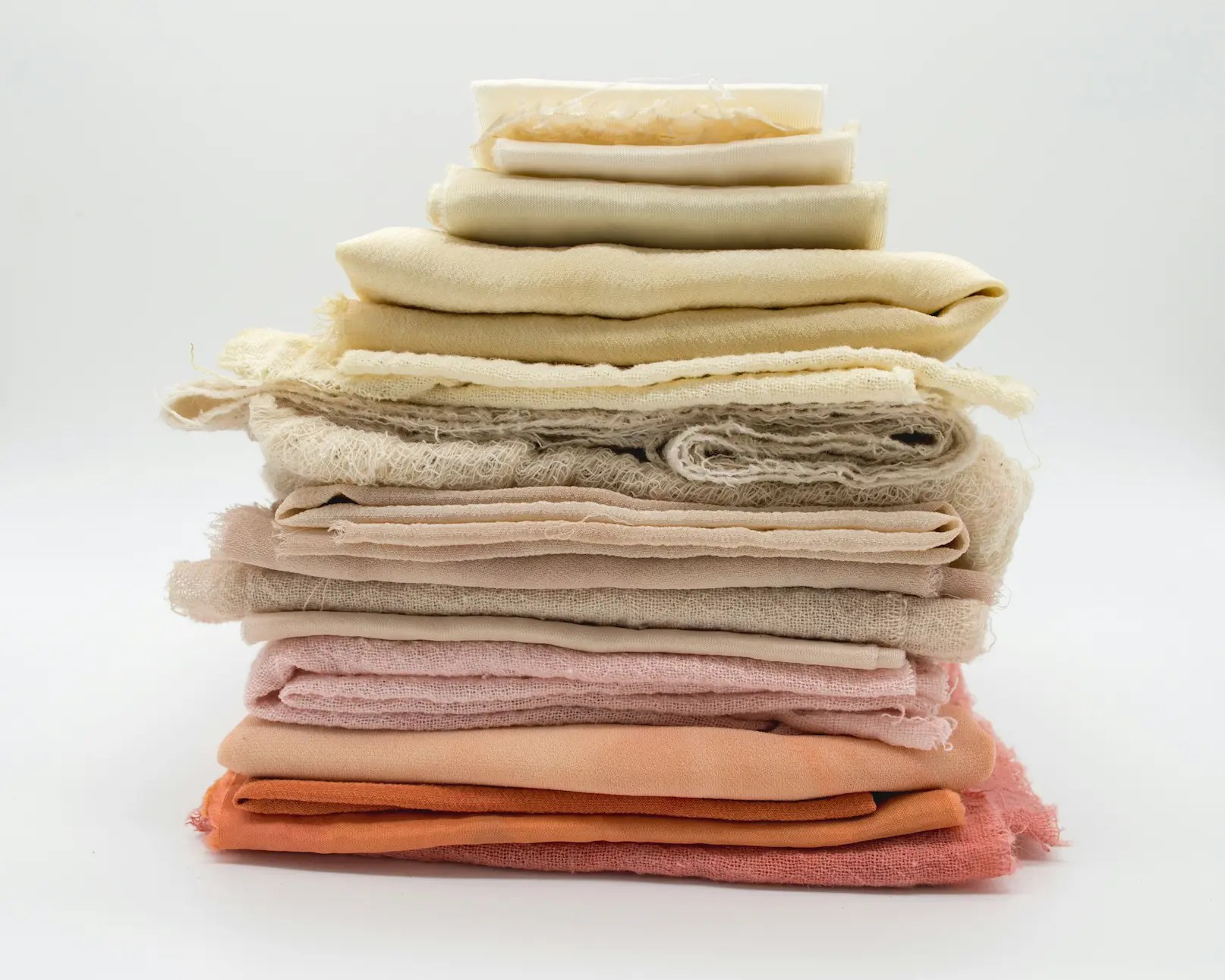 Conclusion: The Path Forward for Fashion Brands
The modern fashion landscape demands more than simply conceptualizing a beautiful garment. It requires an intimate understanding of the mechanical, chemical, and ethical processes that bring that garment into existence. Transitioning away from destructive legacy models toward a circular, low-impact economy is non-negotiable for future-facing brands.
By aligning with an operationally sophisticated, socially compliant small batch clothing manufacturer sustainable partner—one that bridges European engineering precision with the robust scale of global textile hubs—apparel brands can confidently scale their collections. The ultimate goal is to produce apparel that not only meets the aesthetic demands of the market but also honors the fundamental principles of environmental stewardship and human dignity across the entire supply chain.