
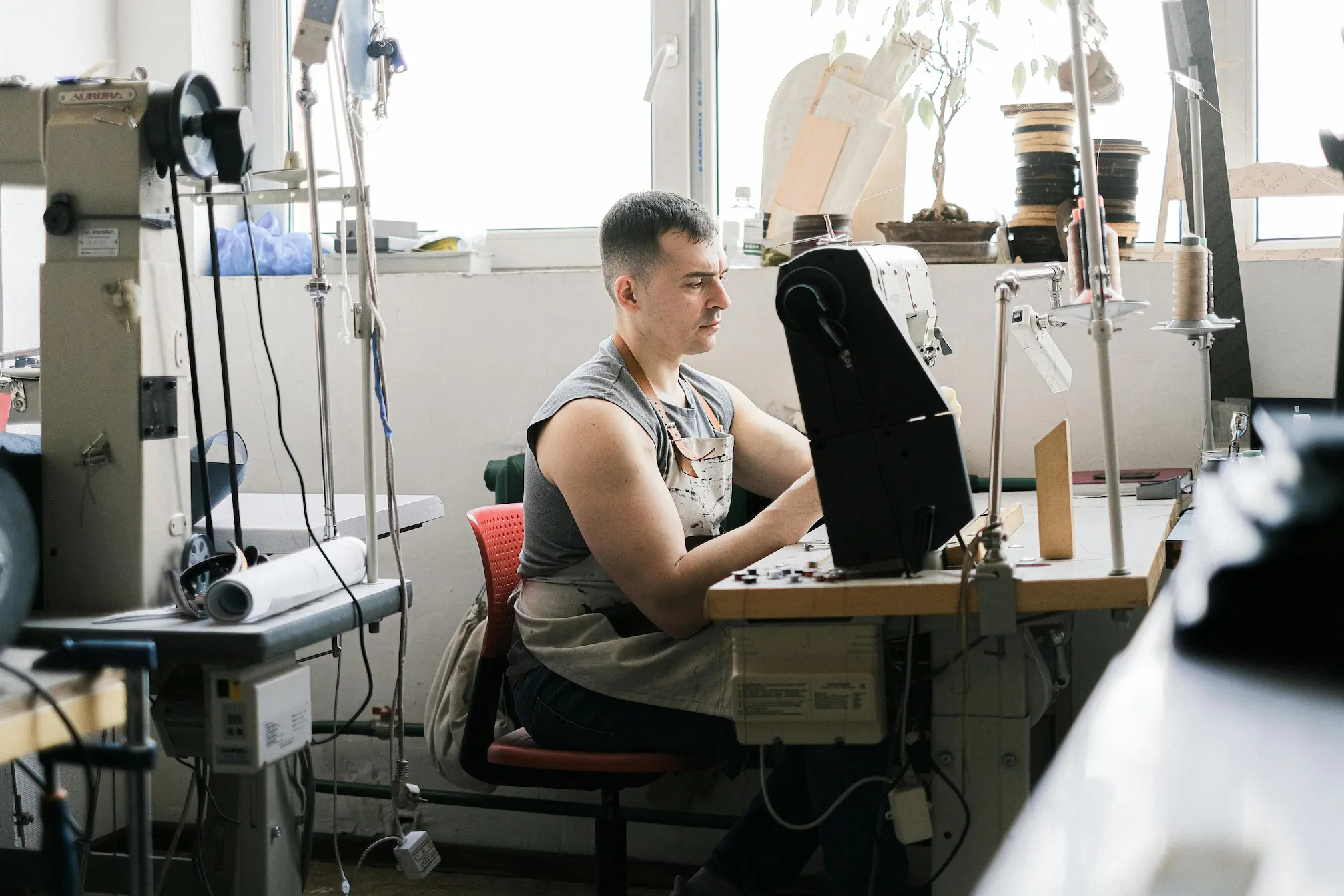
Introduction: The Evolution of Apparel Sourcing in 2026
The global textile landscape has undergone a seismic shift. For modern apparel brands, the search for reliable ethical clothing manufacturers USA has become the primary starting point for founders who want to build a brand rooted in sustainability, transparency, and fair labor. Consumers in 2026 demand absolute visibility into how their garments are made. They want to know the origin of the cotton, the conditions of the sewing floor, and the carbon footprint of the logistics chain. Consequently, finding ethical clothing manufacturers USA is no longer just a marketing advantage; it is a foundational business requirement.
However, the reality of scaling a fashion brand introduces complex challenges. While domestic ethical clothing manufacturers USA offer unparalleled proximity and strict adherence to US labor laws, they often struggle with the sheer volume and raw material diversity required by rapidly growing brands. This educational pillar article is designed to explore the entire ecosystem of ethical clothing manufacturers USA, analyze their strengths and limitations, and provide a comprehensive blueprint for how brands can achieve maximum sustainability and profitability by integrating global partners—specifically leveraging the robust textile infrastructure of Portugal and the vertical manufacturing power of Bangladesh.
As a Portuguese-based company with a registered brand and vertical manufacturing facilities, ExploreTex operates as a premier manufacturing partner, offering the rigorous ethical standards you would expect from the best ethical clothing manufacturers USA, combined with international scale.
Chapter 1: The Core Principles of Ethical Clothing Manufacturers USA
To understand the global standard for sustainability, we must first define what makes ethical clothing manufacturers USA the benchmark for many nascent brands. The term “ethical” in 2026 encompasses a multi-tiered approach to both human rights and environmental stewardship.
1. Labor Rights and Fair Compensation
The primary driver for brands seeking ethical clothing manufacturers USA is the guarantee of fair labor. In the United States, garment workers are protected by the Fair Labor Standards Act (FLSA) and Occupational Safety and Health Administration (OSHA) regulations. Ethical clothing manufacturers USA ensure living wages, standard working hours, zero child or forced labor, and safe, well-ventilated factory floors. When brands market themselves as “Made in USA,” they are heavily implying adherence to these strict labor laws.
2. Environmental Compliance and Waste Management
Ethical clothing manufacturers USA are heavily regulated by the Environmental Protection Agency (EPA). This means strict controls on wastewater discharge, particularly concerning fabric dyeing and finishing processes. Unlike unregulated regions where toxic runoff destroys local ecosystems, ethical clothing manufacturers USA must utilize closed-loop water systems and non-toxic, OEKO-TEX certified dyes.
3. Supply Chain Transparency
The modern consumer expects a Digital Product Passport (DPP). The most reputable ethical clothing manufacturers USA provide complete supply chain maps. However, a significant hurdle for ethical clothing manufacturers USA is that the raw materials—such as organic cotton, TENCEL™, or recycled polyester—are rarely grown or processed domestically. They must be imported, which complicates the “100% domestic” narrative.
This is where the educational gap often occurs. A brand may partner with ethical clothing manufacturers USA for cut-and-sew operations, but if the fabric was unethically milled overseas, the final garment is not truly ethical. Therefore, matching the standards of ethical clothing manufacturers USA requires a holistic view of the entire supply chain, from seed to garment.
Chapter 2: The Bottleneck—Why Brands Look Beyond Ethical Clothing Manufacturers USA
While the ideological appeal of ethical clothing manufacturers USA is undeniable, the practical realities of scaling an apparel business often necessitate a broader view. Purely domestic production presents several acute bottlenecks.
The Cost Paradigm
The most significant barrier to exclusive reliance on ethical clothing manufacturers USA is the cost of production. The minimum wage in the US, combined with high overhead costs for factory space and domestic logistics, means that the Cost of Goods Sold (COGS) from ethical clothing manufacturers USA is often three to five times higher than global alternatives. For premium luxury brands with high margins, ethical clothing manufacturers USA might be viable. However, for mid-market, contemporary, or streetwear brands aiming to offer accessible sustainable fashion, the unit economics of ethical clothing manufacturers USA can severely stifle growth.
Material Sourcing Limitations
As mentioned, the United States is not a primary hub for weaving and knitting sustainable textiles at scale. Most ethical clothing manufacturers USA are Cut, Make, Trim (CMT) facilities. They rely on imported fabrics. If a brand wants GOTS-certified organic heavy-weight jersey or eco-friendly denim, ethical clothing manufacturers USA must import these rolls from Europe or Asia. This adds import duties, carbon miles, and lead times, diluting the benefits of domestic production. If you want to dive deeper into fabric origins, understanding where to find sustainable fabrics in Portugal showcases how advanced European hubs have become in raw material generation.
Capacity and Scaling Restrictions
Many ethical clothing manufacturers USA operate as micro-factories or boutique ateliers. They are excellent for small batch runs or sample making. However, when a brand experiences a viral marketing moment and needs to scale from 500 units to 50,000 units, most ethical clothing manufacturers USA simply do not have the floor space, machinery, or workforce to meet that demand rapidly.
Because of these limitations, the smartest brands are evolving. They are taking the stringent requirements they demand from ethical clothing manufacturers USA and applying them to highly vetted, vertically integrated international partners.
Chapter 3: The Global Solution: Portugal and Bangladesh as the Ultimate Ethical Partners
If the goal is to maintain the rigorous standards of ethical clothing manufacturers USA while overcoming the hurdles of cost and scale, the strategic answer lies in a blended European-Asian manufacturing model. ExploreTex, a Portuguese-based entity, perfectly encapsulates this solution.
The Portuguese Advantage: European Craftsmanship and Ethics
Portugal has quietly become the premier destination for sustainable luxury and high-quality contemporary apparel. When comparing alternatives to ethical clothing manufacturers USA, Portugal garment sourcing stands unrivaled. Portugal operates under stringent European Union labor and environmental laws, making it a 1:1 match—and often superior—to the compliance metrics of ethical clothing manufacturers USA.
Portuguese textile hubs in Porto, Braga, and Guimarães are world-renowned for their mastery of premium jersey, circular knits, and sustainable denim. Unlike many ethical clothing manufacturers USA that only offer cut-and-sew, Portuguese factories often handle the spinning, knitting, dyeing, and sewing within a tight geographic radius. This localization drastically reduces the carbon footprint. Brands looking for clothing manufacturers in Portugal find that the communication, legal protections, and quality control mirror the best experiences of working with ethical clothing manufacturers USA, but with access to superior, locally milled fabrics.
The Bangladesh Advantage: Vertical Manufacturing and Unmatched Scale
While Portugal handles premium, high-complexity, or faster-turnaround European market goods, Bangladesh is the powerhouse of scalable, vertical manufacturing. Historically, Bangladesh faced scrutiny, but the landscape in 2026 is vastly different. Modern, ethical factories in Bangladesh—such as the vertical facilities owned and operated by ExploreTex—are LEEDS certified, highly automated, and strictly audited by international bodies.
By owning a vertical manufacturing facility in Bangladesh, a Portuguese-based brand can offer US clients the ethical oversight they crave from ethical clothing manufacturers USA, but with the ability to produce millions of units. “Vertical” means the factory handles everything from importing raw cotton to spinning yarn, knitting fabric, dyeing, cutting, sewing, and packing. This eliminates middlemen, ensuring strict quality control and massive cost savings—a scalability that domestic ethical clothing manufacturers USA cannot offer.
Chapter 4: Factory-Floor “Expert” Insights: Inside Vertical Manufacturing
To truly replicate the transparency of ethical clothing manufacturers USA, we must pull back the curtain on the factory floor. Educational transparency requires understanding the mechanics of garment creation.
1. The Spinning and Knitting Floor
Unlike boutique ethical clothing manufacturers USA, a vertical facility controls the yarn. In our Bangladesh facilities, imported organic cotton bales are cleaned and spun into yarn using advanced ring-spinning technology. The yarn is then fed into circular knitting machines. Our expert technicians calibrate the tension to create specific GSMs (Grams per Square Meter). For example, a heavy streetwear hoodie requires a dense 450 GSM French Terry. Controlling this in-house ensures zero discrepancy in fabric weight—a common issue when ethical clothing manufacturers USA source fabric blindly from third-party mills.
2. The Dye House: Closed-Loop Systems
The most environmentally taxing phase of clothing production is dyeing. While ethical clothing manufacturers USA rely on strict EPA municipal water systems, top-tier international facilities utilize closed-loop dyeing. This means the water used to dye a batch of Portuguese clothing is filtered, purified through reverse osmosis, and reused for the next batch. We utilize low-liquor ratio dyeing machines, which drastically reduce the amount of water and thermal energy required compared to older machinery.
3. Cut and Sew Automation
On the cutting floor, AI-driven CAD (Computer-Aided Design) systems maximize fabric yield. Laser-guided automatic cutting machines slice through dozens of layers of fabric with millimeter precision. This minimizes textile waste to less than 2%, a metric that manual cutting floors at smaller ethical clothing manufacturers USA struggle to achieve. The sewing lines are modular, meaning workers are cross-trained and ergonomically supported, ensuring the labor ethics demanded by clients seeking ethical clothing manufacturers USA are rigorously upheld globally.
Chapter 5: Materials & Sustainable Certifications
You cannot claim to be comparable to ethical clothing manufacturers USA without the paperwork to prove it. In 2026, greenwashing is heavily penalized. Authentic sustainability relies on third-party verification.
GOTS (Global Organic Textile Standard)
This is the gold standard. A GOTS certified company must prove that their textiles contain a minimum of 70% organic fibers, grown without synthetic pesticides or GMOs. But GOTS goes beyond farming; it dictates environmental and social criteria throughout the entire supply chain. When US brands look for ethical clothing manufacturers USA, they are ultimately looking for GOTS-level assurance. You can read the official parameters on the Global Standard website.
OEKO-TEX® Standard 100
This certification ensures that every component of the garment—from the fabric to the sewing thread, buttons, and zippers—has been rigorously tested for harmful substances and is safe for human health. Whether you use ethical clothing manufacturers USA or a Portuguese partner, OEKO-TEX is non-negotiable for skin-safe apparel.
GRS (Global Recycled Standard)
For brands utilizing recycled materials like rPET (recycled polyethylene terephthalate) from ocean-bound plastics, GRS verifies the recycled content of the product and verifies responsible social, environmental, and chemical practices in production.
Partnering with sustainable textile suppliers in Portugal guarantees access to these certified materials instantly, bypassing the supply chain hurdles often faced by standalone ethical clothing manufacturers USA.
Chapter 6: Product Development, Prototyping, and MOQs
One of the main reasons startups flock to ethical clothing manufacturers USA is for the perceived ease of product development. The assumption is that speaking to a factory in the same time zone makes creating a tech pack easier. However, modern global manufacturing has entirely digitized this process.
The Tech Pack and 3D Prototyping
At ExploreTex, product development is an exact science. Instead of shipping physical samples back and forth across the country (as is common with ethical clothing manufacturers USA), we utilize 3D rendering software. A US brand can see how a fabric drapes on a virtual avatar, adjusting the fit digitally before a single piece of fabric is cut. This drastically reduces sampling waste and speeds up time-to-market.
Navigating MOQs (Minimum Order Quantities)
Ethical clothing manufacturers USA often win on low MOQs, sometimes allowing brands to make as few as 50 pieces. However, the cost per unit at 50 pieces domestically is astronomical. The ExploreTex model bridges this gap. By utilizing our partner factories for clothing manufacture in Portugal, we can offer highly competitive, accessible MOQs for premium European goods. Then, as the brand successfully tests the market and needs to scale to 5,000+ units, we seamlessly transition the proven tech packs to our vertical facilities in Bangladesh for maximum margin optimization. This dual-pipeline strategy is far more robust than relying solely on ethical clothing manufacturers USA.
Chapter 7: Logistics, Shipping, and Supply Chain Resiliency to the USA
A major selling point for ethical clothing manufacturers USA is domestic shipping. Bypassing customs, ocean freight, and port strikes is a significant advantage. However, international logistics have become incredibly streamlined for apparel.
When moving goods from our European or Asian facilities to the US market, we utilize strategic freight forwarding.
Air Freight: For rapid replenishment of best-sellers, air freight from Portugal to New York takes mere days, rivaling the cross-country trucking times of ethical clothing manufacturers USA located in California.
Ocean Freight: For bulk orders from Bangladesh, ocean freight is carbon-optimized and planned months in advance to align with seasonal retail drops.
Furthermore, international organizations like the International Labour Organization (ILO) and industry reports from groups like McKinsey & Company constantly emphasize that supply chain resiliency is built on diversification. Relying 100% on ethical clothing manufacturers USA makes a brand vulnerable to localized economic downturns or domestic raw material shortages. A global partner provides a buffer against regional volatility.
Chapter 8: Cost Breakdown: USA vs. Blended Strategy
Let us engage in a pure educational cost-analysis exercise to demonstrate why the pivot from exclusively using ethical clothing manufacturers USA to a global managed network is vital for brand survival.
(Note: The following is a generalized educational estimate based on 2026 market averages for a 100% Organic Cotton Heavyweight 400 GSM Hoodie).
Scenario A: 100% Domestic (Ethical Clothing Manufacturers USA)
Organic Yarn Import to US: High duty.
Domestic Knitting & Dyeing: High utility and labor cost.
CMT (Cut, Make, Trim) Labor: $25 – $40 per unit (depending on state minimum wages).
Total Estimated COGS: $45 – $60 per hoodie.
Retail Price Required for 2.5x Markup: $112.50 – $150.00.
Scenario B: The ExploreTex Blended Strategy (Portugal/Bangladesh)
Raw Material Sourced locally in Portugal or directly to Bangladesh via established trade routes.
Vertical Manufacturing Efficiency: Eliminates multi-factory transport.
CMT Labor: Highly regulated, ethical, but scaled to global economic standards.
Total Estimated COGS: $15 – $25 per hoodie.
Retail Price Required for 2.5x Markup: $37.50 – $62.50.
By moving beyond strict reliance on ethical clothing manufacturers USA, a brand can offer a GOTS-certified, ethically made, premium heavyweight hoodie to the consumer at an accessible $60 price point, rather than alienating buyers with a $150 price tag. This financial flexibility is why learning how to source globally is the most critical education a fashion founder can receive.
Chapter 9: Crafted Specialized FAQ Section
This section is engineered to capture long-tail search queries related to ethical clothing manufacturers USA.
Q: Are ethical clothing manufacturers USA more sustainable than European or Asian factories?
A: Not inherently. While ethical clothing manufacturers USA adhere to strict domestic laws, sustainability is global. Advanced factories in Portugal and certified vertical facilities in Bangladesh often feature superior green technologies, such as closed-loop dyeing and solar-powered operations, making them equally, if not more, sustainable.
Q: How do I ensure an overseas factory is as ethical as ethical clothing manufacturers USA?
A: You must demand third-party certifications. Look for GOTS, OEKO-TEX, Fair Trade, and ISO 9001/14001 compliance. Furthermore, partner with transparent companies like ExploreTex that provide dedicated account managers, open factory auditing, and comprehensive digital traceability.
Q: Can I get low MOQs outside of ethical clothing manufacturers USA?
A: Yes. While ethical clothing manufacturers USA are known for small batches, Portuguese manufacturing partners excel at accommodating premium, low-MOQ orders for startup brands, providing European quality craftsmanship before scaling to larger vertical production.
Q: What is the main disadvantage of using ethical clothing manufacturers USA?
A: The primary disadvantages are significantly higher production costs (COGS), restricted scalability for large volume orders, and a heavy reliance on imported sustainable raw materials, which can complicate the domestic supply chain.
Q: Does ExploreTex offer the same quality control as ethical clothing manufacturers USA?
A: Absolutely. As a Portuguese-based company, ExploreTex manages production through a strict European quality control lens. Whether manufacturing with our partner factories in Portugal or our vertical facility in Bangladesh, the AQL (Acceptable Quality Limit) standards match or exceed those of premium ethical clothing manufacturers USA.
 Conclusion: Your Next Steps in Sustainable Sourcing
 Conclusion: Your Next Steps in Sustainable Sourcing
The journey to building a respected, profitable fashion brand requires navigating the complex realities of the global supply chain. While starting your search with ethical clothing manufacturers USA reflects a noble commitment to human rights and environmental protection, true scale requires a broader perspective. By understanding the limitations of purely domestic production—namely cost, fabric availability, and scaling bottlenecks—brands can make educated, strategic decisions.
Partnering with an international powerhouse like ExploreTex bridges the gap. It provides the strict ethical oversight and premium quality you desire from ethical clothing manufacturers USA, empowered by the heritage craftsmanship of Portugal and the massive vertical capabilities of Bangladesh. You do not have to sacrifice your brand’s morals to achieve profitability; you simply need the right educational foundation and the right manufacturing partner.
If you are ready to transition your production from limited domestic facilities to a robust, globally scalable, and meticulously ethical supply chain, we invite you to connect with our team. Explore how we can engineer your next collection by visiting our Contact Page and speaking directly with our sourcing experts.
When considering your brand’s growth trajectory for the next four quarters, which specific product category (e.g., heavyweight knits, technical activewear, or sustainable denim) is currently presenting the biggest challenge in balancing ethical production with profit margins?